1 listing Prices & premiums exclude tax to compare across countries
Filters
| Product | /oz | Premium | Price (ex. tax) | |
|---|---|---|---|---|

 Sharps Pixley
|
$76.20 |
+14.37%
+37% inc.VAT
|
$2,451.33
£2,204 inc.VAT
|
View Deal |
Prices are fetched automatically and may not reflect current merchant prices. Currency conversions and tax treatment are approximate. Rankings are based solely on price. We are not a dealer and accept no responsibility for transactions with listed merchants. Past performance is not indicative of future results. This site does not provide investment advice. Full disclaimer
About the 1 Kilo Classic Silver Bar
The 1 Kilo Argor-Heraeus Classic Silver Bar
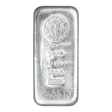
The Classic is Argor-Heraeus's standard investment-grade bar range, the foundational product line distinct from its Kinebar holographic series and later specialty lines. In the 1 kilo silver format it is produced as a cast bar: 1,000 grams (32.15 troy oz) of fine silver poured in the traditional way at the Mendrisio refinery in the Swiss canton of Ticino. The kilo cast bar is one of the core sizes of the silver Classic line alongside the 5 kg, with minted Classic silver bars covering the smaller weights.
The refiner's credentials are the main reason to choose this bar over a generic kilo. Argor-Heraeus has held LBMA Good Delivery status for silver since 1992 (and for gold since 1961), and it is one of only seven global LBMA Referees, the panel that audits other refiners' Good Delivery compliance. Every Classic bar carries an individual serial number and is certified by an Argor-Heraeus sworn assayer, with cast bars shipping alongside a numbered assay certificate. That chain of custody translates directly into resale: dealers maintain ready markets for LBMA-accredited kilo bars, and they are accepted into LBMA-affiliated vault networks without re-assay.
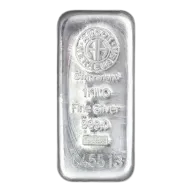
The design philosophy is deliberately minimal. The obverse carries the stylised AH monogram, weight, metal, purity, serial number, and assayer mark, with no allegorical figures or decorative motifs. That restraint is intentional: it keeps production costs down, premiums competitive, and the authentication marks legible. For buyers optimising cost per gram of silver from a top-tier Swiss refiner, the Classic kilo is the purpose-built tool.
Argor-Heraeus Classic Kilo Silver Bar Specifications
| Attribute | Value |
|---|---|
| Weight | 1 kilogram (1,000 g / 32.15 troy oz) |
| Fineness | Stamped 999.0 fine silver |
| Format | Cast bar |
| Serial number | Individual, with sworn assayer certification |
| Certificate | Numbered assay certificate (cast bars below 400 oz) |
| Refiner | Argor-Heraeus SA, Mendrisio, Switzerland |
| Accreditation | LBMA Good Delivery (silver since 1992); LBMA Referee |
| Legal tender | No; no face value |
A note on the fineness stamp: Argor-Heraeus silver Classic bars are stamped 999.0 as a longstanding house convention in the official catalogue, while some product listings describe the metal content as 999.9 fine. A kilo silver bar typically measures around 114 x 57 x 13 mm depending on manufacturer, noticeably larger than the equivalent gold weight because silver is far less dense. A year-of-manufacture stamp has appeared on all Argor-Heraeus bars since 1988. Bars stack neatly and are more space-efficient per ounce than the same weight held in 1 oz units; storage should be kept below 50% relative humidity since silver tarnishes in humid conditions.
Tax Treatment of a Kilo Silver Bar
This bar is not legal tender and has no face value, so it earns no CGT exemption in any jurisdiction. Purchase tax depends on where you buy.
- UK: 20% VAT on new silver bars, and gains are CGT-liable. Silver bars are the least tax-efficient form for UK buyers, taxed on entry and exit.
- EU: Full local VAT applies to new silver, typically 17-27% by member state. Margin scheme treatment exists in some countries but applies to pre-owned stock, not new refinery bars.
- US: Most states exempt bullion bars from sales tax; gains are taxed at the collectibles rate of up to 28%. On IRA eligibility, silver requires 0.999 minimum fineness, and the 999.0 stamp on this bar may create custodian confusion; verify with the specific custodian before buying for an IRA.
- Canada: GST/HST exempt, since silver at 99.9%+ purity in bar form qualifies for the federal exemption.
- Australia: Investment-grade silver requires at least 99.9% purity for GST-free treatment.
- New Zealand: GST exemption for silver requires 99.9%+ purity.
- Singapore: The Investment Precious Metals scheme exempts silver at 99.9%+ purity in bar form from GST; no capital gains tax applies.
- Hong Kong: No sales tax, no import duty, no capital gains tax.
In VAT countries the kilo size works in the buyer's favour: the larger the bar, the more its low premium offsets the fixed percentage tax hit compared with small silver units.
Argor-Heraeus Classic Kilo vs PAMP, Heraeus, and Smaller Formats
The kilo silver bar market is crowded with LBMA-accredited names: PAMP Suisse, Valcambi, Heraeus, Umicore, the Royal Canadian Mint, and the Perth Mint all produce at this weight. Within that field the bars compete on price and finish rather than fundamentals, since all are produced to the same purity standards by accredited refiners. The Classic's cast format follows the pattern of large silver bars generally; cast bars run cheaper than minted bars of the same weight, typically by 1-2%, at the cost of a more rustic finish. Argor-Heraeus sits in the same Ticino refining tier as PAMP and Valcambi, with roughly 400 tonnes of annual gold refining capacity, so there is no quality concession in choosing it over the better-marketed Swiss names.
Against 10 oz silver bars, the kilo offers a modest further premium saving; silver kilo bars run roughly 3-6% over spot, among the lowest retail premiums alongside 100 oz bars, though the marginal per-ounce saving from 10 oz up to a kilo is small. The real trade-off is divisibility. A kilo bar is an all-or-nothing sale, so an investor who may need to raise smaller amounts of cash gives up flexibility that 10 oz bars retain.
Against the 100 oz bar, the choice is largely regional: the 100 oz format is the traditional large silver bar in North America, while the kilo is the international standard, dominant in Europe and Asia. A kilo is roughly a third of a 100 oz bar with similar premiums, making it the more manageable unit for most private buyers stacking silver bars in size.
1 Kilo Classic Silver Bar: frequently asked questions
-
The cheapest 1kg Argor-Heraeus Classic bar we track is $2,451.33 at Sharps Pixley, sitting 14.4% over the $67.63 silver spot price. Prices update regularly as dealer stock and premiums change, so compare across listed dealers before buying.
-
The bar weighs 1 Kilo (32.15 troy oz) and is 999 fine silver. It is produced by Argor-Heraeus in Mendrisio, Switzerland. Each bar carries an individual serial number and is certified by an Argor-Heraeus sworn assayer. Cast and minted formats are available; the minted version ships in a tamper-evident blister card.
-
Argor-Heraeus SA is a Swiss precious metals refinery based in Mendrisio, Ticino, founded in 1951. It has held LBMA Good Delivery status for silver since 1992, meaning its bars are accepted in London vaults without re-assay. The refinery is also one of seven global LBMA Referees, auditing other refiners' Good Delivery compliance. It is now a wholly owned subsidiary of Heraeus Holding GmbH.
-
Generally, yes. The 1kg bar currently sits at 14.4% over spot. Larger bars spread fixed fabrication and handling costs across more metal, so the premium per troy ounce is typically lower than on 1oz or 100g bars. The trade-off is less flexibility when selling, as a single large bar is harder to liquidate in portions than multiple smaller pieces.