55 products · 332 deals Prices & premiums exclude tax to compare across countries
Filters
| Product | /oz | Premium | Price (ex. tax) | |
|---|---|---|---|---|

2 deals
|
$67.08 | -0.81% | $134.16 | Compare |

12 deals
|
$67.08 | -0.80% | $134.17 | Compare |

2 deals
|
$67.83 | +0.30% | $2,180.78 | Compare |

3 deals
|
$68.59 | +1.42% | $342.94 | Compare |

10 deals
|
$68.61 | +1.45% | $102.91 | Compare |

9 deals
|
$69.27 | +2.43% | $138.54 | Compare |

10 deals
|
$69.46 | +2.71% | $69.46 | Compare |

9 deals
|
$69.82 | +3.24% | $34.91 | Compare |

9 deals
|
$71.25 | +5.36% | $71.25 | Compare |

3 deals
|
$71.52 | +5.75% | $71.52 | Compare |
| $72.37 | +7.01% | $72.37 | View Deal | |

2 deals
|
$72.58 | +7.32% | $362.90 | Compare |

111 deals
|
$71.71 |
+7.57%
+29% inc.VAT
|
$71.71
£64 inc.VAT
|
Compare |

3 deals
|
$72.90 | +7.80% | $72.90 | Compare |

4 deals
|
$74.31 | +9.88% | $74.31 | Compare |

2 deals
|
$74.72 | +10.48% | $373.59 | Compare |

22 deals
|
$75.02 | +10.93% | $75.02 | Compare |

8 deals
|
$75.11 | +11.06% | $75.11 | Compare |

4 deals
|
$75.21 | +11.21% | $376.06 | Compare |
| $75.32 | +11.37% | $75.32 | View Deal | |

3 deals
|
$75.57 | +11.74% | $377.84 | Compare |

2 deals
|
$75.99 | +12.36% | $75.99 | Compare |

4 deals
|
$76.08 | +12.50% | $38.04 | Compare |

15 deals
|
$76.90 | +13.71% | $76.90 | Compare |

4 deals
|
$77.05 | +13.93% | $77.05 | Compare |
| $77.06 | +13.95% | $77.06 | View Deal | |
| $77.09 | +13.99% | $77.09 | Compare | |
| $77.74 | +14.95% | $77.74 | View Deal | |
| $78.13 | +15.53% | $78.13 | View Deal | |

8 deals
|
$78.61 | +16.24% | $78.61 | Compare |

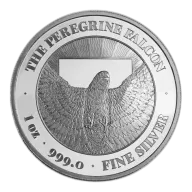
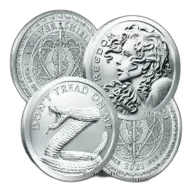
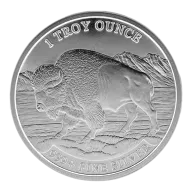
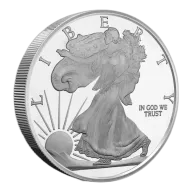
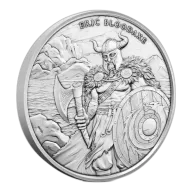
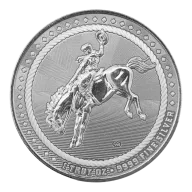
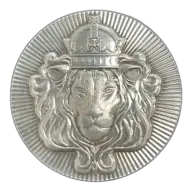

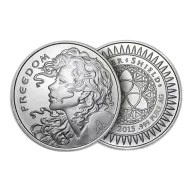




Prices are fetched automatically and may not reflect current merchant prices. Currency conversions and tax treatment are approximate. Rankings are based solely on price. We are not a dealer and accept no responsibility for transactions with listed merchants. Past performance is not indicative of future results. This site does not provide investment advice. Full disclaimer
About Silver Rounds
Silver Rounds and Their Place in Bullion
Silver rounds are coin-shaped bullion products struck by private mints. They carry no face value, no legal tender status, and no government backing. Their appeal is straightforward: more ounces of silver per dollar spent, delivered in a familiar, stackable, countable format.
The distinction from silver coins is important. A 1oz Silver Britannia or 1oz Silver Eagle carries a sovereign guarantee and legal tender status. A round from Sunshine Minting or SilverTowne carries only the private mint's reputation. The trade-off is reflected directly in pricing: rounds typically sit at 5-10% over spot, positioned between silver bars at 3-8% and government coins at 15-25%.
The 1oz size dominates. Larger rounds (2oz, 5oz) exist but are uncommon. Standard purity is .999 fine silver, matching most sovereign coins. Some private mints produce .9999 rounds, though the marginal purity difference has no practical significance for bullion buyers.
Silver rounds are overwhelmingly a North American product. Major private mints including Sunshine Minting, SilverTowne, Asahi (the successor to Johnson Matthey), and Golden State Mint serve a market where the wide US and Canadian dealer network makes resale straightforward. In Europe and Asia, where sovereign mint coins and bars dominate retail buying, rounds are less familiar to local dealers and may trade at thinner margins on the secondary market.
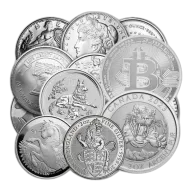
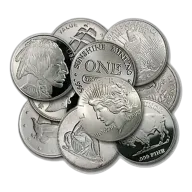
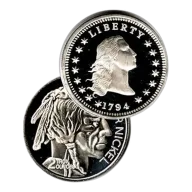
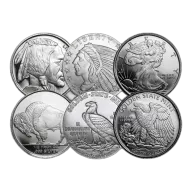
Private mints frequently produce themed, commemorative, or artistic designs on silver rounds. The Buffalo round (based on the US Buffalo nickel design) and Walking Liberty round (based on the classic half-dollar) are among the most widely produced generic designs. Some limited-edition series develop modest collector followings, but the overwhelming majority of rounds are purchased for metal content, not design appeal.
Tax Treatment of Silver Rounds
Silver rounds receive the same tax treatment as silver bars in every jurisdiction. Form does not matter for tax purposes with one critical exception: in the UK, legal tender status determines CGT exemption, and rounds, lacking legal tender status, do not qualify.
United Kingdom
Silver rounds carry 20% VAT on purchase and are subject to Capital Gains Tax on disposal profits. They receive no CGT exemption because they are not UK legal tender. This places rounds at a significant tax disadvantage compared to the Silver Britannia, which is VAT-liable on purchase but CGT-exempt on sale. There is also no margin scheme benefit for rounds, since the scheme applies to pre-owned goods and most rounds are sold new. For UK buyers, rounds are difficult to justify against Britannias (which offer CGT exemption) or bars (which carry lower premiums).
United States
No federal sales tax applies. Approximately 35 states fully exempt bullion from sales tax, with partial exemptions in roughly 5 states based on transaction thresholds. Capital gains on silver rounds are taxed at the collectibles rate: up to 28% federal for long-term holds, ordinary income rates for holdings under one year. Silver rounds of .999+ purity qualify for IRA inclusion when produced by an LBMA-accredited refiner and held by an approved custodian.
Canada
Rounds at 99.9% purity or higher are exempt from GST/HST. Capital gains are taxed at a 50% inclusion rate on the individual's marginal tax rate.
Australia and New Zealand
Australia exempts investment-grade silver at 99.9%+ purity from GST. New Zealand similarly exempts fine silver at 99.9%+ purity from its 15% GST and imposes no capital gains tax. In both countries, rounds from LBMA-accredited refiners generally meet the qualifying criteria.
European Union
Standard VAT rates apply to silver rounds across EU member states, ranging from 17% to 27%. Rounds do not qualify for margin scheme treatment in Germany or the Netherlands because the margin scheme applies to pre-owned goods and, in practice, to coins rather than rounds. This makes rounds more expensive than margin-scheme coins in those markets.
Other Jurisdictions
Singapore exempts qualifying silver from GST under the Investment Precious Metals scheme at 99.9%+ purity from LBMA-accredited sources. Hong Kong charges no tax of any kind. South Africa applies 15% VAT to all silver products including rounds.
Silver Round Premiums and Value Proposition
Silver rounds sit in a pricing sweet spot between sovereign coins and bars. At 5-10% over spot, they cost roughly half the premium of a 1oz Silver Eagle and a few percentage points above a comparable 1oz silver bar. For buyers focused on accumulating maximum ounces per dollar, rounds deliver the coin-like format of a countable, stackable, standard-weight piece without the cost of legal tender status.
Brand recognition affects pricing within the rounds category. Products from well-known mints such as Sunshine Minting and Asahi carry slightly higher premiums than plain generic rounds from smaller operations. Sunshine's MintMark SI security feature, verifiable with a proprietary decoder lens, adds a layer of authentication that commands a modest premium.
The resale calculation is where rounds differ most from sovereign coins. A round purchased at 8% over spot might sell back to a dealer at 4-6% over spot. A sovereign coin purchased at 20% over spot might sell at 15-18% over spot. In absolute terms, the round buyer gets more metal upfront for the same outlay. The coin buyer recovers a higher proportion of their premium on exit. For long holds in rising markets, the round buyer's extra metal content can outweigh the coin buyer's better premium retention.
In VAT jurisdictions like the UK and EU, rounds offer no tax advantage over coins or bars. The premium savings are purely in the product markup. Since UK buyers also forfeit the CGT exemption available on Silver Britannias, the case for rounds in the UK is weak unless the buyer prioritises sheer metal weight above all other considerations. In the US and Canadian markets, where tax treatment is neutral across forms, the cost-efficiency argument for rounds is strongest.
For bulk purchases in tubes (typically 20 rounds) or monster boxes, per-unit spreads tighten further. Dealers handling known brands in standard packaging process these transactions efficiently, keeping bid-ask spreads competitive with bar equivalents.
Widely Traded Silver Rounds
Silver rounds function more as a commodity than a branded product. Most buyers select on price and mint reputation rather than specific design. That said, several products have earned sufficient market recognition to trade with tighter spreads and broader dealer acceptance.
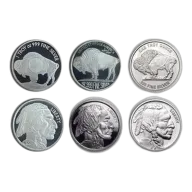
The Buffalo round, produced by multiple private mints, carries the classic Native American portrait and bison design adapted from the 1913 US Buffalo nickel (the same design used on the Gold Buffalo coin). It is the most widely produced generic silver round design, available from virtually every US bullion dealer, and trades with high liquidity on the secondary market.
The Sunshine Minting round is notable for its MintMark SI security feature, a micro-engraved element visible only through a proprietary decoder lens. Sunshine Minting, based in Coeur d'Alene, Idaho, is one of the largest private mints in the US and a major supplier of coin blanks to the US Mint. The security feature provides a practical authentication method that most generic rounds lack.
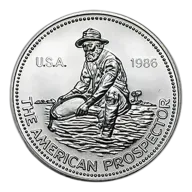
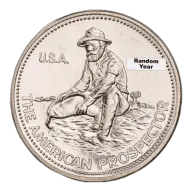
The SilverTowne Prospector comes from one of the longest-running names in US bullion retail. SilverTowne has operated since 1949, and its Prospector design is a recognised staple of the generic round market.
The Asahi round carries branding from Asahi Refining, the successor operation to Johnson Matthey's precious metals business. Asahi is one of the world's largest precious metals refiners, and the brand provides strong secondary market recognition.
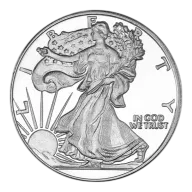
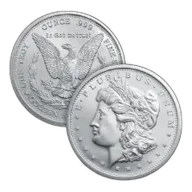
The Walking Liberty round, produced by various mints, adapts the obverse design of the 1916-1947 Walking Liberty half dollar. Like the Buffalo design, it is a public-domain classic that multiple mints produce, making it a commodity item rather than a proprietary brand.
For buyers prioritising resale liquidity, sticking to rounds from these established names is advisable. Obscure-brand or no-name rounds may take longer to sell and command slightly lower buyback prices, as dealers apply wider margins to products they cannot authenticate by brand alone.
Verifying Silver Rounds
Silver rounds lack the sovereign mint specifications and government security features that make coin authentication straightforward. Authentication relies on a combination of physical testing, brand recognition, and, for one manufacturer, a proprietary security system.
Sunshine Minting's MintMark SI is the only dedicated anti-counterfeiting technology widely available on silver rounds. The mark is a micro-engraved element embedded in the round's design, visible as a shifting image when viewed through Sunshine's decoder lens (included with purchases or available separately). No other private mint offers an equivalent built-in verification system for rounds.
For rounds without embedded security, standard physical tests apply. The weight and dimension check compares a round against its stated specifications; a genuine 1oz .999 silver round should weigh 31.1g within tight tolerances. The magnet slide test uses silver's diamagnetic properties: a neodymium magnet placed on a tilted round should slide slowly and smoothly. If the magnet sticks (ferrous fake) or slides at the wrong speed (wrong metal), the round fails. The ice test exploits silver's high thermal conductivity; ice placed on a genuine silver surface melts noticeably faster than on most substitute metals.
Electronic verification using a Sigma Metalytics precious metal verifier measures electrical conductivity and can distinguish genuine silver from common substitute metals non-destructively. These devices cost $800-1,200 and are standard equipment for dealers.
Counterfeit silver rounds exist but are less common than counterfeit coins, for a logical reason: the counterfeit premium on a $35 round is far lower than on a $3,000+ gold product. The effort-to-reward ratio discourages sophisticated forgery. Common counterfeits are crude, detectable by weight and dimension alone, and concentrated in secondary market sales between individuals rather than from established dealers.
Silver Rounds: frequently asked questions
-
The live silver spot price is $67.63 per troy ounce. This is the wholesale benchmark for raw silver. Silver round prices are quoted as a premium over this figure, covering the private mint's fabrication and dealer margin.
-
Silver rounds are privately minted discs with no legal-tender face value, typically carrying the lowest fabrication premium of the three forms. Coins are government-issued, carry a face value and sovereign backing, and usually command a slightly higher premium. Bars, especially larger ones, often have the tightest premiums per ounce because fabrication costs are spread over more silver.
-
The standard tube for 1 troy oz silver rounds holds 20 pieces. Monster boxes, which are the largest standard packaging unit, typically hold 500 rounds (25 tubes of 20). Quantities can vary by manufacturer and weight, so it is worth checking the product listing for the exact tube or box count.
-
Investment-grade silver rounds are .999 fine (99.9% pure silver) as standard. Some rounds are struck to .9999 fineness. Either purity qualifies as investment-grade silver bullion. This is distinct from sterling silver (92.5%) or coin silver (90%), which are alloys used in other applications.
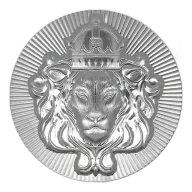
- 100g Scottsdale Stacker Silver Round
- 100g Silver Round
- 10g MMTC-PAMP Banyan Tree Silver Round
- 10 oz Allegories Silver Round
- 10 oz Aztec Calendar Silver Round
- 10 oz Silver Buffalo Silver Round
- 10 oz Silver Round
- 10 oz Sunshine Eagle Silver Round
- 10 oz Viking Silver Round
- 10 oz Walking Liberty Silver Round
- 1/10 oz Aztec Calendar Silver Round
- 1/10 oz Bull and Bear Silver Round
- 1/10 oz Egyptian Relic Silver Round
- 1/10 oz Golden State Mint Buffalo Silver Round
- 1/10 oz Silver Round
- 1/10 oz Walking Liberty Silver Round
- 1.25 oz Silver Round
- 1/2 oz Aztec Calendar Silver Round
- 1/2 oz Bull and Bear Silver Round
- 1/2 oz Egyptian Relic Silver Round
- 1/2 oz Golden State Mint Buffalo Silver Round
- 1/2 oz GSM Silver Eagle Silver Round
- 1/2 oz Incuse Indian Silver Round
- 1/2 oz Morgan Silver Round
- 1/2 oz Silver Round
- 1/2 oz Sunshine Eagle Silver Round
- 1/2 oz Walking Liberty Silver Round
- 1/4 oz Aztec Calendar Silver Round
- 1/4 oz Bull and Bear Silver Round
- 1/4 oz Egyptian Relic Silver Round
- 1/4 oz Golden State Mint Buffalo Silver Round
- 1/4 oz GSM Silver Eagle Silver Round
- 1/4 oz Incuse Indian Silver Round
- 1/4 oz Silver Round
- 1/4 oz Walking Liberty Silver Round
- 1.5 oz Silver Round
- 1 Kilo Aztec Calendar Silver Round
- 1 Kilo Silver Round
- 1 oz African Lion Silver Round
- 1 oz Allegories Silver Round
- 1 oz American Buffalo Silver Round
- 1 oz American Prospector Silver Round
- 1 oz APMEX Lunar Silver Round
- 1 oz Asahi Refining Lunar Silver Round
- 1 oz Aztec Calendar Silver Round
- 1 oz Bull and Bear Silver Round
- 1 oz Bull & Bear Silver Round
- 1 oz Cayman Marlin Silver Round
- 1 oz Christmas Coins Silver Round
- 1 oz Day of the Dead Silver Round
- 1 oz Dragon Silver Round
- 1 oz Dwelling Taniwha Silver Round
- 1 oz Eagle Stacker Silver Round
- 1 oz Egyptian Silver Round
- 1 oz Engelhard Bar Silver Round
- 1 oz Eureka Silver Round
- 1 oz First Mint Lunar Silver Round
- 1 oz Fortuna Silver Round
- 1 oz Germania Silver Round
- 1 oz Golden State Mint Lunar Silver Round
- 1 oz GSM Silver Eagle Silver Round
- 1 oz Holiday Silver Round
- 1 oz Humpback Whale Silver Round
- 1 oz Incuse Indian Silver Round
- 1 oz Lady Justice Silver Round
- 1 oz Legendary Warriors Silver Round
- 1 oz Liberty Bell Round Silver Round
- 1 oz Liberty Trade Silver Round
- 1 oz Lost Cities Silver Round
- 1 oz Mason Mint Vikings Silver Round
- 1 oz Medusa Silver Round
- 1 oz Mercury Silver Round
- 1 oz Mermaid Silver Round
- 1 oz MMTC-PAMP Lakshmi Ganesh Silver Round
- 1 oz Monarch Precious Metals Zodiac Silver Round
- 1 oz Morgan Silver Round
- 1 oz Mythical Cities Silver Round
- 1 oz National Bank of Ukraine Archangel Michael Silver Round
- 1 oz Nikola Tesla Silver Round
- 1 oz Noah's Ark Silver Round
- 1 oz Panda Silver Round
- 1 oz Patriot Silver Round
- 1 oz Perth Mint Lunar Silver Round
- 1 oz Phoenix Silver Round
- 1 oz Poker Silver Round
- 1 oz Santa Silver Round
- 1 oz Scottsdale Cowboy Silver Round
- 1 oz Scottsdale Stacker Silver Round
- 1 oz Second Amendment Silver Round
- 1 oz Signs of the Zodiac Silver Round
- 1 oz Silver Buffalo Silver Round
- 1 oz Silver Fern Silver Round
- 1 oz Silver Round
- 1 oz Silver Shield Silver Round
- 1 oz SilverTowne Buffalo Silver Round
- 1 oz Somalia Elephant Silver Round
- 1 oz South Korean Tiger Silver Round
- 1 oz Sunshine Eagle Silver Round
- 1 oz Taekwondo Silver Round
- 1 oz Texas Silver Round
- 1 oz Themed Gift Bullion Silver Round
- 1 oz Themed Rounds Silver Round
- 1 oz Trident Silver Round
- 1 oz US Mint Liberty Silver Round
- 1 oz Viking Silver Round
- 1 oz Vivat Humanitas Silver Round
- 1 oz Walking Liberty Silver Round
- 1 oz Zombucks Silver Round
- 20g Silver Round
- 25g Silver Round
- 2 oz Allegories Silver Round
- 2 oz Aztec Calendar Silver Round
- 2 oz Bull and Bear Silver Round
- 2 oz Bull & Bear Silver Round
- 2 oz Call of the Wild Silver Round
- 2 oz Day of the Dead Silver Round
- 2 oz Eagle Stacker Silver Round
- 2 oz Egyptian Gods Silver Round
- 2 oz Golden State Mint Buffalo Silver Round
- 2 oz Golden State Mint Lunar Silver Round
- 2 oz GSM Silver Eagle Silver Round
- 2 oz Incuse Indian Silver Round
- 2 oz Monarch Precious Metals Zodiac Silver Round
- 2 oz Morgan Silver Round
- 2 oz Privateer Silver Round
- 2 oz Scottsdale Stacker Silver Round
- 2 oz Second Amendment Silver Round
- 2 oz Signs of the Zodiac Silver Round
- 2 oz Silver Buffalo Silver Round
- 2 oz Silver Round
- 2 oz The Awakening Series Silver Round
- 2 oz US Mint Liberty Silver Round
- 2 oz Walking Liberty Silver Round
- 30g Panda Silver Round
- 500g Silver Round
- 5 oz Allegories Silver Round
- 5 oz American Buffalo Silver Round
- 5 oz Aztec Calendar Silver Round
- 5 oz Bull and Bear Silver Round
- 5 oz Bull & Bear Silver Round
- 5 oz Golden State Mint Lunar Silver Round
- 5 oz GSM Silver Eagle Silver Round
- 5 oz Incuse Indian Silver Round
- 5 oz Monarch Precious Metals Zodiac Silver Round
- 5 oz Morgan Silver Round
- 5 oz Scottsdale Cowboy Silver Round
- 5 oz Scottsdale Stacker Silver Round
- 5 oz Second Amendment Silver Round
- 5 oz Signs of the Zodiac Silver Round
- 5 oz Silver Buffalo Silver Round
- 5 oz Silver Round
- 5 oz Sunshine Eagle Silver Round
- 5 oz The Awakening Series Silver Round
- 5 oz US Mint Liberty Silver Round
- 5 oz Walking Liberty Silver Round
- Pre-Owned 1/10 oz Walking Liberty Silver Round
- Pre-Owned 1/2 oz Silver Round
- Pre-Owned 1/4 oz Golden State Mint Buffalo Silver Round
- Pre-Owned 1/4 oz Incuse Indian Silver Round
- Pre-Owned 1/4 oz Walking Liberty Silver Round
- Pre-Owned 1.5 oz Silver Round
- Pre-Owned 1 oz American Prospector Silver Round
- Pre-Owned 1 oz APMEX Lunar Silver Round
- Pre-Owned 1 oz APMEX Silver Round
- Pre-Owned 1 oz Aztec Calendar Silver Round
- Pre-Owned 1 oz Golden State Mint Silver Round
- Pre-Owned 1 oz Johnson Matthey Silver Round
- Pre-Owned 1 oz Legendary Warriors Silver Round
- Pre-Owned 1 oz Libertad Silver Round
- Pre-Owned 1 oz Scottsdale Mint Silver Round
- Pre-Owned 1 oz Scottsdale Stacker Silver Round
- Pre-Owned 1 oz Silver Round
- Pre-Owned 1 oz Silver Shield Silver Round
- Pre-Owned 1 oz SilverTowne Silver Round
- Pre-Owned 1 oz Sunshine Eagle Silver Round
- Pre-Owned 1 oz Sunshine Minting Silver Round
- Pre-Owned 1 oz Taekwondo Silver Round
- Pre-Owned 1 oz Walking Liberty Silver Round
- Pre-Owned 2 oz Scottsdale Stacker Silver Round
- Pre-Owned 2 oz Silver Round
- Pre-Owned 50g Fortuna Silver Round
- Pre-Owned 5 oz Scotiabank Silver Round
- Pre-Owned 5 oz Scottsdale Stacker Silver Round
- Pre-Owned 5 oz Silver Round
- African Lion
- Allegories
- A-Mark Liberty Bell Silver Round
- American Buffalo
- American Prospector
- APMEX Lunar
- Archangel Michael
- Asahi Lunar
- Aztec Calendar
- Banyan Tree
- Bull and Bear
- Bull and Bear
- Call of the Wild
- Cayman Marlin
- Christmas Coins
- Day of the Dead
- Dragon
- Dwelling Taniwha
- Eagle Stacker
- Egyptian Gods
- Egyptian Relic
- Egyptian Series
- Engelhard Silver Bars
- Eureka
- First Mint Lunar
- Fortuna
- Germania
- Golden State Buffalo
- Golden State Lunar
- GSM Santa
- GSM Silver Eagle
- Holiday
- Humpback Whale
- Incuse Indian
- Lady Justice
- Legendary Warriors
- Libertad
- Liberty
- Liberty Trade
- Lost Cities
- Medusa
- Mermaid
- MMTC-PAMP Lakshmi Ganesh
- Morgan
- Mythical Cities Series
- Nikola Tesla
- Noah's Ark
- Panda
- Patriot Series
- Perth Lunar
- Phoenix
- Poker Series
- Privateer
- Scottsdale Cowboy
- Scottsdale Stacker
- Second Amendment
- Silver Buffalo Round
- Silver Fern
- Silver Shield
- SilverTowne Buffalo
- SilverTowne Themed Gift Bullion
- Somalia Elephant
- South Korean Tiger
- Sunshine Mercury
- Sunshine Silver Round
- Taekwondo
- Texas Silver
- The Awakening Series
- Themed Rounds
- Trident
- Vikings
- Viking Series
- Vivat Humanitas
- Walking Liberty
- Zodiac
- Zodiac
- Zombucks