84 products · 1,206 deals Prices & premiums exclude tax to compare across countries
Filters
| Product | /oz | Premium | Price (ex. tax) | |
|---|---|---|---|---|

110 deals
|
$67.91 |
+1.87%
+22% inc.VAT
|
$67.91
£61 inc.VAT
|
Compare |
| $68.90 | +1.88% | $68.90 | Compare | |

22 deals
|
$67.95 |
+1.93%
+22% inc.VAT
|
$67.95
£61 inc.VAT
|
Compare |
| $70.74 | +4.60% | $70.74 | Compare | |
| $70.87 | +4.79% | $70.87 | View Deal | |

148 deals
|
$70.14 |
+5.21%
+26% inc.VAT
|
$70.14
£63 inc.VAT
|
Compare |

16 deals
|
$70.27 |
+5.40%
+25% inc.VAT
|
$70.27
€73 inc.VAT
|
Compare |

8 deals
|
$70.28 |
+5.43%
+27% inc.VAT
|
$70.28
£63 inc.VAT
|
Compare |

4 deals
|
$71.70 | +6.02% | $71.70 | Compare |
| $71.81 | +6.18% | $71.81 | Compare | |

13 deals
|
$71.88 | +6.29% | $71.88 | Compare |
| $72.62 | +7.38% | $72.62 | View Deal | |

3 deals
|
$72.69 | +7.49% | $72.69 | Compare |
| $72.80 | +7.65% | $72.80 | View Deal | |
| $71.89 |
+7.82%
+28% inc.VAT
|
$71.89
€75 inc.VAT
|
Compare | |
| $72.19 | +8.18% |
$72.19
A$101
|
Compare | |
| $72.66 |
+8.99%
+31% inc.VAT
|
$72.66
£65 inc.VAT
|
Compare | |

22 deals
|
$72.68 |
+9.03%
+31% inc.VAT
|
$72.69
£65 inc.VAT
|
Compare |
| $72.73 |
+9.09%
+31% inc.VAT
|
$72.73
£65 inc.VAT
|
Compare | |

33 deals
|
$72.75 |
+9.13%
+31% inc.VAT
|
$72.75
£65 inc.VAT
|
Compare |

63 deals
|
$72.75 |
+9.13%
+31% inc.VAT
|
$72.75
£65 inc.VAT
|
Compare |
| $72.75 |
+9.13%
+31% inc.VAT
|
$72.75
£65 inc.VAT
|
View Deal | |

54 deals
|
$72.75 |
+9.13%
+31% inc.VAT
|
$72.75
£65 inc.VAT
|
Compare |

4 deals
|
$73.87 | +9.23% | $73.87 | Compare |
| $74.58 | +10.28% | $74.58 | View Deal | |

52 deals
|
$74.18 |
+11.28%
+34% inc.VAT
|
$74.18
£67 inc.VAT
|
Compare |

167 deals
|
$74.58 |
+11.88%
+34% inc.VAT
|
$74.58
£67 inc.VAT
|
Compare |
| $75.81 | +12.10% | $75.81 | View Deal | |
| $76.75 | +13.49% | $76.75 | View Deal | |

2 deals
|
$75.67 | +13.52% |
$75.67
CA$106
|
Compare |









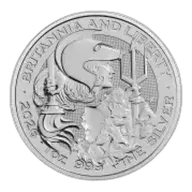
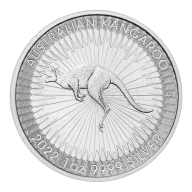

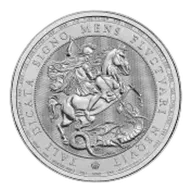
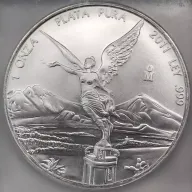




Prices are fetched automatically and may not reflect current merchant prices. Currency conversions and tax treatment are approximate. Rankings are based solely on price. We are not a dealer and accept no responsibility for transactions with listed merchants. Past performance is not indicative of future results. This site does not provide investment advice. Full disclaimer
About 1 oz Silver Coins
The Benchmark Weight for Silver Stackers
One troy ounce is 31.1035 grams, and it is the standard unit for bullion worldwide. Spot prices are quoted per troy ounce, so a 1oz coin maps directly onto the published price with no conversion. That alone makes 1oz silver coins the natural starting point for anyone comparing dealers: the premium you pay over spot is immediately visible.
The buyer profile is broad. Silver coins are the most popular entry point for new bullion investors because the unit price sits around USD 30-40 per ounce, against USD 3,000+ for an equivalent 1oz gold coin. That low ticket size suits regular monthly buying, gifting, and anyone who wants the option of selling a few ounces at a time rather than liquidating a large bar in one go.
The economic trade-off is real, though. A 1oz sovereign coin is the most expensive per-ounce silver format because blanking, striking, quality control and packaging cost roughly the same per coin whether the metal inside is worth USD 30 or USD 3,000. On a silver coin those fixed costs are a large percentage of the price. Buyers who only care about ounces accumulated will get more metal for the same money from silver rounds or silver bars. What the coin buys you in exchange is a sovereign mint guarantee, a legal tender face value, the tightest dealer recognition worldwide, and in the UK a capital gains tax exemption on legal tender coins such as the Silver Britannia.
Tax can dominate the decision in some countries. UK and EU buyers pay VAT on new silver (20% in the UK), which stacks on top of the coin premium, while buyers in the US (most states), Canada, Australia, New Zealand, Singapore and Hong Kong face no equivalent purchase tax on investment-grade silver coins. Canada, Australia, New Zealand and Singapore all condition their exemptions on 99.9% purity (99.9% in Canada), a bar that every major modern sovereign silver coin clears. For UK buyers the calculation is unusual: the Britannia costs more upfront because of VAT but pays no CGT on disposal, which favours large, long-term gains over short holds.
Premium Structure on 1oz Silver Coins
Government-minted 1oz silver coins carry premiums of roughly 15-25% over spot in 2026 market conditions. That is far higher than the 3-5% typical of 1oz gold coins, and the reason is mechanical rather than commercial: manufacturing costs are roughly similar per coin regardless of metal, so on a USD 30 coin they represent a much larger percentage than on a USD 2,500+ gold coin. During supply crunches, sovereign coin premiums have exceeded 50% over spot.
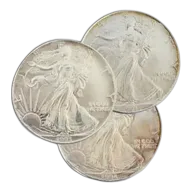
Within the sovereign coin group there is a consistent pecking order. The American Silver Eagle historically commands the highest premium of the standard 1oz coins, often 5-10% above other sovereign issues, driven by strong US collector demand and US Mint pricing to authorised purchasers. The Austrian Silver Philharmonic and Canadian Silver Maple Leaf typically sit among the lowest-premium government coins. Secondary market, random-year coins often trade at a meaningful discount to current-year issues, which makes them worth a look for buyers indifferent to date.
Moving down the product hierarchy at the same weight, premiums fall in steps. Privately minted 1oz silver rounds run roughly 5-10% over spot and 1oz silver bars roughly 3-8%, because neither carries a face value or sovereign strike. Moving up the weight scale cuts premiums further: 10oz silver bars price roughly USD 2 per ounce below 1oz bars. The 1oz coin is therefore the most premium-heavy way to buy silver, and buyers accept that cost for liquidity and recognition rather than metal efficiency.
Two further points affect the real cost. First, in VAT jurisdictions the effective premium including tax on a new 1oz silver coin can reach 35-45% above spot, which makes the entry price a significant drag on returns; UK and EU buyers should weigh margin scheme (pre-owned) coins where dealers offer them. Second, coins retain more of their premium at resale than bars or rounds. A coin bought at 20% over spot might sell back at 10-18% over spot, so the headline premium overstates the true round-trip cost relative to formats that resell nearer melt.
The Major 1oz Silver Coins Compared
Eight sovereign coins dominate the 1oz silver market. All are struck at 99.9% fineness or better, all carry legal tender status, and each has a distinguishing feature that drives its following.
| Coin | Mint | Purity | First issued | Notable |
|---|---|---|---|---|
| American Silver Eagle | US Mint | .999 | 1986 | Highest-volume silver bullion coin globally; Type II design since 2021 |
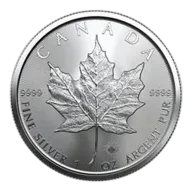
| Canadian Maple Leaf | Royal Canadian Mint | .9999 | 1988 | Highest purity standard; Bullion DNA security since 2015 |
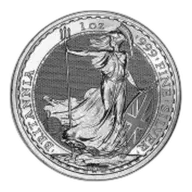
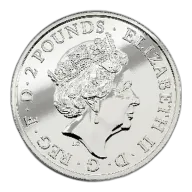
| Britannia | Royal Mint | .999 | 1997 | CGT-exempt in the UK; advanced security features |
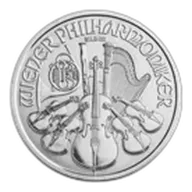
| Philharmonic | Austrian Mint | .999 | 2008 | Euro-denominated; among the lowest-premium government coins |
| Kookaburra | Perth Mint | .9999 (since 2017) | 1990 | Annual design changes |
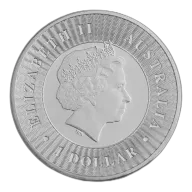
| Kangaroo | Perth Mint | .9999 | 2016 | Newer Perth Mint bullion series |
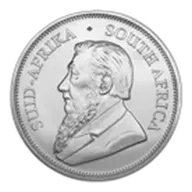
| Krugerrand | South African Mint | .999 | 2017 | Silver version of the 1967 gold original |
| Libertad | Casa de Moneda de Mexico | .999 | 1982 | Lower mintages make older years collectible |
Choice usually comes down to jurisdiction and resale market. In the UK, the 1oz Silver Britannia is the default because its CGT exemption applies to UK legal tender. In the US, the Eagle's domestic demand makes it the easiest coin to resell at a strong price, though buyers maximising ounces often prefer the cheaper Maple Leaf or Philharmonic. The Silver Maple Leaf offers the highest purity of any major sovereign coin at .9999 fine, with micro-engraved Bullion DNA anti-counterfeiting since 2015. The Philharmonic is the most popular bullion coin in continental Europe and the only major coin denominated in euros, with a EUR 1.50 face value. Perth Mint's Silver Kangaroo and Kookaburra add annual design variation, and the Mexican Libertad's lower mintages give older years collector appeal beyond melt value.
Tubes, Monster Boxes, and Selling Back
No bullion format is easier to sell than a major sovereign 1oz coin. Every dealer worldwide buys and sells 1oz products, and coins from the big mints are recognised by assay offices and buyback programmes without additional verification. Within that group, government coins command the tightest bid-ask spreads, and American Silver Eagles have the highest resale demand in the US market, often recovering a larger portion of their purchase premium on sale.
Packaging follows mint conventions. 1oz silver coins ship in tubes of 20 or 25 depending on the mint, and monster boxes hold 500 coins in 25 tubes of 20. A monster box measures roughly 38 x 22 x 11 cm and weighs about 15.5 kg, which matters for safe sizing; monster boxes also sell efficiently as a single unit, often at lower per-coin spreads than individual tubes. The coins themselves are large for their value: a 1oz silver coin runs about 38-39 mm in diameter, considerably bigger than a 1oz gold coin, and a tube of 20 stands roughly 80 mm tall. Silver is bulky per unit of value generally; USD 100,000 in silver weighs on the order of 90 kg, so large stacks need real vault space.
Spreads are wider than gold in percentage terms, reflecting the higher purchase premiums. A coin bought at 20% over spot might sell back at 10-18% over spot, and shipping costs for selling silver are proportionally higher because the metal is heavy relative to its value. During sharp price rises, dealer buying capacity can be strained, with some dealers temporarily trimming buyback prices or capping purchases.
Storage is straightforward if the coins stay sealed. Silver tarnishes on exposure to sulphur compounds in the air; the dark layer is cosmetic and does not affect melt value, and dealers buy tarnished bullion at the same price, but untarnished coins present better when selling above melt. Keep coins in capsules or original mint tubes, add anti-tarnish strips, avoid PVC holders and rubber bands, and store in a low-humidity environment. In the UK and EU, selling pre-owned coins through a dealer's margin scheme can partially offset the VAT paid on purchase, which is worth confirming with the buyer before sale.
1 oz Silver Coins: frequently asked questions
-
A 1 oz silver coin contains exactly one troy ounce of fine silver, so its melt value equals the silver spot price of $67.63. Retail prices will be higher than that, as dealers add a premium to cover production and distribution costs. Use the comparison table on this page to see what different dealers are charging.
-
Premiums on 1 oz silver coins vary by series, quantity, and dealer. This page tracks 1263 listings from 75 dealers, so you can compare them directly. Generic or lesser-known coins tend to carry lower premiums; branded coins from major sovereign mints typically sit higher. Buying in tubes or rolls can reduce the per-coin cost.
-
A 1 oz silver coin weighs 31.1035 grams. That is one troy ounce, the standard unit used to measure precious metals. Troy ounces are slightly heavier than avoirdupois ounces (28.35 g), so a 1 oz silver coin is heavier than what most people mean by an everyday ounce.
-
Cleaning bullion silver coins is generally a bad idea. Abrasives and chemicals scratch the surface and remove toning that buyers and dealers expect. Even gentle polishing leaves micro-marks visible under light. Store coins in protective capsules or sealed flips and handle them by the edges. A cleaned coin can be harder to sell and may attract a lower offer.
- 1 oz African Lion Silver Coin
- 1 oz African Ounce Silver Coin
- 1 oz Allegories Silver Coin
- 1 oz Alpha & Omega Silver Coin
- 1 oz American Buffalo Silver Coin
- 1 oz American Eagle Silver Coin
- 1 oz American Liberty Silver Coin
- 1 oz American Silver Eagle Silver Coin
- 1 oz Artefacts Silver Coin
- 1 oz Athenian Owl Silver Coin
- 1 oz Australian Brumby Silver Coin
- 1 oz Australian Nugget Silver Coin
- 1 oz Australian Shipwrecks Silver Coin
- 1 oz Barbados Trident Silver Coin
- 1 oz B.H. Mayer Norse Gods Silver Coin
- 1 oz Big 5 Silver Coin
- 1 oz Big Five Silver Coin
- 1 oz Bird of Paradise Silver Coin
- 1 oz Birds of Prey Silver Coin
- 1 oz Bison Silver Coin
- 1 oz Black Flag Silver Coin
- 1 oz Bounty Silver Coin
- 1 oz Britannia and Liberty Silver Coin
- 1 oz Britannia Silver Coin
- 1 oz Bull and Bear Silver Coin
- 1 oz Bull & Bear Silver Coin
- 1 oz Call of the Wild Silver Coin
- 1 oz Cameroon Cheetah Silver Coin
- 1 oz Cameroon Imperial Dragon Silver Coin
- 1 oz Canadian Moose Silver Coin
- 1 oz Cayman Marlin Silver Coin
- 1 oz Chad Deathstalker Silver Coin
- 1 oz Chinese Lunar Silver Coin
- 1 oz Chinese Myths and Legends Silver Coin
- 1 oz Chiwoo Cheonwang Silver Coin
- 1 oz Coat of Arms Silver Coin
- 1 oz Commander Silver Coin
- 1 oz Congo Silverback Gorilla Silver Coin
- 1 oz Coronation Silver Coin
- 1 oz Dragon Rectangular Silver Coin
- 1 oz Dragon Silver Coin
- 1 oz EC8 Silver Coin
- 1 oz Egyptian Cat Silver Coin
- 1 oz Emu Silver Coin
- 1 oz Eureka Silver Coin
- 1 oz Fiji Iguana Silver Coin
- 1 oz First Mint Lunar Silver Coin
- 1 oz Five Blessings Silver Coin
- 1 oz Funnel Web Spider Silver Coin
- 1 oz Ghana Leopard Silver Coin
- 1 oz Goddesses Silver Coin
- 1 oz Gods of Olympus Silver Coin
- 1 oz Golden Eagle Silver Coin
- 1 oz Great White Shark Silver Coin
- 1 oz Grizzly Bear Silver Coin
- 1 oz Guardian Lions Silver Coin
- 1 oz Hawksbill Turtle Silver Coin
- 1 oz Humpback Whale Silver Coin
- 1 oz Icons of Inspiration Silver Coin
- 1 oz Knights of The Past Silver Coin
- 1 oz Komodo Dragon Silver Coin
- 1 oz Kookaburra Silver Coin
- 1 oz Lady Justice Silver Coin
- 1 oz Landmarks of Britain Silver Coin
- 1 oz Legendary Creatures Silver Coin
- 1 oz Legendary Warriors Silver Coin
- 1 oz Libertad Silver Coin
- 1 oz Loggerhead Turtle Silver Coin
- 1 oz Lucky Dragon Silver Coin
- 1 oz Maltese Silver Coin
- 1 oz Mandrill Silver Coin
- 1 oz Maple Leaf Silver Coin
- 1 oz Masters of Art Silver Coin
- 1 oz Mermaid & Pearl Silver Coin
- 1 oz Mermaid Silver Coin
- 1 oz MMTC-PAMP Lakshmi Ganesh Silver Coin
- 1 oz Monarch Precious Metals Zodiac Silver Coin
- 1 oz Most Dangerous Silver Coin
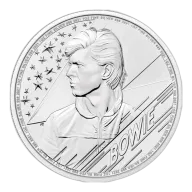
- 1 oz Music Legends Silver Coin
- 1 oz Mythical Forest Silver Coin
- 1 oz Myths and Legends Silver Coin
- 1 oz National Bank of Ukraine Archangel Michael Silver Coin
- 1 oz New Zealand Mint Lunar Silver Coin
- 1 oz Nikola Tesla Silver Coin
- 1 oz Noah's Ark Silver Coin
- 1 oz Pacific Mermaid Silver Coin
- 1 oz Pacific Sovereign Silver Coin
- 1 oz PAMP Suisse Lunar Silver Coin
- 1 oz Panda Silver Coin
- 1 oz Perth Mint Kangaroo Silver Coin
- 1 oz Perth Mint Koala Silver Coin
- 1 oz Perth Mint Lunar Silver Coin
- 1 oz Philharmonic Silver Coin
- 1 oz Pobjoy Mint Angel Silver Coin
- 1 oz Pobjoy Mint Noble Silver Coin
- 1 oz Predator Silver Coin
- 1 oz Prehistoric Beast Silver Coin
- 1 oz Queen's Virtues Silver Coin
- 1 oz Quokka Silver Coin
- 1 oz Ragnarök Silver Coin
- 1 oz Ram of Calvary Silver Coin
- 1 oz Rand Refinery Krugerrand Silver Coin
- 1 oz Robin Hood Silver Coin
- 1 oz Royal Arms of England Silver Coin
- 1 oz Royal Arms Silver Coin
- 1 oz Royal Australian Mint Kangaroo Silver Coin
- 1 oz Royal Australian Mint Lunar Silver Coin
- 1 oz Rwanda Lunar Silver Coin
- 1 oz Rwanda Nautical Silver Coin
- 1 oz Sailfish Silver Coin
- 1 oz Saltwater Crocodile Silver Coin
- 1 oz Samoa Seahorse Silver Coin
- 1 oz Silver Buffalo Silver Coin
- 1 oz Silver Coin
- 1 oz Silver Fern Silver Coin
- 1 oz Somalia Elephant Silver Coin
- 1 oz Somali Leopard Silver Coin
- 1 oz South African Mint Krugerrand Silver Coin
- 1 oz Southern Cross Silver Coin
- 1 oz St George and the Dragon Silver Coin
- 1 oz Stingray Silver Coin
- 1 oz Super Pit Silver Coin
- 1 oz Swan Silver Coin
- 1 oz Taku Silver Coin
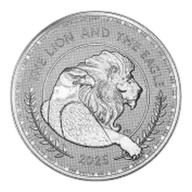
- 1 oz The Lion and The Eagle Silver Coin
- 1 oz The Royal Mint Lunar Silver Coin
- 1 oz The Valiant Silver Coin
- 1 oz Unicorn Silver Coin
- 1 oz Untamed Landscapes Silver Coin
- 1 oz US Mint Liberty Silver Coin
- 1 oz Wedge-Tailed Eagle Silver Coin
- 1 oz Wildlife Silver Coin
- 1 oz Witchcraft Silver Coin
- 1 oz Wonders of Australia Silver Coin
- 1 oz World's Wildlife Silver Coin
- 1 oz Zebra Seahorse Silver Coin
- 1 oz Zi:Sin Silver Coin
- Pre-Owned 1 oz 125th Anniversary Silver Coin
- Pre-Owned 1 oz American Eagle Silver Coin
- Pre-Owned 1 oz American Silver Eagle Silver Coin
- Pre-Owned 1 oz Athenian Owl Silver Coin
- Pre-Owned 1 oz Australia Zoo Silver Coin
- Pre-Owned 1 oz Austrian Mint Zodiac Silver Coin
- Pre-Owned 1 oz Bird of Paradise Silver Coin
- Pre-Owned 1 oz Bison Silver Coin
- Pre-Owned 1 oz Black Flag Silver Coin
- Pre-Owned 1 oz Bödvar Saga Silver Coin
- Pre-Owned 1 oz Britannia and Liberty Silver Coin
- Pre-Owned 1 oz Britannia Silver Coin
- Pre-Owned 1 oz British Lion Silver Coin
- Pre-Owned 1 oz Bull and Bear Silver Coin
- Pre-Owned 1 oz Canadian Moose Silver Coin
- Pre-Owned 1 oz China Mint Silver Coin
- Pre-Owned 1 oz Chronos Silver Coin
- Pre-Owned 1 oz Coat of Arms Silver Coin
- Pre-Owned 1 oz Congo Silverback Gorilla Silver Coin
- Pre-Owned 1 oz Coronation Silver Coin
- Pre-Owned 1 oz Dragon Rectangular Silver Coin
- Pre-Owned 1 oz East India Company Silver Coin
- Pre-Owned 1 oz East India Company Una and the Lion Silver Coin
- Pre-Owned 1 oz Equilibrium Silver Coin
- Pre-Owned 1 oz Five Blessings Silver Coin
- Pre-Owned 1 oz Funnel Web Spider Silver Coin
- Pre-Owned 1 oz Gold Kiwi Silver Coin
- Pre-Owned 1 oz Growling Cougar Silver Coin
- Pre-Owned 1 oz Hawksbill Turtle Silver Coin
- Pre-Owned 1 oz Icons of Inspiration Silver Coin
- Pre-Owned 1 oz Knights of Malta Silver Coin
- Pre-Owned 1 oz Knights of The Past Silver Coin
- Pre-Owned 1 oz Kookaburra Silver Coin
- Pre-Owned 1 oz Lady Justice Silver Coin
- Pre-Owned 1 oz Landmarks of Britain Silver Coin
- Pre-Owned 1 oz Legendary Creatures Silver Coin
- Pre-Owned 1 oz Libertad Silver Coin
- Pre-Owned 1 oz Mandala Silver Coin
- Pre-Owned 1 oz Maple Leaf Silver Coin
- Pre-Owned 1 oz Monarch Precious Metals Zodiac Silver Coin
- Pre-Owned 1 oz Myths and Legends Silver Coin
- Pre-Owned 1 oz National Bank of Ukraine Archangel Michael Silver Coin
- Pre-Owned 1 oz New Zealand Mint Silver Coin
- Pre-Owned 1 oz Noah's Ark Silver Coin
- Pre-Owned 1 oz Norns Silver Coin
- Pre-Owned 1 oz NSW Coat of Arms Silver Coin
- Pre-Owned 1 oz Numismatic Icons Silver Coin
- Pre-Owned 1 oz Panda Silver Coin
- Pre-Owned 1 oz Perth Mint Kangaroo Silver Coin
- Pre-Owned 1 oz Perth Mint Koala Silver Coin
- Pre-Owned 1 oz Perth Mint Lunar Silver Coin
- Pre-Owned 1 oz Philharmonic Silver Coin
- Pre-Owned 1 oz Pobjoy Mint Noble Silver Coin
- Pre-Owned 1 oz Pobjoy Mint Silver Coin
- Pre-Owned 1 oz Pressburg Mint Silver Coin
- Pre-Owned 1 oz Queen's Virtues Silver Coin
- Pre-Owned 1 oz Quokka Silver Coin
- Pre-Owned 1 oz Robin Hood Silver Coin
- Pre-Owned 1 oz Royal Arms Silver Coin
- Pre-Owned 1 oz Royal Australian Mint Kangaroo Silver Coin
- Pre-Owned 1 oz Royal Australian Mint Silver Coin
- Pre-Owned 1 oz Royal Canadian Mint Silver Coin
- Pre-Owned 1 oz Saltwater Crocodile Silver Coin
- Pre-Owned 1 oz Scottsdale Mint Silver Coin
- Pre-Owned 1 oz Silver Coin
- Pre-Owned 1 oz Singapore Lunar Silver Coin
- Pre-Owned 1 oz Snow Falcon Silver Coin
- Pre-Owned 1 oz Somalia Elephant Silver Coin
- Pre-Owned 1 oz Somali Leopard Silver Coin
- Pre-Owned 1 oz South African Mint Krugerrand Silver Coin
- Pre-Owned 1 oz South African Mint Silver Coin
- Pre-Owned 1 oz Sovereign Silver Coin
- Pre-Owned 1 oz St George and the Dragon Silver Coin
- Pre-Owned 1 oz Taku Silver Coin
- Pre-Owned 1 oz The Lion and The Eagle Silver Coin
- Pre-Owned 1 oz The Royal Mint Lunar Silver Coin
- Pre-Owned 1 oz The Royal Mint Silver Coin
- Pre-Owned 1 oz The Valiant Silver Coin
- Pre-Owned 1 oz Valkyries Silver Coin
- Pre-Owned 1 oz Vivat Humanitas Silver Coin
- Pre-Owned 1 oz Wedge-Tailed Eagle Silver Coin
- Pre-Owned 1 oz Wildlife Silver Coin
- Pre-Owned 1 oz Wonders of Australia Silver Coin
- 125th Anniversary
- African Lion
- African Wildlife Leopard
- Allegories
- Alpha & Omega
- American Buffalo
- American Eagle
- American Liberty
- American Silver Eagle
- Archangel Michael
- Artefacts
- Athenian Owl
- Australian Brumby
- Australian Nugget
- Australian Shipwrecks
- Australia's Coat of Arms
- Australia's Most Dangerous Series
- Australia Zoo Series
- Barbados Trident
- Big 5
- Big Five
- Bird of Paradise
- Birds of Prey
- Bison
- Black Flag
- Bödvar Saga
- Bounty
- Britannia
- Britannia and Liberty
- British Lion
- Bull and Bear
- Bull and Bear
- Call of the Wild
- Cameroon Cheetah
- Cameroon Imperial Dragon
- Canadian Moose
- Cayman Marlin
- Chad Deathstalker
- Chinese Lunar
- Chinese Myths and Legends
- Chiwoo Cheonwang
- Chronos
- Commander
- Congo Silverback Gorilla
- Coronation
- Dragon
- Dragon Rectangular
- EC8
- Egyptian Cat
- Emu
- Equilibrium
- Eureka
- Fiji Iguana
- Fiji Taku
- First Mint Lunar
- Five Blessings
- Funnel Web Spider
- Ghana Leopard
- Goddesses
- Gods of Olympus
- Golden Eagle
- Gold Kiwi
- Great White Shark
- Grizzly Bear
- Growling Cougar
- Guardian Lions
- Hawksbill Turtle
- Humpback Whale
- Icons of Inspiration
- Knights of Malta
- Knights of The Past
- Komodo Dragon
- Kookaburra
- Lady Justice
- Landmarks of Britain
- Legendary Creatures
- Legendary Warriors
- Libertad
- Liberty
- Loggerhead Turtle
- Lucky Dragon
- Maltese
- Mandala Wildlife
- Mandrill
- Maple Leaf
- Masters of Art
- Mermaid
- MMTC-PAMP Lakshmi Ganesh
- Music Legends
- Mythical Forest
- Myths and Legends
- New South Wales Coat of Arms
- Nikola Tesla
- Niue Lunar
- Noah's Ark
- Noble
- Norns
- Norse Gods
- Numismatic Icons
- Pacific Mermaid
- Pacific Sovereign
- PAMP Lunar
- Panda
- Perth Kangaroo
- Perth Koala
- Perth Lunar
- Philharmonic
- Pobjoy Angel
- Predator
- Prehistoric Beast
- Quokka
- Ragnarök
- RAM Kangaroo
- RAM Lunar
- Ram of Calvary
- Rand Refinery Krugerrand
- Robin Hood
- Royal Arms
- Royal Arms of England
- Royal Mint Lunar
- Rwandan African Ounce
- Rwandan Lunar Ounce
- Rwandan Nautical Ounce
- Sailfish
- Saltwater Crocodile
- SA Mint Krugerrand
- Samoa Mermaid & Pearl
- Samoa Seahorse
- Scottsdale Unicorn
- Silver Buffalo Round
- Silver Fern
- Singapore Lunar
- Snow Falcon
- Somalia Elephant
- Southern Cross
- Sovereign
- St George and the Dragon
- St Helena Queen's Virtues
- St Helena Una and the Lion
- Stingray
- Super Pit
- Swan
- The Lion and The Eagle
- The Valiant
- Untamed Landscapes
- Valkyries
- Vivat Humanitas
- Wedge-Tailed Eagle
- Wildlife
- Witchcraft
- Wonders of Australia
- World's Wildlife
- Zebra Seahorse
- Zi:Sin
- Zodiac
- Zodiac