28 products · 373 deals
Filters
| Product | /oz | Premium | Price | |
|---|---|---|---|---|

43 deals
|
$4,640.25 | +6.79% |
$464.02
£348
|
Compare |
| $4,707.88 | +8.35% |
$470.80
£353
|
View Deal | |

2 deals
|
$4,733.11 | +8.93% |
$473.32
£355
|
Compare |
| $4,822.82 | +9.41% | $482.29 | Compare | |

71 deals
|
$4,787.29 | +10.17% |
$478.74
£359
|
Compare |

27 deals
|
$4,802.50 | +10.52% |
$480.26
£360
|
Compare |
| $4,815.33 | +10.82% |
$481.52
£361
|
View Deal | |

4 deals
|
$4,892.72 | +10.99% | $489.28 | Compare |

4 deals
|
$4,928.22 | +11.80% | $492.83 | Compare |
| $4,969.32 | +12.73% | $496.94 | View Deal | |
| $4,916.14 | +13.14% |
$491.61
CA$689
|
Compare | |

19 deals
|
$4,922.62 | +13.29% |
$492.25
£369
|
Compare |

61 deals
|
$4,965.72 | +14.28% |
$496.56
£372
|
Compare |
| $5,045.02 | +14.45% | $504.51 | Compare | |

10 deals
|
$4,981.47 | +14.62% |
$498.15
€435
|
Compare |
| $5,059.32 | +14.77% | $505.94 | Compare | |
| $5,017.43 | +15.35% |
$501.75
A$705
|
View Deal | |
| $5,016.66 | +15.45% |
$501.67
£376
|
View Deal | |
| $5,091.02 | +15.49% | $509.11 | Compare | |

29 deals
|
$5,053.77 | +16.31% |
$505.38
£379
|
Compare |
| $5,053.93 | +16.31% |
$505.38
£379
|
View Deal | |

38 deals
|
$5,125.69 | +17.96% |
$512.58
£384
|
Compare |
| $5,294.42 | +20.11% | $529.45 | Compare | |

29 deals
|
$5,230.47 | +20.37% |
$523.04
£392
|
Compare |
| $5,670.92 | +30.51% |
$567.10
£425
|
Compare | |

2 deals
|
$5,929.22 | +36.45% |
$592.86
£444
|
Compare |
| $6,194.91 | +42.20% |
$619.50
S$792
|
View Deal | |

4 deals
|
$6,247.32 | +43.41% |
$624.74
S$799
|
Compare |
















Prices are fetched automatically and may not reflect current merchant prices. Currency conversions and tax treatment are approximate. Rankings are based solely on price. We are not a dealer and accept no responsibility for transactions with listed merchants. Past performance is not indicative of future results. This site does not provide investment advice. Full disclaimer
About 1/10 oz Gold Coins
The Smallest Mainstream Gold Coin
A 1/10 oz gold coin contains 3.1103 grams of gold and is the smallest commonly produced fractional size from the major sovereign mints. Every major mint makes one: the US Mint, the Royal Mint, the Royal Canadian Mint, the South African Mint, the Austrian Mint, and the Perth Mint all strike a tenth-ounce version of their flagship coin. The coins themselves are tiny, around 16.5mm in diameter for the Eagle and Britannia, smaller than a UK 5p coin, and a sealed US Mint tube of fifty weighs just 155 grams.
This weight class exists for accessibility, not efficiency. At roughly one-tenth the price of a full ounce, a 1/10 oz coin is the lowest-cost route into sovereign gold coin ownership, and it has become the gateway product for new gold buyers globally. In the US, the 1/10 oz American Gold Eagle is the most popular fractional gold coin in the world and is widely bought as a gift, including as a holiday stocking stuffer. In the UK, the 1/10 oz Gold Britannia is the lowest-cost entry into Capital Gains Tax-free gold, at approximately £300 to £350.
The trade-off is cost per ounce of metal. Manufacturing a tenth-ounce coin involves nearly the same die work, quality control, and packaging as a 1 oz coin, but those costs are spread over one-tenth the gold. The result is the highest premiums of any standard bullion coin weight. Accumulating one ounce of gold through ten 1/10 oz coins costs roughly $400 more than buying a single 1 oz gold coin outright; build a 10 oz position this way and the extra premium runs to $3,500 to $4,000.
The honest framing is that 1/10 oz coins serve specific purposes well: a low-cost entry into gold ownership, gifts, and maximum divisibility within a holding. For straightforward wealth accumulation, larger coins are more cost-effective per ounce. Buyers who value the ability to sell small slices of a position, or who want a recognisable sovereign coin at around the $500 price point, are the natural audience here. The small size also makes these coins highly portable and easy to conceal, which is part of their appeal for some buyers, though it cuts both ways: they are easy to lose, and capsules or mint tubes are essential.
The Highest Premiums of Any Standard Coin Weight
1/10 oz gold coins carry premiums of roughly 10-18% over spot for a coin like the American Gold Eagle, the highest of any standard bullion coin weight. At a $4,200 gold spot price, that band puts a 1/10 oz Gold Eagle at approximately $462 to $495, against around $420 of contained metal. The cause is structural rather than a dealer markup quirk: the die work, quality control, and packaging behind a tenth-ounce coin cost nearly as much as for a full ounce, but the fixed cost is recovered from one-tenth the gold.
The premium ladder across gold coin weights makes the position of this size clear. In normal market conditions, 1 oz sovereign coins run around 3-8% over spot, 1/2 oz around 5-8%, 1/4 oz around 7-10%, and 1/10 oz sits at the top of the fractional range. Tiny gold bars in the 1g to 5g range occupy similar or worse territory at 10-25%, while kilo bars sit at the opposite extreme at 0.5-2%. Each step down the weight scale buys divisibility at the cost of premium.
The cumulative effect matters more than the headline percentage. Ten 1/10 oz coins assemble the same ounce of gold as one 1 oz coin, but cost roughly $400 more. Scale that to a 10 oz holding built entirely from tenth-ounce coins and the additional premium reaches $3,500 to $4,000 versus buying 1 oz coins. That gap is real money that must be recovered through either price appreciation or a strong resale market before the smaller coins break even against their larger siblings.
Resale compounds the picture. This weight class shows the widest bid-ask spreads among fractional sizes, so sellers should expect to recover less of the premium they paid than they would on a 1 oz coin. For buyers tempted to go even smaller, the research on 1/20 oz coins from mints such as the Perth Mint and the Royal Canadian Mint points to premiums that are higher still, often 15-25% or more, with limited liquidity; they are not recommended as investments. Two mitigations help at the 1/10 oz level: secondary-market (random-year) coins generally trade 1-3% below current-year premiums, and sticking to the most widely traded coins keeps the eventual exit spread as narrow as this size allows.
Context from the wider market helps calibrate expectations: premiums across all gold products widen during high-demand periods, as in 2020 and the 2025 price surge, when even standard 1 oz coins spiked to 10% or more over spot. A fractional size that starts at 10-18% in calm conditions has further to stretch when the market runs hot, which is another argument for buying this weight when demand is quiet rather than chasing it during a rally.
Major 1/10 oz Gold Coins
Every flagship sovereign bullion coin series includes a 1/10 oz denomination, so the choice at this weight mirrors the choice at 1 oz: the same designs, purities, and legal-tender backing, scaled down to 3.1103 grams of gold.
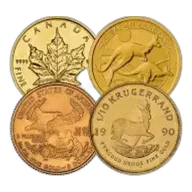
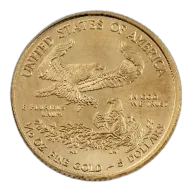
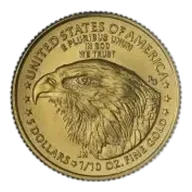
- American Gold Eagle 1/10 oz: $5 face value, 22 karat (.9167). Introduced in 1986 as part of the original Eagle programme, it is the most popular fractional gold coin in the world. Sold in sealed US Mint tubes of 50 coins, and IRA-eligible in the US despite its 22k purity, thanks to the Eagle's specific statutory exemption.
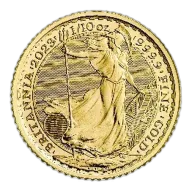
- Gold Britannia 1/10 oz: £10 face value, 24 karat. As UK legal tender it is exempt from Capital Gains Tax, making it the cheapest entry into CGT-free gold for UK buyers. The coins measure 16.5mm in diameter and come in Royal Mint tubes of 25.
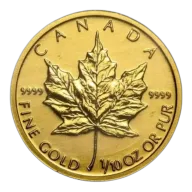
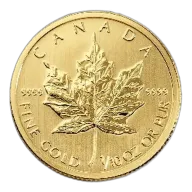
- Canadian Gold Maple Leaf 1/10 oz: 24 karat, from the Royal Canadian Mint, whose Maple Leaf was the first .9999 gold coin.
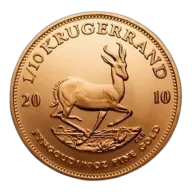
- South African Krugerrand 1/10 oz: 22 karat, from the series that created the modern bullion coin market in 1967.
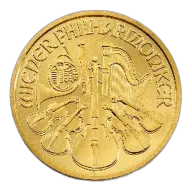
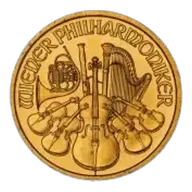
- Austrian Philharmonic 1/10 oz: 24 karat, euro-denominated, popular in continental Europe.
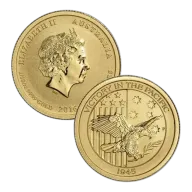
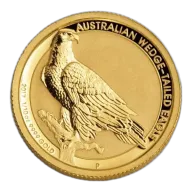
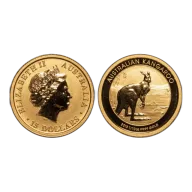
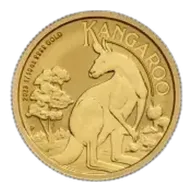
- Australian Kangaroo 1/10 oz: 24 karat, from the Perth Mint.
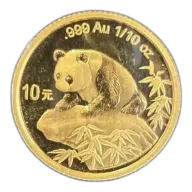
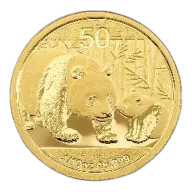
- Chinese Gold Panda 3g: the closest metric equivalent, since the Panda series moved from troy ounces to gram weights.
The 22k versus 24k split carries practical consequences at this weight. Both contain the stated fine gold; the alloy in the Eagle and Krugerrand simply adds durability and total coin weight. But purity drives tax in several countries: New Zealand applies 15% GST to 22k coins because they fall below the 99.5% purity threshold, and Singapore's GST exemption likewise requires 99.5% purity, so 24k coins such as the Britannia, Maple Leaf, Philharmonic, and Kangaroo are the tax-efficient picks in those markets.
1/10 oz gold bars do exist but are uncommon. At this size, coins are strongly preferred for their recognisability and government backing, so the bar option is rarely worth seeking out. Buyers wanting bars are better served further up the weight scale, where gold bars start to deliver their characteristic premium advantage over coins.
For UK buyers specifically, the Britannia stands alone at this weight: VAT-exempt to buy, as all investment gold is in the UK, and CGT-exempt to sell as British legal tender. No other coin on this list carries that double exemption in any market, which is why the tenth-ounce Britannia is the standard recommendation for small-budget UK gold buyers.
Selling and Storing Tenth-Ounce Gold
Liquidity at this weight is best described the way the trade describes it: variable. All major dealers will buy 1/10 oz sovereign gold coins, so finding a buyer is not the problem. The problem is price. This size shows the widest bid-ask spreads of any fractional weight, and the buyback price relative to spot is less favourable than for larger coins. A seller should expect to give back a meaningful share of the premium paid at purchase.
Two factors work in the seller's favour. First, the low price point broadens the buyer base: there is steady demand for sovereign gold at around the $500 mark, from gift buyers to first-time stackers, and that demand partially offsets the wide dealer spreads. Second, coin choice matters more here than at 1 oz. Liquidity is best for the 1/10 oz American Gold Eagle and the 1/10 oz Gold Britannia; less common coins at this weight trade less readily and should be priced accordingly on the way in.
Storage conventions follow the mints. The US Mint sells 1/10 oz Eagles in sealed tubes of 50 coins, and a full tube weighs only 155 grams, about five ounces in the hand. The Royal Mint packages 1/10 oz Britannias in tubes of 25. Loose coins need capsules. At roughly 16.5mm in diameter, smaller than a UK 5p coin, a tenth-ounce gold coin is genuinely easy to misplace, and because gold is soft, unprotected coins pick up contact marks. Capsules or original mint tubes are essential rather than optional at this size.
The compactness that makes these coins easy to lose is also their storage advantage. A substantial holding fits in a corner of a small safe, distributes easily across multiple locations, and travels discreetly. Combined with the divisibility benefit, the ability to sell a single coin worth a few hundred dollars rather than liquidating a full ounce, this is the practical case for holding at least some gold at this weight, even for buyers who do most of their accumulating in 1 oz gold coins.
Settlement mechanics are the same as for any sovereign gold coin: online dealers typically quote instant buyback prices, with payment following within one to five business days, and well-known sovereign coins are accepted on recognition without assay. The wide-spread problem at this weight is about the percentage, not the process.
1/10 oz Gold Coins: frequently asked questions
-
The metal value of a 1/10 oz gold coin is one-tenth of the current gold spot price ($4,408.10). Dealer prices include a per-coin premium above that, so actual selling prices are higher. The 389 listings from 63 dealers on this page show current market prices across suppliers.
-
Minting, die production, quality inspection, and distribution carry costs that are largely fixed per coin. On a 1/10 oz coin those fixed costs represent a larger share of the coin's total value than on a full 1oz coin, so the premium percentage is structurally higher. Buying full ounce coins is more cost-efficient for larger budgets.
-
A 1/10 troy ounce gold coin weighs 3.1104 g. A troy ounce (used for precious metals) is 31.1035 grams, so one-tenth is 3.1104 grams. This differs from a standard avoirdupois ounce, which is 28.35 grams.
-
Many of the major government mint programmes issue 1/10 oz coins, including the Britannia, Maple Leaf, American Eagle, Krugerrand, and Kangaroo. This page tracks 389 products at this weight, spanning multiple programmes and years. Fractional sizes like 1/10 oz are popular for gifting and for building a collection incrementally.
- 1/10 oz American Eagle Gold Coin
- 1/10 oz American Gold Eagle Gold Coin
- 1/10 oz American Liberty Gold Coin
- 1/10 oz American Prospector Gold Coin
- 1/10 oz Australian Nugget Gold Coin
- 1/10 oz Barbados Trident Gold Coin
- 1/10 oz Bounty Gold Coin
- 1/10 oz Britannia and Liberty Gold Coin
- 1/10 oz Britannia Gold Coin
- 1/10 oz Commander Gold Coin
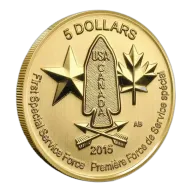
- 1/10 oz Devil's Brigade Gold Coin
- 1/10 oz Five Blessings Gold Coin
- 1/10 oz Gold Coin
- 1/10 oz Gold Lion Gold Coin
- 1/10 oz Growling Cougar Gold Coin
- 1/10 oz Kookaburra Gold Coin
- 1/10 oz Lady Justice Gold Coin
- 1/10 oz Libertad Gold Coin
- 1/10 oz Maltese Gold Coin
- 1/10 oz Maple Leaf Gold Coin
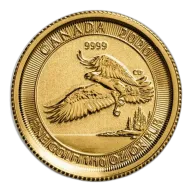
- 1/10 oz North American Bald Eagle Gold Coin
- 1/10 oz Panda Gold Coin
- 1/10 oz Perth Mint Kangaroo Gold Coin
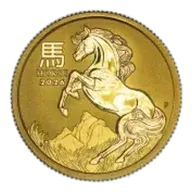
- 1/10 oz Perth Mint Lunar Gold Coin
- 1/10 oz Philharmonic Gold Coin
- 1/10 oz Polar Bear Gold Coin
- 1/10 oz Rand Refinery Krugerrand Gold Coin
- 1/10 oz Royal Arms Gold Coin
- 1/10 oz Royal Australian Mint Kangaroo Gold Coin
- 1/10 oz Royal Australian Mint Lunar Gold Coin
- 1/10 oz Royal Canadian Mint Lunar Gold Coin
- 1/10 oz Somalia Elephant Gold Coin
- 1/10 oz South African Mint Krugerrand Gold Coin
- 1/10 oz Sovereign Gold Coin
- 1/10 oz The Royal Mint Lunar Gold Coin
- 1/10 oz Tower Mint Angel Gold Coin
- 1/10 oz Victory in the Pacific Gold Coin
- 1/10 oz War in the Pacific Gold Coin
- 1/10 oz Wedge-Tailed Eagle Gold Coin
- Pre-Owned 1/10 oz American Gold Eagle Gold Coin
- Pre-Owned 1/10 oz Australian Nugget Gold Coin
- Pre-Owned 1/10 oz Britannia Gold Coin
- Pre-Owned 1/10 oz Coronation Gold Coin
- Pre-Owned 1/10 oz Gold Coin
- Pre-Owned 1/10 oz Maple Leaf Gold Coin
- Pre-Owned 1/10 oz Panda Gold Coin
- Pre-Owned 1/10 oz Perth Mint Kangaroo Gold Coin
- Pre-Owned 1/10 oz Philharmonic Gold Coin
- Pre-Owned 1/10 oz Rand Refinery Krugerrand Gold Coin
- Pre-Owned 1/10 oz Royal Arms Gold Coin
- Pre-Owned 1/10 oz The Lion and The Eagle Gold Coin
- American Eagle
- American Gold Eagle
- American Liberty
- American Prospector
- Australian Nugget
- Barbados Trident
- Bounty
- Britannia
- Britannia and Liberty
- Commander
- Coronation
- Devil's Brigade
- Five Blessings
- Growling Cougar
- Isle of Man Angel
- Kookaburra
- Lady Justice
- Libertad
- Maltese
- Maple Leaf
- North American Bald Eagle
- Panda
- Perth Kangaroo
- Perth Lunar
- Philharmonic
- Polar Bear
- RAM Kangaroo
- RAM Lunar
- Rand Refinery Krugerrand
- RCM Lunar
- Royal Arms
- Royal Mint Lunar
- SA Mint Krugerrand
- Singapore Gold Lion
- Somalia Elephant
- Sovereign
- The Lion and The Eagle
- Victory in the Pacific
- War in the Pacific
- Wedge-Tailed Eagle