23 products · 120 deals Prices & premiums exclude tax to compare across countries
Filters
| Product | /oz | Premium | Price (ex. tax) | |
|---|---|---|---|---|

2 deals
|
$68.82 | +1.76% | $2,212.50 | Compare |

40 deals
|
$68.42 |
+2.64%
+23% inc.VAT
|
$2,199.94
£1,978 inc.VAT
|
Compare |

3 deals
|
$69.02 |
+3.53%
+24% inc.VAT
|
$2,218.96
£1,995 inc.VAT
|
Compare |

9 deals
|
$69.11 | +3.66% |
$2,221.81
£1,665
|
Compare |

5 deals
|
$69.17 | +3.77% |
$2,223.98
£1,667
|
Compare |

11 deals
|
$69.21 | +3.82% |
$2,225.06
£1,667
|
Compare |

8 deals
|
$69.51 | +4.27% |
$2,234.84
£1,675
|
Compare |
| $69.80 | +4.43% |
$2,244.00
S$2,869
|
View Deal | |
| $71.14 | +5.19% | $2,287.07 | View Deal | |

3 deals
|
$70.36 |
+5.25%
+25% inc.VAT
|
$2,262.05
€2,343 inc.VAT
|
Compare |

3 deals
|
$70.37 | +5.28% |
$2,262.30
S$2,892
|
Compare |

9 deals
|
$70.63 |
+5.95%
+27% inc.VAT
|
$2,270.86
£2,042 inc.VAT
|
Compare |

6 deals
|
$70.83 | +5.97% |
$2,277.14
S$2,911
|
Compare |
| $70.42 | +6.76% |
$2,264.21
NZ$3,965
|
View Deal | |

2 deals
|
$71.22 |
+6.84%
+28% inc.VAT
|
$2,289.86
£2,059 inc.VAT
|
Compare |

2 deals
|
$73.82 |
+10.73%
+33% inc.VAT
|
$2,373.22
£2,134 inc.VAT
|
Compare |

2 deals
|
$74.09 | +11.03% |
$2,382.09
A$3,346
|
Compare |

2 deals
|
$74.30 | +11.45% |
$2,388.67
CA$3,347
|
Compare |

3 deals
|
$74.92 | +12.39% |
$2,408.75
£1,805
|
Compare |
| $76.24 | +12.73% | $2,451.05 | View Deal | |
| $76.64 | +13.33% | $2,464.05 | Compare | |
| $82.49 |
+23.74%
+48% inc.VAT
|
$2,652.16
£2,385 inc.VAT
|
View Deal | |
| $92.14 |
+38.22%
+66% inc.VAT
|
$2,962.46
£2,664 inc.VAT
|
Compare |





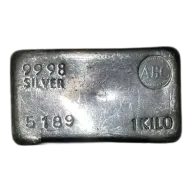

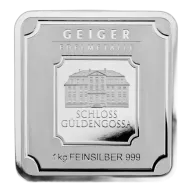

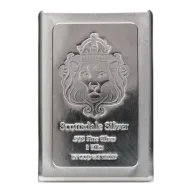
Prices are fetched automatically and may not reflect current merchant prices. Currency conversions and tax treatment are approximate. Rankings are based solely on price. We are not a dealer and accept no responsibility for transactions with listed merchants. Past performance is not indicative of future results. This site does not provide investment advice. Full disclaimer
About 1 Kilo Silver Bars
The Kilo Bar: Silver's International Standard
A 1 kilogram silver bar contains 1,000 grams of fine silver, equal to 32.1507 troy ounces. It is the standard metric bullion weight, recognised globally and produced by all major LBMA-accredited refiners. At current spot prices a silver kilo bar costs approximately $900 to $1,000, a meaningful but accessible outlay for a retail buyer, and roughly one-third of the silver in a 100 oz silver bar.
Kilo buyers are optimising for the lowest cost per gram, not flexibility. Premiums on kilo silver bars run 3 to 6 percent over spot, among the lowest available for retail bullion and matched only by the 100 oz format. The trade-off is divisibility. A kilo bar sells as a single unit, so an investor who may need to raise small amounts of cash gives up the option of selling a few ounces at a time. Buyers who want that option keep part of their holding in 10 oz silver bars or smaller units and use the kilo for bulk accumulation.
Geography shapes which buyers reach for this weight. The kilo bar is the international standard size for retail silver, popular in Europe, Asia, and Australia. In Asian markets (Singapore, Hong Kong, mainland China) the kilo dominates modern bullion trading. In Europe, where metric weights of 100g, 250g, 500g, and 1 kg are standard, the format is the natural choice. North America is the exception: the 100 oz bar is the traditional large-format silver bar there, and kilo bars, though widely available, hold a smaller share of the market. In the UK, kilo bars are less common than troy ounce denominations for retail buyers but remain popular with serious stackers.
Against the 100 oz bar, the choice is mostly about market convention rather than cost, since premiums on the two formats are similar. A kilo bar at 32.15 oz is the easier single purchase and the easier single sale, while the 100 oz bar concentrates more metal into one piece. Against everything smaller, the kilo's case is simple: more silver per dollar. Switching from 1 oz units to a kilo bar saves approximately 6 percent on the silver value, around $50 to $70 on a purchase of roughly $1,000. For a buyer accumulating weight rather than collecting, that arithmetic is the whole argument.
Kilo Silver Bar Premiums Against the Weight Scale
Kilo silver bars carry premiums of 3 to 6 percent over spot in normal market conditions. That places them at the cheap end of the entire retail silver market, alongside 100 oz bars. The full ladder for silver bars looks like this:
| Bar size | Typical premium over spot |
|---|---|
| 1 oz | 8-15% |
| 5 oz | 6-10% |
| 10 oz | 4-8% |
| 1 kg (32.15 oz) | 3-6% |
| 100 oz | 2-5% |
The shape of that table matters more than any single row. The single biggest premium drop happens between 1 oz and 10 oz, typically a 4 to 5 percentage point reduction. After 10 oz, each step up saves less: the marginal saving from a 10 oz bar to a kilo is often under 1 percent per ounce. That sounds trivial, but it accumulates over large purchases, which is exactly the context in which kilo bars are bought. Moving from 1 oz units straight to a kilo saves approximately 6 percent on the silver value, around $50 to $70 on a purchase of roughly $1,000.
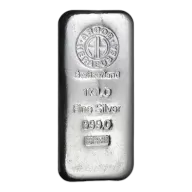
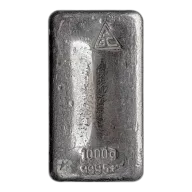
Manufacturing method moves the price too. Cast kilo bars, poured into moulds with a chunkier, more rustic finish, run 1 to 2 percent cheaper than minted bars of the same weight. Minted bars are cut, stamped, and polished, often serialised and sealed in assay cards, and the extra finishing shows up in the premium. A buyer purely maximising weight per dollar picks cast; a buyer thinking about presentation at resale may pay the minted surcharge.
Tax magnifies the kilo's advantage in some jurisdictions. In VAT countries such as the UK and the EU, the effective premium including tax can reach 25 to 40 percent on 1 oz bars, because the VAT applies on top of an already high percentage premium. The larger the bar, the more the premium savings offset that fixed tax hit. UK buyers face 20 percent VAT on all silver bars regardless of size, so compressing the premium is the only lever available on the purchase side.
Silver premiums are structurally higher than gold premiums because manufacturing, shipping, and handling costs are similar per unit in absolute terms, and silver's low per-ounce price makes those fixed costs a larger proportion of the total. The kilo bar is one of the few retail formats that dilutes them to low single digits.
Who Makes Kilo Silver Bars
Every major LBMA-accredited refiner produces kilo bars, and the format is recognised globally. The names most commonly seen at this weight are PAMP Suisse, Valcambi, Royal Canadian Mint, Umicore, Heraeus, Argor-Heraeus, Asahi, Perth Mint, Nadir, and Geiger Edelmetalle. European refiners, including PAMP, Valcambi, Heraeus, and Umicore, are the primary producers of kilo bars, which fits a format built around the metric system.
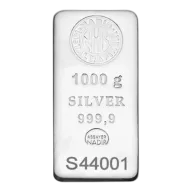
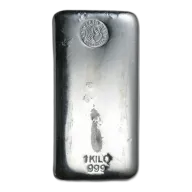
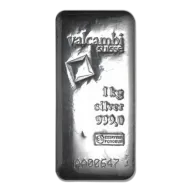
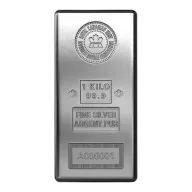
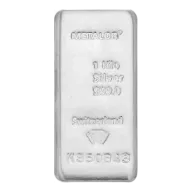
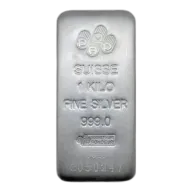
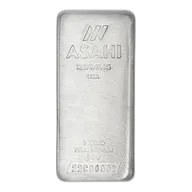
The practical split among these products is cast versus minted rather than brand versus brand. Cast kilo bars are poured into moulds, chunkier in appearance, and often cheaper. Minted kilo bars are cut, stamped, and polished, frequently serialised and sealed in assay cards. PAMP Suisse offers its Fortuna design on silver and seals bars in assay cards; Valcambi is likewise LBMA accredited. The Royal Canadian Mint stands out as a government mint producing bars at .9999 purity with serial numbers, a step above the .999 fine standard that most investment bars and the LBMA Good Delivery silver minimum use. The Perth Mint brings government backing. Asahi acquired Johnson Matthey's refining operations in 2015 and is widely distributed in North America. Heraeus is LBMA accredited and popular in Europe; Argor-Heraeus is another LBMA-accredited producer at this weight.
Brand matters at resale. Bars from LBMA-accredited refiners command better resale prices than generic bars, and a generic or unbranded kilo bar from a lesser-known refiner will sell at melt value only, with no brand premium recovered. Since the recognised brands cost little more at purchase, the accredited names are the sensible default at this weight.
Kilo silver exists in coin form as well. The Perth Mint strikes 1 kg versions of the Lunar, Koala, and Kookaburra, and the Royal Mint also produces kilo silver coins. These carry collector premiums above bar prices, so they serve a different buyer: the kilo coin is a collectible that happens to weigh a kilo, where the kilo bar is the cost-efficient way to hold the same metal. An investor comparing either against smaller bullion, such as the 1 oz silver coins that dominate the sovereign mint market, is back to the standard premium-versus-divisibility trade that defines this weight class.
Selling, Handling, and Storing a Kilo of Silver
Liquidity at this weight is excellent provided the bar carries the right name. Dealers maintain ready markets for LBMA-accredited bars from recognised refiners, and silver kilo bars from major refiners are widely accepted. Two caveats apply. First, a kilo bar represents a larger single transaction than a 10 oz silver bar, so each sale moves more value at once. Second, partial liquidation is impossible: each bar is an all-or-nothing sale. For investors who may need to raise small amounts of cash, that is a real disadvantage versus holding smaller units, and it is the price paid for the low premium at purchase.
Condition and packaging affect the exit price. Sealed bars in original packaging resell better than loose bars, which favours minted bars in assay cards for buyers who expect to sell on. Generic or unbranded bars typically sell at melt value only. Tarnish, by contrast, does not matter: silver tarnishes when exposed to sulphur compounds, but the effect is cosmetic and dealers buy by metal content, not appearance.
Physically, a silver kilo bar measures approximately 114mm x 57mm x 13mm, though dimensions vary by manufacturer, and weighs 1 kg (2.2 lbs). Silver's density of 10.49 g/cm3 is roughly half that of gold, so the bar is noticeably larger than the equivalent gold weight, but it remains an easy object to handle and stack in a home safe. Multiple kilo bars stack neatly and are more space-efficient per ounce than the same weight held as 1 oz bars or coins. That efficiency compounds: silver's low value-to-weight ratio is the defining storage challenge of the metal, and at current prices $50,000 of silver weighs around 45 kg, so any format that packs ounces tighter earns its place.
Storage conditions need one discipline: humidity control. Basement or garage storage requires relative humidity below 50 percent, maintained with desiccant packets, because silver tarnishes in humid conditions. Anti-tarnish strips help, and rubber bands or PVC holders should be avoided since they release sulphur. For larger holdings, vault storage is an option but is disproportionately expensive for silver compared to gold, because fees are based on insured value or weight and space, and silver needs far more room per dollar of value. Most kilo bar stackers store at home for exactly that reason.
1 Kilo Silver Bars: frequently asked questions
-
A 1 kilo silver bar contains 32.15 troy ounces of silver, so its melt value is 32.15 times the current $67.63 spot price. Dealer prices are higher because they include a premium for fabrication and margin. Use the table above to compare current retail prices across dealers.
-
A 1 kilo silver bar contains 32.15 troy ounces (1,000g divided by 31.1035g per troy ounce). Note that a troy ounce is heavier than a standard avoirdupois ounce (28.35g), so the figure is often misquoted. Investment-grade 1 kilo bars are weighed and priced in troy ounces.
-
Standard investment 1 kilo silver bars are struck or cast to 999 fine silver, meaning 99.9% pure. Some premium products reach .9999 fine (99.99%). These are distinct from 925 sterling silver, which is a jewellery alloy containing copper and is not used in bullion bars.
-
In the UK, silver bars attract VAT at 20%. In Australia, investment-grade silver bullion is GST-free at 0%. In Canada, GST applies to silver at 0%. In the US, sales tax rules vary by state, with several states exempting investment silver; there is no federal rate.
- 1 Kilo AARUS Silver Bar
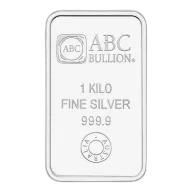
- 1 Kilo ABC Cast Bar Silver Bar
- 1 Kilo ABC Refinery Silver Bar
- 1 Kilo Ainslie Silver Bar
- 1 Kilo Argentia Silver Bar
- 1 Kilo Argor-Heraeus Silver Bar
- 1 Kilo Asahi Refining Silver Bar
- 1 Kilo Baird & Co. Silver Bar
- 1 Kilo Beaver Bullion Silver Bar
- 1 Kilo B.H. Mayer Silver Bar
- 1 Kilo Classic Silver Bar
- 1 Kilo Degussa Goldbars Silver Bar
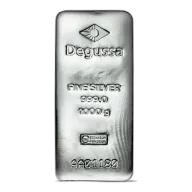
- 1 Kilo Degussa Silver Bar
- 1 Kilo Dillon Gage Silver Bar
- 1 Kilo Engelhard Bar Silver Bar
- 1 Kilo Eureka Silver Bar
- 1 Kilo First Mint Cast Bar Silver Bar
- 1 Kilo Fortuna Silver Bar
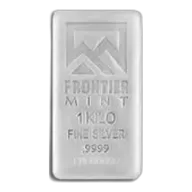
- 1 Kilo Frontier Mint Silver Bar
- 1 Kilo Geiger Original Silver Bar
- 1 Kilo Germania Mint Silver Bar
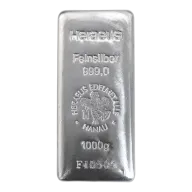
- 1 Kilo Heraeus Silver Bar
- 1 Kilo Imperium Silver Bar
- 1 Kilo Intrinsic Tender Silver Bar
- 1 Kilo Italpreziosi Bars Silver Bar
- 1 Kilo JBR Recovery Silver Bar
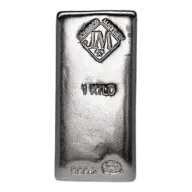
- 1 Kilo Johnson Matthey Silver Bar
- 1 Kilo Kinesis Silver Bar
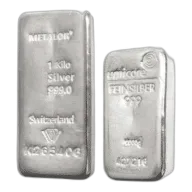
- 1 Kilo Metalor Silver Bar
- 1 Kilo Nadir Refinery Silver Bar
- 1 Kilo New Zealand Mint Silver Bar
- 1 Kilo PAMP Suisse Silver Bar
- 1 Kilo Perth Mint Silver Bar
- 1 Kilo Republic Metals Corporation Silver Bar
- 1 Kilo Royal Canadian Mint Silver Bar
- 1 Kilo Scotiabank Silver Bar
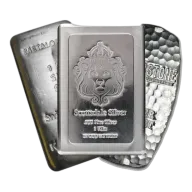
- 1 Kilo Scottsdale Mint Silver Bar
- 1 Kilo Scottsdale Stacker Silver Bar
- 1 Kilo SD Bullion Silver Bar
- 1 Kilo Silver Bar
- 1 Kilo SilverTowne Pony Silver Bar
- 1 Kilo Sunshine Minting Silver Bar
- 1 Kilo TD Silver Bar
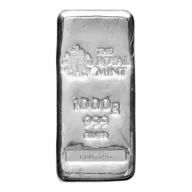
- 1 Kilo The Royal Mint Silver Bar
- 1 Kilo Tombstone Nugget Silver Bar
- 1 Kilo Tombstone Silver Bar
- 1 Kilo UBS Silver Bar
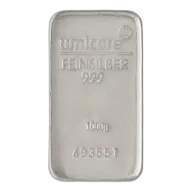
- 1 Kilo Umicore Silver Bar
- 1 Kilo Valcambi Silver Bar
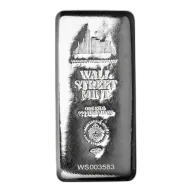
- 1 Kilo Wall Street Mint Silver Bar
- Pre-Owned 1 Kilo ABC Cast Bar Silver Bar
- Pre-Owned 1 Kilo Al Etihad Gold Silver Bar
- Pre-Owned 1 Kilo Baird & Co. Silver Bar
- Pre-Owned 1 Kilo Korea Mint Silver Bar
- Pre-Owned 1 Kilo Metalor Silver Bar
- Pre-Owned 1 Kilo PAMP Suisse Silver Bar
- Pre-Owned 1 Kilo Scottsdale Stacker Silver Bar
- Pre-Owned 1 Kilo Silver Bar
- Pre-Owned 1 Kilo Tombstone Silver Bar
- Pre-Owned 1 Kilo Umicore Silver Bar