1 listing Prices & premiums exclude tax to compare across countries
Filters
| Product | /oz | Premium | Price (ex. tax) | |
|---|---|---|---|---|

 Suisse Gold
Out of Stock
Suisse Gold
Out of Stock
|
$82.42 |
+23.81%
+34% inc.VAT
|
$2,654.15
€2,504 inc.VAT
|
View Deal |
Prices are fetched automatically and may not reflect current merchant prices. Currency conversions and tax treatment are approximate. Rankings are based solely on price. We are not a dealer and accept no responsibility for transactions with listed merchants. Past performance is not indicative of future results. This site does not provide investment advice. Full disclaimer
About the 1 Kilo B.H. Mayer Silver Bar
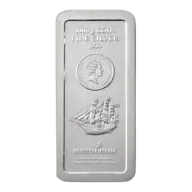
The 1 Kilo B.H. Mayer Silver Bar
A kilo silver bar is a cost-per-gram decision. At 1,000 grams, or 32.15 troy ounces, the format sits alongside the 100 oz bar at the bottom of the retail premium scale, typically 3 to 6% over spot against 8 to 15% for 1 oz bars. Switching from ounces to kilos saves roughly 6% on the silver value of a purchase, which is why the buyers here are stackers optimising for the lowest cost per gram rather than flexibility. This B.H. Mayer bar is struck to .9999 fine silver, a step above the .999 standard that most silver bars carry.
The kilo is the international standard size for retail silver. It dominates in Europe, where metric weights are the norm, and across Asian markets including Singapore and Hong Kong; North America traditionally leans toward the 100 oz bar instead. UK buyers will find kilos less common than troy-ounce denominations, though the format is popular with serious stackers there.
The trade-off for the low premium is divisibility. A kilo bar is an all-or-nothing sale; an investor who may need to raise smaller amounts of cash is better served holding the same weight in 10 oz bars, at a modestly higher premium. At roughly $900 to $1,000 per bar at current spot prices, each kilo is a meaningful but accessible single purchase, and the format is recognised by dealers globally.
1 Kilo Silver Bar Format
| Specification | Detail |
|---|---|
| Weight | 1 kg (1,000 g / 32.1507 troy oz) |
| Purity | .9999 fine silver |
| Manufacturer | B.H. Mayer |
| Face value | None (bar, not legal tender) |
Kilo silver bars typically measure around 114mm x 57mm x 13mm, with exact dimensions varying by manufacturer and by whether the bar is cast or minted. Cast bars are poured into moulds and have a chunkier, more rustic appearance at slightly lower premiums, usually 1 to 2% cheaper; minted bars are cut, stamped, and polished, often serialised and sealed.
Silver's density of 10.49 g/cm3 makes a kilo bar noticeably larger than the equivalent weight in gold, but the format still stacks neatly and is more space-efficient per ounce than the same weight held as 1 oz bars or coins. The bar weighs 2.2 lbs, so a stack of them needs a properly rated safe shelf. Storage conditions matter more than with gold: silver tarnishes when exposed to sulphur compounds, so bars should be kept in dry conditions, ideally below 50% relative humidity with desiccant packets, wrapped or in sealed packaging.
Tax Treatment of Kilo Silver Bars
Silver bars get the least favourable tax treatment of any mainstream bullion format in the VAT jurisdictions, and at .9999 fine this bar's treatment turns entirely on where the buyer lives.
- UK: 20% VAT on purchase, and no CGT exemption on sale since bars have no legal tender status. That double exposure makes new silver bars the least tax-efficient silver form for UK investors; the premium saving over coins has to outweigh the eventual CGT bill.
- EU: full local VAT on new silver, ranging from 17% to 27% by member state. Margin schemes in countries like Germany and the Netherlands apply to pre-owned items, not new bars from refiners.
- US: no federal sales tax; most states exempt bullion, others tax it or set dollar thresholds. A kilo bar at roughly $900 to $1,000 sits near the $1,000 thresholds in Louisiana, Massachusetts, and New York, and below California's $2,000 line. IRA-eligible silver must be 99.9%+ purity, which a .9999 bar meets on the purity test.
- Canada: GST/HST exempt, since the exemption covers silver refined to 99.9% or better in bar form.
- Australia and New Zealand: GST-free, with both countries setting the investment-grade silver threshold at 99.9% purity, which this bar clears.
- Singapore: GST-exempt as an Investment Precious Metal at 99.9%+ purity in bar form; no capital gains tax. Kilo bars are a natural fit for this market.
- Hong Kong: no sales tax, duty, or capital gains tax of any kind.
Kilo Bar vs 10 oz, 100 oz, and Kilo Coins
The kilo's nearest rivals are the two bracketing bar sizes. The 10 oz silver bar is widely considered the most popular silver bar size, carrying premiums of 4 to 8% against the kilo's 3 to 6%; the marginal saving from stepping up to the kilo is often under 1% per ounce, but it compounds across large purchases. What the 10 oz format keeps is divisibility: three-ish 10 oz bars can be sold one at a time, where the kilo cannot. The 100 oz bar runs 2 to 5% premiums, roughly three kilos' worth of metal in one 3.1 kg slab, and is the traditional North American large format, while the kilo is the standard everywhere metric weights rule.
Against kilo silver coins, the bar wins on price. One-kilogram coins exist from the Perth Mint (Lunar, Koala, Kookaburra) and the Royal Mint, but they carry collector premiums above bar prices, so they only make sense for buyers who value the design or legal tender status.
Brand matters at resale. Kilo bars come from all the major LBMA-accredited refiners, including PAMP Suisse, Valcambi, Heraeus, Umicore, and the Royal Canadian Mint, and accredited-refiner bars command better buyback prices than generic bars, which typically sell at melt value only. Sealed bars in original packaging resell better than loose ones, so whichever brand is cheapest on the day, keep the packaging intact.