200 products · 825 deals Prices & premiums exclude tax to compare across countries
Filters
| Product | /oz | Premium | Price (ex. tax) | |
|---|---|---|---|---|

6 deals
|
$64.21 |
-3.69%
+4% inc.VAT
|
$64,211.31
€60,569 inc.VAT
|
Compare |

8 deals
|
$68.02 | +0.58% | $6,802.00 | Compare |

3 deals
|
$68.30 | +0.99% | $10,979.19 | Compare |

2 deals
|
$68.37 | +1.10% | $6,837.33 | Compare |
| $68.64 | +1.49% | $686.39 | View Deal | |

8 deals
|
$68.75 | +1.65% | $687.47 | Compare |

2 deals
|
$68.82 | +1.77% | $6,882.40 | Compare |

2 deals
|
$69.15 | +2.26% | $2,223.33 | Compare |

4 deals
|
$68.28 |
+2.43%
+23% inc.VAT
|
$10,976.87
£9,871 inc.VAT
|
Compare |

41 deals
|
$68.38 |
+2.57%
+23% inc.VAT
|
$2,198.45
£1,977 inc.VAT
|
Compare |

18 deals
|
$68.49 |
+2.74%
+23% inc.VAT
|
$1,101.03
£990 inc.VAT
|
Compare |

3 deals
|
$69.50 | +2.77% | $6,950.08 | Compare |

2 deals
|
$69.50 | +2.77% | $6,950.08 | Compare |

2 deals
|
$69.84 | +3.27% | $698.38 | Compare |

3 deals
|
$68.97 | +3.45% |
$6,896.57
£5,168
|
Compare |

4 deals
|
$69.06 | +3.60% |
$6,906.23
£5,175
|
Compare |

18 deals
|
$69.07 | +3.61% |
$6,906.71
£5,176
|
Compare |

3 deals
|
$69.09 | +3.65% |
$6,909.43
£5,178
|
Compare |

9 deals
|
$69.20 | +3.81% |
$2,224.94
£1,667
|
Compare |

3 deals
|
$69.26 |
+3.89%
+25% inc.VAT
|
$2,226.54
£2,002 inc.VAT
|
Compare |
| $70.26 | +3.89% | $70.26 | View Deal | |

3 deals
|
$69.27 | +3.91% |
$6,927.01
£5,191
|
Compare |

5 deals
|
$69.27 | +3.91% |
$2,227.12
£1,669
|
Compare |

5 deals
|
$70.29 | +3.93% | $702.87 | Compare |
| $70.31 | +3.96% | $1,406.10 | View Deal | |

11 deals
|
$69.30 | +3.96% |
$2,228.21
£1,670
|
Compare |

2 deals
|
$69.34 | +4.01% |
$6,933.77
£5,196
|
Compare |

3 deals
|
$70.51 | +4.26% | $70.51 | Compare |

20 deals
|
$69.54 | +4.32% |
$6,954.07
£5,211
|
Compare |

4 deals
|
$69.54 | +4.32% |
$33,537.28
£25,133
|
Compare |

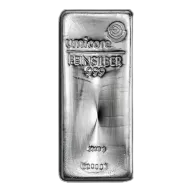
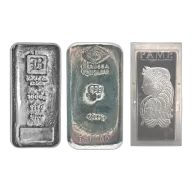
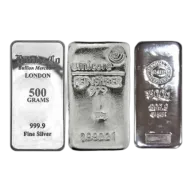
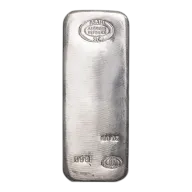

Prices are fetched automatically and may not reflect current merchant prices. Currency conversions and tax treatment are approximate. Rankings are based solely on price. We are not a dealer and accept no responsibility for transactions with listed merchants. Past performance is not indicative of future results. This site does not provide investment advice. Full disclaimer
About Silver Bars
Silver Bars: Maximising Ounces Per Dollar
Silver bars are the most cost-efficient way to accumulate silver weight. At every size from 1 oz to 100 oz, bars carry lower premiums than silver coins, and the savings are more significant than the equivalent bar-versus-coin gap in the gold market. For investors focused on maximising ounces per dollar spent, bars are the default choice.
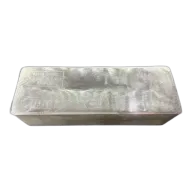
Bars come in two styles. Cast bars (also called poured bars) are made by pouring molten silver into moulds. They have a rougher, more rustic appearance and carry the lowest premiums, typically 1-2% below minted bars of the same weight. Minted bars are cut from rolled silver sheet, stamped, polished, and often sealed in branded packaging. The finish is cleaner and more uniform. Both contain the same silver at the same purity.
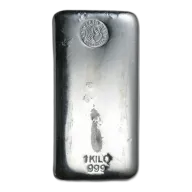
The most popular silver bar sizes span a wide range: 1 oz, 5 oz, 10 oz, 1 kg (32.15 oz), and 100 oz. The 10 oz bar is widely considered the sweet spot for retail investors. It captures the largest single premium drop (from 8-15% at 1 oz down to 4-8% at 10 oz), remains portable enough for easy handling and storage, and sells readily through any bullion dealer. Above 10 oz, each size step saves less in premium percentage while demanding more capital and introducing heavier handling logistics. A 100 oz bar weighs 3.1 kg (6.9 lbs) and represents a meaningful financial commitment at current prices.
Major bar producers include PAMP Suisse, Valcambi, Asahi (which acquired Johnson Matthey's refining operations in 2015), Heraeus, Sunshine Minting, SilverTowne, Perth Mint, and the Royal Canadian Mint. Bars from LBMA-accredited refiners command better resale prices and wider dealer acceptance than generic or unbranded products. Sealed bars in original packaging resell better than loose bars.
The primary trade-off with silver bars is tax treatment in the UK. Silver bars carry 20% VAT on purchase (same as all silver) and are subject to Capital Gains Tax on disposal. Silver Britannias (coins) share the VAT burden but are CGT-exempt as UK legal tender. For UK buyers, bars only make sense when the premium savings outweigh the CGT liability on expected gains, or when the holding is within the GBP 3,000 annual CGT allowance.
Silver Bar Tax Treatment by Country
Silver bars receive the same purchase tax treatment as silver coins in most jurisdictions, since the exemption is based on purity and metal type, not form. The critical difference from coins is the absence of legal tender status, which affects CGT treatment in the UK.
United Kingdom
Silver bars are subject to 20% VAT on purchase. On disposal, gains are subject to CGT at 18-24%, with the GBP 3,000 annual allowance. Bars are not CGT-exempt. Silver Britannias (coins) share the 20% VAT but are CGT-exempt as UK legal tender. This makes bars the least tax-efficient silver form for UK investors: 20% VAT on entry and CGT on exit. For UK buyers with gains likely to exceed the annual allowance, Britannias are more tax-efficient despite their higher premiums.
VAT-free vault storage is available from several UK dealers. Silver remains in LBMA-approved vaults outside free circulation, so VAT is not charged. Physical delivery later triggers the 20% VAT. This is the primary cost mitigation for UK silver bar investors.
United States
Most states exempt silver bars from sales tax. Capital gains at the 28% collectibles rate. IRA-eligible silver bars must be 99.9%+ purity from accredited refiners. Bars' lower premiums make them attractive for IRA accounts. No form-based tax distinction between bars and coins.
Canada
GST/HST exempt for silver bars at 99.9%+ purity. Canada is one of the few countries where silver and gold receive identical purchase tax treatment. No form-based distinction.
Australia
GST-free for investment-grade silver bars at 99.9%+ purity from accredited refiners. The purity threshold for silver (99.9%) is higher than for gold (99.5%) and platinum (99%). Standard silver bars from major refiners meet it. CGT applies with the 50% discount for holdings over 12 months.
New Zealand
GST-exempt at 99.9%+ purity. No capital gains tax. One of the most favourable jurisdictions for silver bars.
Singapore
GST-exempt for silver bars at 99.9%+ purity from LBMA-accredited refiners. Bars must weigh at least 0.5 troy ounce. No capital gains tax.
Hong Kong
No VAT, no import duty, no capital gains tax. Silver bars are the straightforward cost-efficient choice in Hong Kong's zero-tax environment.
South Africa
Silver bars are subject to 15% VAT. No exemption exists. When selling back through a VAT-registered dealer, the VAT is partially recoverable through a resale declaration.
European Union
Standard VAT applies at national rates (17-27%). No investment silver exemption. The margin scheme may reduce effective VAT on second-hand bars in some countries, but new bars from refiners typically attract full VAT. In Germany, gains on silver bars held longer than one year are tax-free, offering partial offset to the upfront VAT.
Silver Bar Premiums by Size and Type
Silver bars carry the lowest premiums of any silver form. The premium inversely scales with size, and the largest percentage drop occurs between the 1 oz and 10 oz threshold, making this the most impactful sizing decision for silver bar buyers.
| Size | Typical premium over spot | Notes |
|---|---|---|
| 1 oz (minted) | 8-15% | Highest per-ounce cost among bars; maximum divisibility |
| 5 oz | 6-10% | Moderate improvement; less common than 10 oz |
| 10 oz | 4-8% | Sweet spot: largest premium drop from 1 oz, practical size |
| 1 kg (32.15 oz) | 3-6% | International standard; popular in Europe, Asia, Australia |
| 100 oz | 2-5% | Most efficient retail size; heavy (3.1 kg / 6.9 lbs) |
Cast bars run 1-2 percentage points cheaper than minted bars at the same weight. The savings are most pronounced at 10 oz and above, where cast production is common. The trade-off is purely aesthetic: a rougher finish and less uniform shape.
The single biggest premium drop happens between 1 oz and 10 oz, typically a 4-5 percentage point reduction. After 10 oz, each step up saves less. The marginal improvement from 10 oz to 100 oz is typically 2-3 percentage points, meaningful in absolute terms on larger purchases but less dramatic per-unit. The 100 oz bar offers the lowest premium available to retail buyers, but its weight (3.1 kg) and the capital commitment (~$3,000+ at current prices) limit its audience.
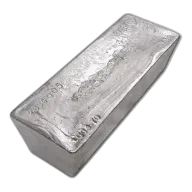
The 1,000 oz (approximately 31 kg / 68.6 lbs) LBMA Good Delivery bar is the institutional standard, deliverable on COMEX and LBMA. These carry the lowest premiums of all but are impractical for home storage, difficult to resell at retail, and relevant only for institutional or very large investors.
In UK and EU VAT jurisdictions, the effective cost above spot for delivered silver bars includes 20% VAT on top of the premium, pushing total costs to 22-35% above spot for 1 oz bars and 22-25% for 100 oz bars. Larger bars reduce the premium component but the fixed VAT percentage is unavoidable. VAT-free vault storage eliminates this cost but requires forgoing physical possession.
Premiums fluctuate with market conditions. During the 2020-2021 demand spike driven by COVID and the Reddit "silver squeeze," even 100 oz bar premiums pushed well above normal ranges. They compress during quieter markets when dealer inventories are ample.
Major Silver Bar Producers and Product Lines
The silver bar market is served by a mix of LBMA-accredited private refiners and government mints. Buying from a recognised producer is the most important decision for bar investors, as it directly affects resale liquidity and dealer acceptance.
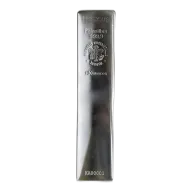
PAMP Suisse (Switzerland) produces silver bars with the Fortuna design, sealed in assay cards. LBMA-accredited and universally recognised. Available from 1 oz to 1 kg.
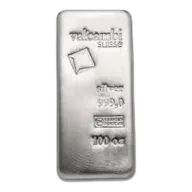
Valcambi (Switzerland) offers silver bars and CombiBars (scored, divisible bars that can be broken into smaller segments). LBMA-accredited with minimalist design. CombiBars add an element of divisibility that other bars lack, though breaking segments is less cost-efficient than buying the right size upfront.
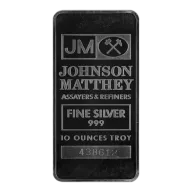
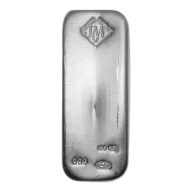
Asahi (Japan/US) acquired Johnson Matthey's refining operations in 2015 and is now a major presence in the North American silver bar market. Widely distributed through authorised dealers. Legacy Johnson Matthey bars also remain liquid and recognised, with some commanding a modest collector premium.
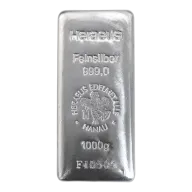
Heraeus (Germany) is a major European refiner, LBMA-accredited, producing silver bars popular across continental European dealer networks.
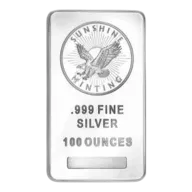
Sunshine Minting (US) is one of the largest US-based private refiners. Their silver bars feature the proprietary MintMark SI security feature, a micro-engraved logo verifiable with a decoder lens. Popular in North America.
SilverTowne (US) is a long-established private mint producing generic silver bars. Well-known in the US market with good dealer acceptance. Their bars are among the most competitively priced.
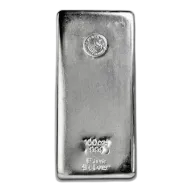
Perth Mint (Australia) produces government-backed silver bars with the kangaroo design. Popular in Australia, Asia-Pacific, and increasingly worldwide. The sovereign backing adds institutional credibility.
Royal Canadian Mint (Canada) produces serialised silver bars at 999.9 purity (higher than the standard 999). Government mint credibility and strong global distribution.
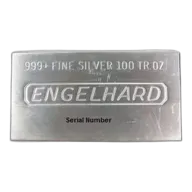
Legacy brands worth noting: Engelhard silver bars (no longer produced) command a modest collector premium above generic bars due to the brand's historical significance. Johnson Matthey bars (now produced as Asahi) are similarly sought after in the secondary market.
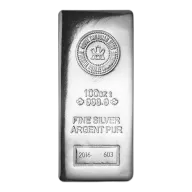
The 1 kg bar is the international standard for retail silver, popular across Europe, Asia, and Australia. The 100 oz bar is the North American equivalent. Both formats are liquid at major dealers, though the 100 oz bar's weight (3.1 kg) requires more careful handling and shipping considerations.
Authenticating Silver Bars
Silver counterfeiting is less profitable than gold counterfeiting (lower value per ounce), but counterfeit silver bars do exist, particularly in the 10 oz and 100 oz sizes where the value justifies the effort. The good news: silver's physical properties make counterfeits relatively easy to detect with simple tests.
The tungsten-core threat that dominates gold bar authentication discussions does not apply to silver. Tungsten's density (19.25 g/cm3) is nearly double silver's (10.49 g/cm3), so a tungsten-core silver bar would be obviously overweight or far too small. The common counterfeiting approach for silver uses copper, lead, or zinc cores plated with silver. These substitutes have different densities, magnetic properties, and acoustic characteristics from silver, making detection straightforward.
Testing Methods
Weight and dimensions: A precision scale and calipers can detect most counterfeits. Each major refiner publishes exact specifications for their bars. A bar that weighs correctly but has incorrect dimensions (or vice versa) is suspect.
Magnet slide test: Silver is strongly diamagnetic. A neodymium magnet slid down the surface of a silver bar descends slowly, visibly braked by the induced eddy currents. Base metals (copper, zinc, lead) do not produce this effect. This is a quick, non-destructive field test that detects many fakes.
Specific gravity (water displacement): Measures density directly. Silver's density of 10.49 g/cm3 is distinctive; common counterfeiting materials (copper 8.96, zinc 7.13, lead 11.34) give different readings. Accurate and definitive, though impractical for sealed products.
Sigma Metalytics Precious Metal Verifier: Electromagnetic conductivity testing. Effective for bars and widely used by dealers. Non-destructive.
XRF testing: Confirms surface composition. Less necessary for silver than gold (no viable same-density substitution exists for silver), but useful for confirming purity.
Provenance
LBMA-accredited refiner bars with serial numbers and assay certificates provide the strongest chain-of-custody assurance. Sunshine Minting's MintMark SI decoder technology adds a verification layer for their branded bars. Sealed bars in original packaging are preferred at resale. Generic or unbranded bars from unknown sources should be tested before purchase, particularly in private sales or secondary market transactions.
Silver Bars: frequently asked questions
-
The live silver spot price is $67.63 per troy ounce. This is the benchmark price for raw silver, before fabrication costs or dealer margins are added. Silver bar prices are quoted as a premium over this figure, so tracking spot helps you assess how competitive any listing is.
-
Silver bars typically carry a lower per-ounce premium over spot than coins of equivalent silver weight. Larger bars tend to have the tightest premiums because fabrication costs are spread over more metal. Coins include a higher fabrication and design cost, which lifts their premium. Rounds usually sit somewhere between the two.
-
Investment-grade silver bars are at minimum .999 fine (99.9% pure silver). Many bars from recognised mints are .9999 fine. This is distinct from sterling silver (92.5% purity), which is an alloy used in jewellery and flatware, not in bullion investment products.
-
Brand affects liquidity and ease of verification. Bars from well-known mints and refineries are more readily accepted by dealers worldwide and simpler for buyers to authenticate. Generic or lesser-known brand bars often carry lower premiums but can be harder to sell quickly at a fair price, particularly in smaller markets.
-
Silver bars offer lower premiums at larger weights, making them an efficient way to accumulate metal. The key trade-offs are: VAT applies to silver bars in the UK and much of the EU (unlike in some other markets); large bars are less divisible than coins if you want to sell in portions; and silver's lower value density than gold means more storage space per pound of value.
- 1000 oz Heraeus Silver Bar
- 1000 oz Johnson Matthey Silver Bar
- 1000 oz PAMP Suisse Silver Bar
- 1000 oz Silver Bar
- 100g Argor-Heraeus Silver Bar
- 100g Baird & Co. Silver Bar
- 100g CombiBar Silver Bar
- 100g Geiger Original Silver Bar
- 100g Germania Mint Silver Bar
- 100g Germania Silver Bar
- 100g Heimerle + Meule Silver Bar
- 100g Heraeus Silver Bar
- 100g Intrinsic Tender Silver Bar
- 100g Metalor Silver Bar
- 100g Nadir Refinery Silver Bar
- 100g PAMP Suisse Lunar Silver Bar
- 100g Pressburg Mint Silver Bar
- 100g Rosa Silver Bar
- 100g Scottsdale Mint Lunar Silver Bar
- 100g Scottsdale Stacker Silver Bar
- 100g Silver Bar
- 100g Themis Silver Bar
- 100g The Royal Mint Silver Bar
- 100g UBS Silver Bar
- 100g Umicore Silver Bar
- 100g Valcambi Silver Bar
- 100 oz AARUS Silver Bar
- 100 oz ABC Cast Bar Silver Bar
- 100 oz Ainslie Silver Bar
- 100 oz Argentia Silver Bar
- 100 oz Asahi Refining Silver Bar
- 100 oz Baird & Co. Silver Bar
- 100 oz Britannia Silver Bar
- 100 oz Canadian PMX Silver Bar
- 100 oz Credit Suisse Silver Bar
- 100 oz Dillon Gage Silver Bar
- 100 oz Engelhard Bar Silver Bar
- 100 oz Engelhard Silver Bar
- 100 oz Frontier Mint Silver Bar
- 100 oz Geiger Original Silver Bar
- 100 oz Germania Mint Silver Bar
- 100 oz Heraeus Silver Bar
- 100 oz JBR Recovery Silver Bar
- 100 oz Johnson Matthey Silver Bar
- 100 oz Kinesis Silver Bar
- 100 oz MintID Silver Bar
- 100 oz Nadir Refinery Silver Bar
- 100 oz PAMP Suisse Silver Bar
- 100 oz Perth Mint Silver Bar
- 100 oz Republic Metals Corporation Silver Bar
- 100 oz Royal Canadian Mint Silver Bar
- 100 oz Scotiabank Silver Bar
- 100 oz Scottsdale Mint Silver Bar
- 100 oz Scottsdale Stacker Silver Bar
- 100 oz Silver Bar
- 100 oz Sunshine Minting Silver Bar
- 100 oz The Royal Mint Una and the Lion Silver Bar
- 100 oz Valcambi Silver Bar
- 10g Am Yisrael Chai! Silver Bar
- 10g Argor-Heraeus Silver Bar
- 10g Buddha Silver Bar
- 10g Fortuna Silver Bar
- 10g Geiger Original Silver Bar
- 10g Ka `Bah. Mecca Silver Bar
- 10g Kundan Refinery Lakshmi Ganesh Silver Bar
- 10g Nadir Refinery Silver Bar
- 10g PAMP Suisse Lunar Silver Bar
- 10g PAMP Suisse Silver Bar
- 10g Rosa Silver Bar
- 10g Silver Bar
- 10g Valcambi Silver Bar
- 10 oz AARUS Silver Bar
- 10 oz ABC Cast Bar Silver Bar
- 10 oz ABC Refinery Silver Bar
- 10 oz Academy Silver Bar
- 10 oz Ainslie Silver Bar
- 10 oz American Buffalo Silver Bar
- 10 oz American Flag Silver Bar
- 10 oz APMEX Silver Bar
- 10 oz Argentia Silver Bar
- 10 oz Asahi Refining Silver Bar
- 10 oz Aztec Calendar Silver Bar
- 10 oz Beaver Bullion Silver Bar
- 10 oz Britannia and Liberty Silver Bar
- 10 oz Britannia Silver Bar
- 10 oz Building Blocks Silver Bar
- 10 oz Bull and Bear Silver Bar
- 10 oz Bull & Bear Silver Bar
- 10 oz Canadian PMX Silver Bar
- 10 oz Credit Suisse Silver Bar
- 10 oz Dillon Gage Silver Bar
- 10 oz Dragon Silver Bar
- 10 oz East India Company Silver Bar
- 10 oz Elemetal Mint Silver Bar
- 10 oz Engelhard Bar Silver Bar
- 10 oz Engelhard Silver Bar
- 10 oz Eureka Silver Bar
- 10 oz Fiji Samurai Silver Bar
- 10 oz First Mint Cast Bar Silver Bar
- 10 oz Fortuna Silver Bar
- 10 oz Frontier Mint Silver Bar
- 10 oz Geiger Original Silver Bar
- 10 oz Germania Mint Silver Bar
- 10 oz Goddess Mara Silver Bar
- 10 oz Gold Bullion Australia Silver Bar
- 10 oz Golden Analytical Silver Bar
- 10 oz Golden State Mint Silver Bar
- 10 oz Heraeus Silver Bar
- 10 oz Highland Mint Silver Bar
- 10 oz Imperium Silver Bar
- 10 oz Intrinsic Tender Silver Bar
- 10 oz Istanbul Gold Refinery Silver Bar
- 10 oz JBR Recovery Silver Bar
- 10 oz Johnson Matthey Silver Bar
- 10 oz Lost Cities Silver Bar
- 10 oz Mini Chunk Silver Bar
- 10 oz MintID Silver Bar
- 10 oz Monarch Precious Metals Silver Bar
- 10 oz Nadir Refinery Silver Bar
- 10 oz New Zealand Mint Silver Bar
- 10 oz NTR Metals Silver Bar
- 10 oz PAMP Suisse Liberty Silver Bar
- 10 oz PAMP Suisse Lunar Silver Bar
- 10 oz PAMP Suisse Silver Bar
- 10 oz Perth Mint Lunar Silver Bar
- 10 oz Perth Mint Silver Bar
- 10 oz Queen's Beasts Silver Bar
- 10 oz Queen's Virtues Silver Bar
- 10 oz Regency Mint Silver Bar
- 10 oz Royal Arms Silver Bar
- 10 oz Royal Canadian Mint Silver Bar
- 10 oz Scotiabank Silver Bar
- 10 oz Scottsdale Mint Archangel Michael Silver Bar
- 10 oz Scottsdale Mint Silver Bar
- 10 oz Scottsdale Stacker Silver Bar
- 10 oz Silver Bar
- 10 oz Silver Buffalo Silver Bar
- 10 oz SilverTowne Buffalo Silver Bar
- 10 oz SilverTowne Silver Bar
- 10 oz Sunshine Minting Silver Bar
- 10 oz TD Silver Bar
- 10 oz Themis Silver Bar
- 10 oz The Royal Mint Silver Bar
- 10 oz The Royal Mint Una and the Lion Silver Bar
- 10 oz The Vortex Silver Bar
- 10 oz The Wild Silver Bar
- 10 oz Tombstone Nugget Silver Bar
- 10 oz Tombstone Silver Bar
- 10 oz USA Eagle Silver Bar
- 10 oz Valcambi Silver Bar
- 10 oz Walking Liberty Silver Bar
- 10 oz Wall Street Mint Silver Bar
- 1/10 oz Silver Bar
- 1/2 oz Building Blocks Silver Bar
- 1/2 oz Intrinsic Tender Silver Bar
- 1/2 oz Johnson Matthey Silver Bar
- 1/2 oz PAMP Suisse Lunar Silver Bar
- 1/2 oz PAMP Suisse Silver Bar
- 1/2 oz Rosa Silver Bar
- 1/2 oz Silver Bar
- 1/2 oz Sunshine Minting Silver Bar
- 1/4 oz Building Blocks Silver Bar
- 1/4 oz Silver Bar
- 15 Kilo Silver Bar
- 1.5 oz Silver Bar
- 1g Prepper Silver Bar
- 1 Kilo AARUS Silver Bar
- 1 Kilo ABC Cast Bar Silver Bar
- 1 Kilo ABC Refinery Silver Bar
- 1 Kilo Ainslie Silver Bar
- 1 Kilo Argentia Silver Bar
- 1 Kilo Argor-Heraeus Silver Bar
- 1 Kilo Asahi Refining Silver Bar
- 1 Kilo Baird & Co. Silver Bar
- 1 Kilo Beaver Bullion Silver Bar
- 1 Kilo B.H. Mayer Silver Bar
- 1 Kilo Classic Silver Bar
- 1 Kilo Degussa Goldbars Silver Bar
- 1 Kilo Degussa Silver Bar
- 1 Kilo Dillon Gage Silver Bar
- 1 Kilo Engelhard Bar Silver Bar
- 1 Kilo Eureka Silver Bar
- 1 Kilo First Mint Cast Bar Silver Bar
- 1 Kilo Fortuna Silver Bar
- 1 Kilo Frontier Mint Silver Bar
- 1 Kilo Geiger Original Silver Bar
- 1 Kilo Germania Mint Silver Bar
- 1 Kilo Heraeus Silver Bar
- 1 Kilo Imperium Silver Bar
- 1 Kilo Intrinsic Tender Silver Bar
- 1 Kilo Italpreziosi Bars Silver Bar
- 1 Kilo JBR Recovery Silver Bar
- 1 Kilo Johnson Matthey Silver Bar
- 1 Kilo Kinesis Silver Bar
- 1 Kilo Metalor Silver Bar
- 1 Kilo Nadir Refinery Silver Bar
- 1 Kilo New Zealand Mint Silver Bar
- 1 Kilo PAMP Suisse Silver Bar
- 1 Kilo Perth Mint Silver Bar
- 1 Kilo Republic Metals Corporation Silver Bar
- 1 Kilo Royal Canadian Mint Silver Bar
- 1 Kilo Scotiabank Silver Bar
- 1 Kilo Scottsdale Mint Silver Bar
- 1 Kilo Scottsdale Stacker Silver Bar
- 1 Kilo SD Bullion Silver Bar
- 1 Kilo Silver Bar
- 1 Kilo SilverTowne Pony Silver Bar
- 1 Kilo Sunshine Minting Silver Bar
- 1 Kilo TD Silver Bar
- 1 Kilo The Royal Mint Silver Bar
- 1 Kilo Tombstone Nugget Silver Bar
- 1 Kilo Tombstone Silver Bar
- 1 Kilo UBS Silver Bar
- 1 Kilo Umicore Silver Bar
- 1 Kilo Valcambi Silver Bar
- 1 Kilo Wall Street Mint Silver Bar
- 1 oz AARUS Silver Bar
- 1 oz African Lion Silver Bar
- 1 oz Ainslie Silver Bar
- 1 oz American Buffalo Silver Bar
- 1 oz Am Yisrael Chai! Silver Bar
- 1 oz APMEX Silver Bar
- 1 oz Argor-Heraeus Silver Bar
- 1 oz Asahi Refining Lunar Silver Bar
- 1 oz Aztec Calendar Silver Bar
- 1 oz Beaver Bullion Silver Bar
- 1 oz B.H. Mayer Norse Gods Silver Bar
- 1 oz Bison Bullion Silver Bar
- 1 oz Britannia and Liberty Silver Bar
- 1 oz Buddha Silver Bar
- 1 oz Building Blocks Silver Bar
- 1 oz Bull and Bear Silver Bar
- 1 oz Canadian PMX Silver Bar
- 1 oz Chinese Lunar Silver Bar
- 1 oz Christmas Coins Silver Bar
- 1 oz Columbia Goddess Silver Bar
- 1 oz Credit Suisse Silver Bar
- 1 oz Cross of Christianity Silver Bar
- 1 oz Dragon Rectangular Silver Bar
- 1 oz East India Company Una and the Lion Silver Bar
- 1 oz Egyptian Relic Silver Bar
- 1 oz Emirates Gold Silver Bar
- 1 oz Engelhard Bar Silver Bar
- 1 oz Engelhard Silver Bar
- 1 oz Fiji Samurai Silver Bar
- 1 oz First Mint Silver Bar
- 1 oz Fortuna Silver Bar
- 1 oz Geiger Original Silver Bar
- 1 oz Germania Mint Silver Bar
- 1 oz Heraeus Silver Bar
- 1 oz Highland Mint Silver Bar
- 1 oz Holiday Silver Bar
- 1 oz HW Minting Company Silver Bar
- 1 oz International Trade Bullion Silver Bar
- 1 oz Jerusalem Silver Bar
- 1 oz Johnson Matthey Silver Bar
- 1 oz Ka `Bah. Mecca Silver Bar
- 1 oz Lion of Judah Silver Bar
- 1 oz Love Silver Bar
- 1 oz Lucky Dragon Silver Bar
- 1 oz Marquee Peacock Silver Bar
- 1 oz Metalor Silver Bar
- 1 oz Minted Bars Silver Bar
- 1 oz MMTC-PAMP Lakshmi Ganesh Silver Bar
- 1 oz Monarch Precious Metals Silver Bar
- 1 oz Nadir Refinery Silver Bar
- 1 oz PAMP Suisse Diwali Silver Bar
- 1 oz PAMP Suisse Lunar Silver Bar
- 1 oz PAMP Suisse Silver Bar
- 1 oz Perth Mint Kangaroo Silver Bar
- 1 oz Perth Mint Lunar Silver Bar
- 1 oz Perth Mint Silver Bar
- 1 oz Queen's Beasts Silver Bar
- 1 oz Rand Refinery Silver Bar
- 1 oz Republic Metals Corporation Silver Bar
- 1 oz Rosa Silver Bar
- 1 oz Scotiabank Silver Bar
- 1 oz Scottsdale Mint Archangel Michael Silver Bar
- 1 oz Scottsdale Mint Silver Bar
- 1 oz Scottsdale Stacker Silver Bar
- 1 oz SD Bullion Silver Bar
- 1 oz Silver Bar
- 1 oz Silver Buffalo Silver Bar
- 1 oz Silver Card Silver Bar
- 1 oz SilverTowne Buffalo Silver Bar
- 1 oz SilverTowne Silver Bar
- 1 oz Skyline Silver Bar
- 1 oz Stacking Across America Silver Bar
- 1 oz Sunshine Minting Silver Bar
- 1 oz TD Silver Bar
- 1 oz Themis Silver Bar
- 1 oz The Royal Mint Una and the Lion Silver Bar
- 1 oz The Vortex Silver Bar
- 1 oz True Happiness Silver Bar
- 1 oz USA Eagle Silver Bar
- 1 oz US Mint Silver Bar
- 1 oz Valcambi Silver Bar
- 1 oz Vintage YPS Silver Bar
- 1 oz Walking Liberty Silver Bar
- 20g Argor-Heraeus Silver Bar
- 20g Credit Suisse Silver Bar
- 20g Fortuna Silver Bar
- 20g Geiger Original Silver Bar
- 20g Kundan Refinery Lakshmi Ganesh Silver Bar
- 20g MMTC-PAMP Lakshmi Ganesh Silver Bar
- 20g Nadir Refinery Silver Bar
- 20g Rosa Silver Bar
- 20g Silver Bar
- 20 oz AARUS Silver Bar
- 20 oz Perth Mint Silver Bar
- 20 oz Scottsdale Mint Silver Bar
- 20 oz Scottsdale Stacker Silver Bar
- 20 oz Silver Bar
- 250g Baird & Co. Silver Bar
- 250g Degussa Silver Bar
- 250g Fortuna Silver Bar
- 250g Geiger Edelmetalle Silver Bar
- 250g Geiger Original Silver Bar
- 250g Germania Mint Silver Bar
- 250g Heimerle + Meule Silver Bar
- 250g Metalor Silver Bar
- 250g Nadir Refinery Silver Bar
- 250g Silver Bar
- 250g Umicore Silver Bar
- 25g Silver Bar
- 2 oz AARUS Silver Bar
- 2 oz Asahi Refining Diwali Silver Bar
- 2 oz Bare Bones Bullion Silver Bar
- 2 oz Beaver Bullion Silver Bar
- 2 oz Egyptian Relic Silver Bar
- 2 oz Golden Eagle Silver Bar
- 2 oz Korea Mint Silver Bar
- 2 oz Mini Chunk Silver Bar
- 2 oz Monarch Precious Metals Silver Bar
- 2 oz Royal Canadian Mint Silver Bar
- 2 oz SD Bullion Silver Bar
- 2 oz Silver Bar
- 2 oz Tombstone Silver Bar
- 3.5 oz MK Barz and Bullion Silver Bar
- 3 oz Silver Bar
- 4 oz Silver Bar
- 500g ABC Cast Bar Silver Bar
- 500g ABC Refinery Silver Bar
- 500g Ainslie Silver Bar
- 500g Baird & Co. Silver Bar
- 500g Credit Suisse Silver Bar
- 500g Engelhard Bar Silver Bar
- 500g Engelhard Silver Bar
- 500g Fortuna Silver Bar
- 500g Geiger Original Silver Bar
- 500g Germania Mint Silver Bar
- 500g Gold Bullion Australia Silver Bar
- 500g Heimerle + Meule Silver Bar
- 500g Heraeus Silver Bar
- 500g Intrinsic Tender Silver Bar
- 500g Metalor Silver Bar
- 500g Nadir Refinery Silver Bar
- 500g PAMP Suisse Silver Bar
- 500g Silver Bar
- 500g The Royal Mint Silver Bar
- 500g Umicore Silver Bar
- 500g Valcambi Silver Bar
- 50g Am Yisrael Chai! Silver Bar
- 50g Argor-Heraeus Silver Bar
- 50g Buddha Silver Bar
- 50g CombiBar Silver Bar
- 50g Fortuna Silver Bar
- 50g Geiger Original Silver Bar
- 50g Ka `Bah. Mecca Silver Bar
- 50g Monarch Precious Metals Silver Bar
- 50g Nadir Refinery Silver Bar
- 50g PAMP Suisse Lunar Silver Bar
- 50g PAMP Suisse Silver Bar
- 50g Rosa Silver Bar
- 50g Silver Bar
- 50g Valcambi Silver Bar
- 50g Yeager's Poured Silver Bar
- 50 oz Argentia Silver Bar
- 50 oz Engelhard Bar Silver Bar
- 50 oz Johnson Matthey Silver Bar
- 50 oz Silver Bar
- 50 oz Sunshine Minting Silver Bar
- 5g Argor-Heraeus Silver Bar
- 5g Credit Suisse Silver Bar
- 5g Fortuna Silver Bar
- 5g Geiger Original Silver Bar
- 5g Johnson Matthey Silver Bar
- 5g Nadir Refinery Silver Bar
- 5g PAMP Suisse Lunar Silver Bar
- 5g Rosa Silver Bar
- 5g Scottsdale Mint Silver Bar
- 5g Silver Bar
- 5 Kilo ABC Cast Bar Silver Bar
- 5 Kilo Ainslie Silver Bar
- 5 Kilo Geiger Original Silver Bar
- 5 Kilo Gold Bullion Australia Silver Bar
- 5 Kilo Nadir Refinery Silver Bar
- 5 Kilo Silver Bar
- 5 Kilo Umicore Silver Bar
- 5 oz AARUS Silver Bar
- 5 oz ABC Refinery Silver Bar
- 5 oz Ainslie Silver Bar
- 5 oz American Buffalo Silver Bar
- 5 oz APMEX Silver Bar
- 5 oz Aztec Calendar Silver Bar
- 5 oz Beaver Bullion Silver Bar
- 5 oz Credit Suisse Silver Bar
- 5 oz Egyptian Cat Silver Bar
- 5 oz Elemetal Mint Silver Bar
- 5 oz Engelhard Bar Silver Bar
- 5 oz Eureka Silver Bar
- 5 oz First Mint Cast Bar Silver Bar
- 5 oz First Mint Silver Bar
- 5 oz Fortuna Silver Bar
- 5 oz Geiger Original Silver Bar
- 5 oz Germania Mint Silver Bar
- 5 oz Germania Silver Bar
- 5 oz Gold Bullion Australia Silver Bar
- 5 oz Heraeus Silver Bar
- 5 oz Imperium Silver Bar
- 5 oz International Trade Bullion Silver Bar
- 5 oz Intrinsic Tender Silver Bar
- 5 oz Italpreziosi Bars Silver Bar
- 5 oz JBR Recovery Silver Bar
- 5 oz King Tut Silver Bar
- 5 oz MintID Silver Bar
- 5 oz Monarch Precious Metals Silver Bar
- 5 oz New Zealand Mint Silver Bar
- 5 oz PAMP Suisse Silver Bar
- 5 oz Perth Mint Silver Bar
- 5 oz Republic Metals Corporation Silver Bar
- 5 oz Royal Canadian Mint Silver Bar
- 5 oz Scotiabank Silver Bar
- 5 oz Scottsdale Mint Silver Bar
- 5 oz SD Bullion Silver Bar
- 5 oz Silver Bar
- 5 oz SilverTowne Buffalo Silver Bar
- 5 oz SilverTowne Silver Bar
- 5 oz Sunshine Minting Silver Bar
- 5 oz Themis Silver Bar
- 5 oz Tombstone Silver Bar
- 5 oz USA Eagle Silver Bar
- 5 oz Valcambi Silver Bar
- 5 oz Viking Silver Bar
- 5 oz Walking Liberty Silver Bar
- Pre-Owned 1000 oz Silver Bar
- Pre-Owned 100g Baird & Co. Silver Bar
- Pre-Owned 100g Britannia Silver Bar
- Pre-Owned 100g Buddha Silver Bar
- Pre-Owned 100g Engelhard Silver Bar
- Pre-Owned 100g Metalor Silver Bar
- Pre-Owned 100g Scottsdale Mint Silver Bar
- Pre-Owned 100g Silver Bar
- Pre-Owned 100g The Royal Mint Silver Bar
- Pre-Owned 100g Umicore Silver Bar
- Pre-Owned 100 oz Baird & Co. Silver Bar
- Pre-Owned 100 oz Britannia Silver Bar
- Pre-Owned 100 oz Engelhard Bar Silver Bar
- Pre-Owned 100 oz Engelhard Silver Bar
- Pre-Owned 100 oz Johnson Matthey Silver Bar
- Pre-Owned 100 oz Scottsdale Stacker Silver Bar
- Pre-Owned 100 oz Silver Bar
- Pre-Owned 10g PAMP Suisse Lunar Silver Bar
- Pre-Owned 10g Silver Bar
- Pre-Owned 10 oz Asahi Refining Silver Bar
- Pre-Owned 10 oz Britannia and Liberty Silver Bar
- Pre-Owned 10 oz Britannia Silver Bar
- Pre-Owned 10 oz East India Company Una and the Lion Silver Bar
- Pre-Owned 10 oz Engelhard Bar Silver Bar
- Pre-Owned 10 oz Engelhard Silver Bar
- Pre-Owned 10 oz Fortuna Silver Bar
- Pre-Owned 10 oz Geiger Original Silver Bar
- Pre-Owned 10 oz Johnson Matthey Silver Bar
- Pre-Owned 10 oz Perth Mint Silver Bar
- Pre-Owned 10 oz Royal Canadian Mint Silver Bar
- Pre-Owned 10 oz Scottsdale Mint Silver Bar
- Pre-Owned 10 oz Silver Bar
- Pre-Owned 10 oz The Royal Mint Three Graces Silver Bar
- Pre-Owned 1/2 oz PAMP Suisse Silver Bar
- Pre-Owned 1 Kilo ABC Cast Bar Silver Bar
- Pre-Owned 1 Kilo Al Etihad Gold Silver Bar
- Pre-Owned 1 Kilo Baird & Co. Silver Bar
- Pre-Owned 1 Kilo Korea Mint Silver Bar
- Pre-Owned 1 Kilo Metalor Silver Bar
- Pre-Owned 1 Kilo PAMP Suisse Silver Bar
- Pre-Owned 1 Kilo Scottsdale Stacker Silver Bar
- Pre-Owned 1 Kilo Silver Bar
- Pre-Owned 1 Kilo Tombstone Silver Bar
- Pre-Owned 1 Kilo Umicore Silver Bar
- Pre-Owned 1 Kilo Valcambi Silver Bar
- Pre-Owned 1 oz A-Mark Silver Bar
- Pre-Owned 1 oz Bache Silver Bar
- Pre-Owned 1 oz B.H. Mayer Norse Gods Silver Bar
- Pre-Owned 1 oz Britannia and Liberty Silver Bar
- Pre-Owned 1 oz Buddha Silver Bar
- Pre-Owned 1 oz Credit Suisse Silver Bar
- Pre-Owned 1 oz Dragon Rectangular Silver Bar
- Pre-Owned 1 oz East India Company Una and the Lion Silver Bar
- Pre-Owned 1 oz Egyptian Silver Bar
- Pre-Owned 1 oz Engelhard Bar Silver Bar
- Pre-Owned 1 oz Engelhard Silver Bar
- Pre-Owned 1 oz Fortuna Silver Bar
- Pre-Owned 1 oz Hamilton Mint Silver Bar
- Pre-Owned 1 oz Heraeus Silver Bar
- Pre-Owned 1 oz Johnson Matthey Silver Bar
- Pre-Owned 1 oz Liberty Trade Silver Bar
- Pre-Owned 1 oz Marquee Peacock Silver Bar
- Pre-Owned 1 oz Monarch Precious Metals Silver Bar
- Pre-Owned 1 oz National Bank of Ukraine Archangel Michael Silver Bar
- Pre-Owned 1 oz National Refiners-Assayers Silver Bar
- Pre-Owned 1 oz PAMP Suisse Lunar Silver Bar
- Pre-Owned 1 oz PAMP Suisse Silver Bar
- Pre-Owned 1 oz Queen's Beasts Silver Bar
- Pre-Owned 1 oz Silver Bar
- Pre-Owned 1 oz Silver Bullets Silver Bar
- Pre-Owned 1 oz SilverTowne Silver Bar
- Pre-Owned 1 oz Sunshine Minting Silver Bar
- Pre-Owned 1 oz Themed Gift Bullion Silver Bar
- Pre-Owned 1 oz The Royal Mint Silver Bar
- Pre-Owned 1 oz The Royal Mint Three Graces Silver Bar
- Pre-Owned 1 oz True Happiness Silver Bar
- Pre-Owned 1 oz U.S. Silver Corporation Silver Bar
- Pre-Owned 20g Heraeus Silver Bar
- Pre-Owned 20g PAMP Suisse Silver Bar
- Pre-Owned 20g Silver Bar
- Pre-Owned 250g Baird & Co. Silver Bar
- Pre-Owned 250g Metalor Silver Bar
- Pre-Owned 250g Silver Bar
- Pre-Owned 250g Umicore Silver Bar
- Pre-Owned 500g Argor-Heraeus Silver Bar
- Pre-Owned 500g Baird & Co. Silver Bar
- Pre-Owned 500g Johnson Matthey Silver Bar
- Pre-Owned 500g Metalor Silver Bar
- Pre-Owned 500g PAMP Suisse Silver Bar
- Pre-Owned 500g Silver Bar
- Pre-Owned 50g Fortuna Silver Bar
- Pre-Owned 50 oz Monarch Precious Metals Silver Bar
- Pre-Owned 50 oz Royal Canadian Mint Silver Bar
- Pre-Owned 50 oz Scottsdale Stacker Silver Bar
- Pre-Owned 5g Heraeus Silver Bar
- Pre-Owned 5g PAMP Suisse Silver Bar
- Pre-Owned 5g Scottsdale Mint Silver Bar
- Pre-Owned 5g Silver Bar
- Pre-Owned 5 Kilo Argor-Heraeus Silver Bar
- Pre-Owned 5 Kilo Degussa Goldbars Silver Bar
- Pre-Owned 5 Kilo Umicore Silver Bar
- Pre-Owned 5 oz Fortuna Silver Bar
- Pre-Owned 5 oz Predator Silver Bar
- Pre-Owned 5 oz Scottsdale Mint Silver Bar
- Pre-Owned 5 oz Silver Bar
- Pre-Owned 5 oz SilverTowne Buffalo Silver Bar
- Pre-Owned 5 oz The Wild Silver Bar
- 1 oz Silver Card
- ABC Cast Bar
- African Lion
- A-Mark Silver Bar
- American Buffalo
- Am Yisrael Chai!
- Archangel Michael
- Argor-Heraeus Classic
- Asahi Diwali
- Asahi Lunar
- Aztec Calendar
- Bare Bones Bullion
- Britannia
- Britannia and Liberty
- Buddha
- Bull and Bear
- Bull and Bear
- Chinese Lunar
- Christmas Coins
- Columbia Goddess
- CombiBar
- Cross of Christianity
- Degussa Goldbars
- Dragon
- Dragon Rectangular
- Egyptian Cat
- Egyptian Relic
- Egyptian Series
- Engelhard Silver Bars
- Eureka
- Fiji Samurai
- First Mint Cast Bar
- Fortuna
- Geiger Edelmetalle Geiger Original
- Germania
- Goddess Mara
- Golden Eagle
- Holiday
- Imperium Collection
- Italpreziosi Standard Investment Bars
- Jerusalem
- Ka `Bah. Mecca
- King Tut
- Kundan Refinery Lakshmi Ganesh
- Liberty Trade
- Lion of Judah
- Lost Cities
- Lucky Dragon
- Marquee Peacock
- Mini Chunk
- MMTC-PAMP Lakshmi Ganesh
- Norse Gods
- PAMP Diwali
- PAMP Liberty
- PAMP Love
- PAMP Lunar
- PAMP Rosa
- Perth Kangaroo
- Perth Lunar
- Predator
- Prepper
- Queen's Beasts
- Rand Refinery Minted Bars
- Royal Arms
- Royal Mint Three Graces
- Royal Mint Una and the Lion
- Scottsdale Archangel Michael
- Scottsdale Lunar
- Scottsdale Stacker
- Silver Buffalo Round
- Silver Building Blocks
- Silver Bullets
- SilverTowne American Flag
- SilverTowne Buffalo
- SilverTowne Pony
- SilverTowne Themed Gift Bullion
- Skyline
- Stacking Across America
- St Helena Queen's Virtues
- St Helena Una and the Lion
- Themis
- The Vortex
- The Wild
- Tombstone
- Tombstone Nugget
- True Happiness
- USA Eagle
- Viking Series
- Vintage YPS
- Walking Liberty
- Wall Street Mint