1 listing
Filters

 Monument Metals
Prices are fetched automatically and may not reflect current merchant prices. Currency conversions and tax treatment are approximate. Rankings are based solely on price. We are not a dealer and accept no responsibility for transactions with listed merchants. Past performance is not indicative of future results. This site does not provide investment advice. Full disclaimer
About the 250g Istanbul Gold Refinery Silver Bar
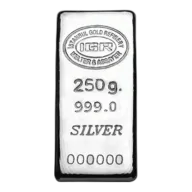
The 250g Istanbul Gold Refinery Silver Bar
A 250 gram silver bar is a quarter kilogram of metal, equal to 8.04 troy ounces, and it occupies an unusual slot in the silver market. The retail silver bar market largely skips this weight: common metric sizes step from 100g straight to 500g or 1 kilo, and troy-ounce markets centre on 1 oz, 10 oz, and 100 oz. That makes a 250g silver bar a genuinely uncommon format, sitting between a 100g silver bar and a 10 oz bar in heft.
Istanbul Gold Refinery is best known internationally as a bar producer for the Middle Eastern and South Asian markets, where it is a major supplier of small gold bars for the gifting trade. This bar applies the same refinery branding to a mid-weight silver format struck in .999 fine silver, the standard purity for silver bullion bars.
The practical case for a bar this size is the general case for silver bars: they carry the lowest premiums of any silver form, making them the most cost-efficient way to accumulate silver weight, and a mid-size bar concentrates more metal into fewer pieces than a stack of 1 oz units without committing to a kilo. The trade-off is divisibility; a single bar is an all-or-nothing sale, where the same weight in 1oz silver coins can be liquidated piecemeal.
250g Silver Bar Specifications
| Attribute | Detail |
|---|---|
| Metal | Silver |
| Purity | .999 fine |
| Weight | 250g (8.04 troy oz) |
| Manufacturer | Istanbul Gold Refinery (Turkey) |
Silver bars are made by one of two methods: cast bars, poured into moulds with a more rustic finish and lower premiums, or minted bars, cut and stamped with a polished finish and often sealed in packaging. Whichever the production method, sealed bars in original packaging resell better than loose bars, so keep any packaging intact.
Storage follows the standard silver rules. Silver tarnishes when exposed to sulphur compounds, so the bar should be kept in dry conditions, ideally wrapped or sealed, with anti-tarnish strips as cheap insurance. At a quarter kilogram the bar stores easily in any home safe; silver's challenge is value density rather than individual bar size, since silver takes far more space per dollar of value than gold.
Tax Treatment of the 250g Istanbul Gold Refinery Silver Bar
Silver bars receive the same tax treatment as silver coins in most jurisdictions; the meaningful split is between gold, which is widely exempt, and silver, which often is not.
- UK: 20% VAT on new silver bullion, and bars are not CGT-exempt since they carry no legal tender status. This double exposure makes silver bars the least tax-efficient silver format for UK buyers.
- EU: Silver attracts full national VAT rates, typically 17-27% depending on the member state. Margin scheme treatment can reduce the effective rate on second-hand bars in some countries, but new bars typically attract full VAT.
- US: Most states exempt bullion bars from sales tax; several tax them or apply purchase thresholds. Long-term gains are taxed at the collectibles rate of up to 28%. IRA eligibility for silver requires 99.9% purity from accredited refiners.
- Canada: GST/HST exempt; silver refined to 99.9% or better in bar form qualifies, which .999 meets.
- Australia: GST-free as investment-grade silver at 99.9% purity or better.
- New Zealand: GST-exempt at 99.9% purity or better in bar form. No capital gains tax regime, though gains can be taxed as income if bullion was acquired for resale.
- Singapore and Hong Kong: Singapore exempts qualifying investment silver from GST with no capital gains tax; Hong Kong has no sales tax or duties at all.
250g Silver vs 100g, 10 oz, and Kilo Alternatives
Because 250g is a non-standard silver weight, the comparison is really about the sizes either side of it. The 10oz silver bar (311g) is the closest standard size and is widely considered the most popular silver bar weight, balancing low premiums with practical divisibility; it is also the size dealers most actively quote, which matters at resale. Below it, the 100g bar is a recognised metric step; above it, the kilo silver bar reaches the lowest premium bracket available for retail silver at 3-6% over spot.
The general premium curve favours size: the single biggest premium drop in silver bars happens between 1 oz and 10 oz, and each step beyond saves progressively less. A 250g bar sits inside that flattening section of the curve, so its pricing should land near 10 oz bar territory; if a dealer prices it meaningfully higher, the standard sizes are the better buy.
Brand is the other variable. LBMA-accredited refiner bars from names like PAMP Suisse, Heraeus, and the Royal Canadian Mint command better resale prices than lesser-known brands, and unrecognised bars typically sell at melt value only. Buyers should weigh the price of this bar against an equivalent weight from a major accredited refiner and let the discount, if any, justify the choice. In zero-tax jurisdictions like Singapore and Hong Kong the calculation is purely premium versus resale recognition; in VAT jurisdictions the fixed tax hit makes the underlying premium difference matter even more.