41 products · 183 deals Prices & premiums exclude tax to compare across countries
Filters
| Product | /oz | Premium | Price (ex. tax) | |
|---|---|---|---|---|

3 deals
|
$70.16 | +3.74% | $70.16 | Compare |
| $70.26 | +3.89% | $70.26 | View Deal | |

5 deals
|
$70.72 | +4.57% | $70.72 | Compare |

4 deals
|
$71.56 | +5.81% | $71.56 | Compare |

7 deals
|
$71.77 | +6.12% | $71.77 | Compare |

4 deals
|
$71.96 | +6.41% | $71.96 | Compare |

2 deals
|
$72.72 | +7.53% | $72.72 | Compare |
| $71.86 | +7.80% |
$71.86
CA$101
|
View Deal | |

7 deals
|
$73.12 | +8.12% | $73.12 | Compare |

36 deals
|
$73.57 |
+10.36%
+32% inc.VAT
|
$73.57
£66 inc.VAT
|
Compare |
| $74.85 | +10.68% | $74.85 | View Deal | |

2 deals
|
$75.88 | +12.20% | $75.88 | Compare |

3 deals
|
$76.27 | +12.78% | $76.27 | Compare |
| $77.86 | +15.13% | $77.86 | Compare | |

2 deals
|
$78.37 | +15.88% | $78.37 | Compare |

2 deals
|
$80.13 | +18.49% | $80.13 | Compare |

2 deals
|
$79.82 | +19.43% |
$79.82
S$102
|
Compare |
| $82.05 | +21.33% | $82.05 | View Deal | |
| $82.71 | +23.95% |
$82.71
A$116
|
View Deal | |

44 deals
|
$85.81 | +28.73% |
$85.82
£64
|
Compare |
| $87.88 | +29.95% | $87.88 | View Deal | |

3 deals
|
$87.60 |
+31.38%
+56% inc.VAT
|
$87.60
€91 inc.VAT
|
Compare |
| $89.13 | +31.79% | $89.13 | Compare | |
| $88.19 |
+32.29%
+59% inc.VAT
|
$88.19
£79 inc.VAT
|
View Deal | |
| $92.58 |
+38.88%
+67% inc.VAT
|
$92.58
£83 inc.VAT
|
Compare | |

3 deals
|
$94.40 | +39.59% | $94.40 | Compare |
| $95.41 |
+43.12%
+72% inc.VAT
|
$95.41
£86 inc.VAT
|
View Deal | |

2 deals
|
$96.88 | +43.25% | $96.88 | Compare |

3 deals
|
$96.56 |
+44.85%
+74% inc.VAT
|
$96.56
£87 inc.VAT
|
Compare |

6 deals
|
$99.38 |
+49.07%
+79% inc.VAT
|
$99.37
£89 inc.VAT
|
Compare |

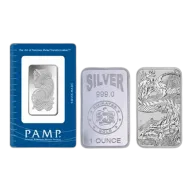

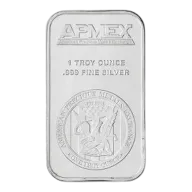
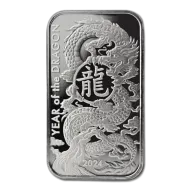
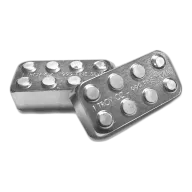




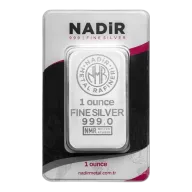

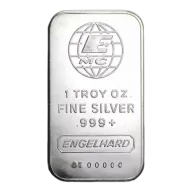


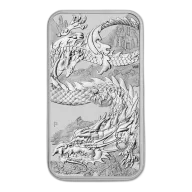
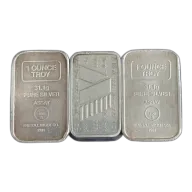

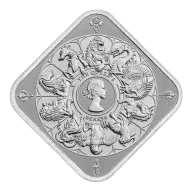
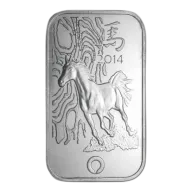
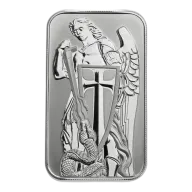
Prices are fetched automatically and may not reflect current merchant prices. Currency conversions and tax treatment are approximate. Rankings are based solely on price. We are not a dealer and accept no responsibility for transactions with listed merchants. Past performance is not indicative of future results. This site does not provide investment advice. Full disclaimer
About 1 oz Silver Bars
Silver by the Single Ounce, Without the Mint Markup
A 1oz silver bar is the smallest mainstream unit of bar silver: a troy ounce, 31.1035 grams, of .999 fine metal carrying a refiner's stamp instead of a sovereign strike. It exists for buyers who want silver in single-ounce increments but do not want to pay sovereign coin premiums for the privilege. Against a 1oz silver coin at 15-25% over spot, a 1oz bar at 3-8% buys the same metal for noticeably less money.
The typical buyer is either starting small or deliberately stacking ounces. The single-ounce unit suits regular small purchases, gifting, and selling in small increments later, while the bar format keeps the cost of each of those ounces down. What the buyer gives up is everything the coin premium pays for: legal tender status, government mint backing, the strongest dealer recognition, and in the UK the CGT exemption attached to legal tender coins like the Silver Britannia. Bars have none of those, which in the UK makes them the least tax-efficient silver form, carrying 20% VAT on purchase and CGT liability on sale.
The more important comparison is up the bar weight scale rather than across to coins. Bar premiums fall fast with size, and the single biggest drop on the entire scale happens between 1oz and 10oz, typically 4-5 percentage points. A buyer who can commit to ten ounces at a time gets meaningfully cheaper silver from a 10oz bar; the 1oz bar's job is serving budgets and divisibility needs that the bigger bars cannot.
Tax treatment outside the UK and EU is generally clean. Silver bars at 99.9%+ purity are GST-exempt in Canada (99.9% threshold), Australia, New Zealand and Singapore, most US states charge no sales tax on bullion, and Hong Kong taxes nothing at all. In VAT jurisdictions, the effective all-in premium on a new 1oz bar can reach 25-40% once tax is added, which pushes UK and EU buyers toward larger bars, margin scheme products, or coins with offsetting tax advantages.
Premiums at the Bottom of the Bar Scale
1oz silver bars run roughly 8-15% over spot in normal market conditions by the general bar-size schedule, with well-priced branded examples available toward the bottom of that range; as a format, 1oz bars price around 3-8% in 2026 conditions, below generic rounds at 5-10% and far below sovereign coins at 15-25%. The same fixed-cost logic that inflates small gold products applies here: fabricating, stamping and packaging a bar costs about the same whether it holds one ounce or ten, so the smallest bars wear the largest percentage markup within the bar family.
The scale effect is steep and front-loaded. Approximate bar premiums run 8-15% at 1oz, 6-10% at 5oz, 4-8% at 10oz, 3-6% at 1kg, and 2-5% at 100oz. The largest single saving comes from the first step: moving from 1oz to 10oz bars typically cuts 4-5 percentage points, roughly USD 2 per ounce, while each step beyond 10oz saves progressively less. Buyers accumulating any meaningful weight should treat the 1oz bar as a convenience size and put the bulk of their budget further up the scale.
Within the 1oz bracket, format and finish move the price. Cast bars run 1-2% cheaper than minted bars of the same weight, though at this small size minted bars in sealed packaging dominate the retail market. Branded bars from LBMA-accredited refiners cost slightly more than generic pours but recover more at resale; generic and unbranded bars typically sell back at melt value only, with no premium recovery at all.
Tax can swamp the premium arithmetic. In the UK and EU, VAT takes the effective cost of a new 1oz bar to 25-40% over spot, and because VAT is proportional, no bar size escapes it; larger bars merely dilute the premium component. Coins retain more of their premium at resale than bars do, so the bar's headline saving narrows over a full round trip, which is worth modelling before choosing bars purely on the purchase price.
Who Makes 1oz Silver Bars Worth Owning
The brand stamped on a silver bar determines its resale path, so the refiner list is the product list. LBMA-accredited and major-mint bars sell on recognition; generic pours sell on melt.
| Bar | Refiner | Country | Notable |
|---|---|---|---|
| Silver bar | PAMP Suisse | Switzerland | LBMA accredited; Fortuna design available in silver; sealed assay cards |
| Silver bar | Valcambi | Switzerland | LBMA accredited; CombiBars available |
| Silver bar | Royal Canadian Mint | Canada | Government mint; .9999 purity; serialised |
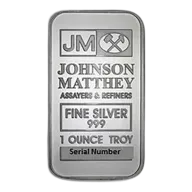
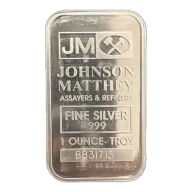
| Silver bar | Asahi | Japan/US | Took over Johnson Matthey's refining operations in 2015; widely distributed in North America |
| Silver bar | Heraeus | Germany | LBMA accredited; popular in Europe |
| Silver bar | Sunshine Minting | US | MintMark SI security feature; major US refiner |
| Silver bar | SilverTowne | US | Long-established private mint; popular generic bars |
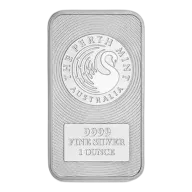
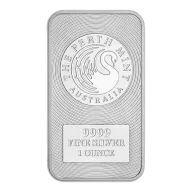
| Silver bar | Perth Mint | Australia | Government-backed; kangaroo design |
A few distinctions matter at the 1oz size. The PAMP Suisse 1oz silver bar brings the same Fortuna design and sealed assay card treatment as its gold counterpart, which helps it resell above generic prices. The Royal Canadian Mint bar is one of the few at .9999 purity rather than the standard .999, and carries government mint backing. Sunshine Minting bars include the MintMark SI decoder feature, a useful verification layer on a product category that otherwise relies on weight and dimensions. Standard purity across the board is .999 fine, which satisfies the GST exemption thresholds in Australia, New Zealand, Singapore and Canada. Buyers comparing against coin-shaped alternatives at the same weight should also weigh silver rounds, which sit between bars and coins on premium.
Reselling and Storing Single-Ounce Bars
1oz silver bars from recognised refiners are liquid, but they sit a step below sovereign coins in spread terms, and their per-unit handling cost is the highest in the bar family. A dealer processing fifty 1oz bars does fifty times the verification work of one 50oz lot, and pricing reflects it; 10oz and 100oz bars resell more efficiently per ounce. The compensation is divisibility: a stack of 1oz bars can be sold a few ounces at a time, matching cash needs the way no large bar can.
Brand drives the resale outcome more than anything else at this size. LBMA-accredited refiner bars command better buyback prices than generic pours, and sealed bars in original packaging resell better than loose ones. Generic or lesser-known bars typically fetch melt value only. A buyer who expects to sell through a dealer rather than privately should pay the small brand premium upfront; it usually comes back at exit.
Counterfeiting is a smaller worry than with gold, since silver's lower value blunts the forger's incentive, and there is no tungsten problem: tungsten is nearly twice silver's density (19.25 vs 10.49 g/cm3), so a fake would be obviously overweight. The realistic threat is copper, lead or zinc cores under silver plating, which weight and dimension checks plus the magnet slide test catch; silver is diamagnetic, so a magnet should slide slowly down a tilted bar. Buying branded bars from reputable dealers removes most of the risk before it arises.
Storage needs are modest at this scale but grow fast with the stack. Silver runs roughly USD 50,000 per 45kg at current prices, so bulk is the long-term constraint, and vault fees based on weight or space make silver disproportionately expensive to store compared with gold. Tarnish is the other consideration: silver darkens on exposure to sulphur compounds, harmlessly for melt value but unhelpfully for presentation, so bars should stay in dry conditions, ideally sealed in original packaging with anti-tarnish strips nearby. Flat, sealed 1oz bars stack neatly in any small safe, which keeps home storage practical until the ounces add up.
1 oz Silver Bars: frequently asked questions
-
The intrinsic metal value of a 1 oz silver bar equals the current $67.63 silver spot price per troy ounce. Dealers add a premium above that to cover production, handling, and margin, so retail prices tracked on this page will be higher. The premium varies by brand and dealer.
-
A 1 oz silver bar weighs 31.1035 g. Silver bars use the troy ounce, which is 31.1035g, not the everyday avoirdupois ounce of 28.35g. This is a common source of confusion, and the distinction matters when converting weights or comparing prices across different measurement systems.
-
Investment-grade 1 oz silver bars are typically 999 fine silver (99.9% pure), and some branded bars reach .9999 fine (99.99%). This is distinct from 925 sterling silver, which is a jewellery alloy that contains copper and is not used in bullion bars. Always check the hallmark when buying.
-
In the UK, silver bars carry VAT at 20%. In Australia, investment-grade silver bars are GST-free at 0%. Canadian buyers pay GST on silver at 0%. In the US, state rules vary and some states exempt investment silver entirely, but there is no federal sales tax.
- 1 oz AARUS Silver Bar
- 1 oz African Lion Silver Bar
- 1 oz Ainslie Silver Bar
- 1 oz American Buffalo Silver Bar
- 1 oz Am Yisrael Chai! Silver Bar
- 1 oz APMEX Silver Bar
- 1 oz Argor-Heraeus Silver Bar
- 1 oz Asahi Refining Lunar Silver Bar
- 1 oz Aztec Calendar Silver Bar
- 1 oz Beaver Bullion Silver Bar
- 1 oz B.H. Mayer Norse Gods Silver Bar
- 1 oz Bison Bullion Silver Bar
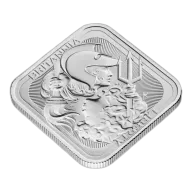
- 1 oz Britannia and Liberty Silver Bar
- 1 oz Buddha Silver Bar
- 1 oz Building Blocks Silver Bar
- 1 oz Bull and Bear Silver Bar
- 1 oz Canadian PMX Silver Bar
- 1 oz Chinese Lunar Silver Bar
- 1 oz Christmas Coins Silver Bar
- 1 oz Columbia Goddess Silver Bar
- 1 oz Credit Suisse Silver Bar
- 1 oz Cross of Christianity Silver Bar
- 1 oz Dragon Rectangular Silver Bar
- 1 oz East India Company Una and the Lion Silver Bar
- 1 oz Egyptian Relic Silver Bar
- 1 oz Emirates Gold Silver Bar
- 1 oz Engelhard Bar Silver Bar
- 1 oz Engelhard Silver Bar
- 1 oz Fiji Samurai Silver Bar
- 1 oz First Mint Silver Bar
- 1 oz Fortuna Silver Bar
- 1 oz Geiger Original Silver Bar
- 1 oz Germania Mint Silver Bar
- 1 oz Heraeus Silver Bar
- 1 oz Highland Mint Silver Bar
- 1 oz Holiday Silver Bar
- 1 oz HW Minting Company Silver Bar
- 1 oz International Trade Bullion Silver Bar
- 1 oz Jerusalem Silver Bar
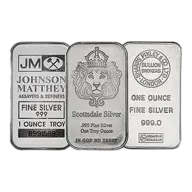
- 1 oz Johnson Matthey Silver Bar
- 1 oz Ka `Bah. Mecca Silver Bar
- 1 oz Lion of Judah Silver Bar
- 1 oz Love Silver Bar
- 1 oz Lucky Dragon Silver Bar
- 1 oz Marquee Peacock Silver Bar
- 1 oz Metalor Silver Bar
- 1 oz Minted Bars Silver Bar
- 1 oz MMTC-PAMP Lakshmi Ganesh Silver Bar
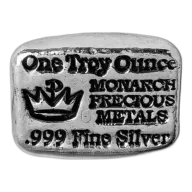
- 1 oz Monarch Precious Metals Silver Bar
- 1 oz Nadir Refinery Silver Bar
- 1 oz PAMP Suisse Diwali Silver Bar
- 1 oz PAMP Suisse Lunar Silver Bar
- 1 oz PAMP Suisse Silver Bar
- 1 oz Perth Mint Kangaroo Silver Bar
- 1 oz Perth Mint Lunar Silver Bar
- 1 oz Perth Mint Silver Bar
- 1 oz Queen's Beasts Silver Bar
- 1 oz Rand Refinery Silver Bar
- 1 oz Republic Metals Corporation Silver Bar
- 1 oz Rosa Silver Bar
- 1 oz Scotiabank Silver Bar
- 1 oz Scottsdale Mint Archangel Michael Silver Bar
- 1 oz Scottsdale Mint Silver Bar
- 1 oz Scottsdale Stacker Silver Bar
- 1 oz SD Bullion Silver Bar
- 1 oz Silver Bar
- 1 oz Silver Buffalo Silver Bar
- 1 oz Silver Card Silver Bar
- 1 oz SilverTowne Buffalo Silver Bar
- 1 oz SilverTowne Silver Bar
- 1 oz Skyline Silver Bar
- 1 oz Stacking Across America Silver Bar
- 1 oz Sunshine Minting Silver Bar
- 1 oz TD Silver Bar
- 1 oz Themis Silver Bar
- 1 oz The Royal Mint Una and the Lion Silver Bar
- 1 oz The Vortex Silver Bar
- 1 oz True Happiness Silver Bar
- 1 oz USA Eagle Silver Bar
- 1 oz US Mint Silver Bar
- 1 oz Valcambi Silver Bar
- 1 oz Vintage YPS Silver Bar
- 1 oz Walking Liberty Silver Bar
- Pre-Owned 1 oz A-Mark Silver Bar
- Pre-Owned 1 oz Bache Silver Bar
- Pre-Owned 1 oz B.H. Mayer Norse Gods Silver Bar
- Pre-Owned 1 oz Britannia and Liberty Silver Bar
- Pre-Owned 1 oz Buddha Silver Bar
- Pre-Owned 1 oz Credit Suisse Silver Bar
- Pre-Owned 1 oz Dragon Rectangular Silver Bar
- Pre-Owned 1 oz East India Company Una and the Lion Silver Bar
- Pre-Owned 1 oz Egyptian Silver Bar
- Pre-Owned 1 oz Engelhard Bar Silver Bar
- Pre-Owned 1 oz Engelhard Silver Bar
- Pre-Owned 1 oz Fortuna Silver Bar
- Pre-Owned 1 oz Hamilton Mint Silver Bar
- Pre-Owned 1 oz Heraeus Silver Bar
- Pre-Owned 1 oz Johnson Matthey Silver Bar
- Pre-Owned 1 oz Liberty Trade Silver Bar
- Pre-Owned 1 oz Marquee Peacock Silver Bar
- Pre-Owned 1 oz Monarch Precious Metals Silver Bar
- Pre-Owned 1 oz National Bank of Ukraine Archangel Michael Silver Bar
- Pre-Owned 1 oz National Refiners-Assayers Silver Bar
- Pre-Owned 1 oz PAMP Suisse Lunar Silver Bar
- Pre-Owned 1 oz PAMP Suisse Silver Bar
- Pre-Owned 1 oz Queen's Beasts Silver Bar
- Pre-Owned 1 oz Silver Bar
- Pre-Owned 1 oz Silver Bullets Silver Bar
- Pre-Owned 1 oz SilverTowne Silver Bar
- Pre-Owned 1 oz Sunshine Minting Silver Bar
- Pre-Owned 1 oz Themed Gift Bullion Silver Bar
- Pre-Owned 1 oz The Royal Mint Silver Bar
- Pre-Owned 1 oz The Royal Mint Three Graces Silver Bar
- Pre-Owned 1 oz True Happiness Silver Bar
- Pre-Owned 1 oz U.S. Silver Corporation Silver Bar
- 1 oz Silver Card
- African Lion
- A-Mark Silver Bar
- American Buffalo
- Am Yisrael Chai!
- Archangel Michael
- Asahi Lunar
- Aztec Calendar
- Britannia and Liberty
- Buddha
- Bull and Bear
- Chinese Lunar
- Christmas Coins
- Columbia Goddess
- Cross of Christianity
- Dragon Rectangular
- Egyptian Relic
- Egyptian Series
- Engelhard Silver Bars
- Fiji Samurai
- Fortuna
- Geiger Edelmetalle Geiger Original
- Holiday
- Jerusalem
- Ka `Bah. Mecca
- Liberty Trade
- Lion of Judah
- Lucky Dragon
- Marquee Peacock
- MMTC-PAMP Lakshmi Ganesh
- Norse Gods
- PAMP Diwali
- PAMP Love
- PAMP Lunar
- PAMP Rosa
- Perth Kangaroo
- Perth Lunar
- Queen's Beasts
- Rand Refinery Minted Bars
- Royal Mint Three Graces
- Royal Mint Una and the Lion
- Scottsdale Archangel Michael
- Scottsdale Stacker
- Silver Buffalo Round
- Silver Building Blocks
- Silver Bullets
- SilverTowne Buffalo
- SilverTowne Themed Gift Bullion
- Skyline
- Stacking Across America
- St Helena Una and the Lion
- Themis
- The Vortex
- True Happiness
- USA Eagle
- Vintage YPS
- Walking Liberty