1 listing
Filters
| Product | /oz | Premium | Price | |
|---|---|---|---|---|

 Monarch Precious Metals
|
$84.64 | +25.16% | $84.64 | View Deal |
Prices are fetched automatically and may not reflect current merchant prices. Currency conversions and tax treatment are approximate. Rankings are based solely on price. We are not a dealer and accept no responsibility for transactions with listed merchants. Past performance is not indicative of future results. This site does not provide investment advice. Full disclaimer
About the 1 oz Egyptian Relic Silver Bar
The 1 oz Egyptian Relic Silver Bar
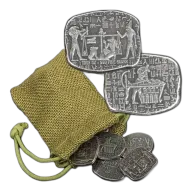
This 1 oz bar of .999 fine silver comes from Scottsdale Mint, the Arizona-founded private mint behind the Egyptian Relic programme it produces on behalf of the Republic of Chad. The Egyptian Relic name is best known through its legal tender coins, launched in 2016, which depict figures, deities, and artifacts from ancient Egypt with real hieroglyphics worked into the designs and a distinctive antique finish that mimics aged bronze or stone. The bar format brings that theme into Scottsdale's bar lineup, where the mint produces .999 fine silver in both cast and minted finishes.
Scottsdale Mint itself is a substantial operation rather than a boutique. Founded in 2008 by Josh Phair as a bullion retailer, it became a US-based manufacturer in 2011 by acquiring the precious metals investment bar division from Materion Corporation, and since 2022 has run a 70,000-plus square foot manufacturing facility in Casper, Wyoming. The mint is ISO 9001:2015 certified, sells into more than 40 countries, and strikes official legal tender coinage for over 20 sovereign nations including Chad. Its products meet ASTM purity standards and are IRS-approved for US self-directed IRAs.
At 1 oz, this is the entry weight for silver bars, where premiums run higher per ounce than larger formats but each unit stays affordable and easy to sell singly. A themed bar like this trades partly on design appeal: buyers who simply want maximum silver per dollar usually step up to 10 oz bars, while buyers who want the Egyptian aesthetic in a low-cost unit are the natural audience here.
Tax Treatment for a 1 oz .999 Silver Bar
As a private-mint silver bar with no legal tender status, this product is taxed on its metal content alone. The .999 fineness meets the 99.9% purity threshold several countries use for silver exemptions.
- USA: No federal sales tax; around 35 states exempt bullion while others tax it or apply purchase thresholds. Scottsdale Mint products are IRS-approved for self-directed IRAs, meeting the 99.9% silver purity requirement. Long-term capital gains are taxed at the 28% collectibles rate.
- UK: 20% VAT on purchase, and no capital gains tax exemption on sale. Bars are the least tax-efficient silver form for UK buyers, since UK legal tender coins at least escape CGT.
- Canada: GST/HST exempt; the federal exemption covers silver refined to at least 99.9% purity in bar form.
- Australia: GST-free as investment-grade silver at 99.9% purity or higher.
- New Zealand: GST-exempt at the 99.9% silver threshold, with no formal capital gains tax.
- Singapore: Qualifying investment precious metals are GST-exempt; no capital gains tax.
- Hong Kong: No sales tax, no import duty, no capital gains tax.
- EU: Silver bars attract full local VAT, from 17% to 27% depending on member state; margin schemes mostly apply to pre-owned stock rather than new bars.
In VAT jurisdictions the fixed tax hit weighs heaviest on small bars, since the 1 oz format already carries the highest percentage premium on the bar size ladder.
Scottsdale Mint and the Egyptian Relic Programme
Scottsdale Mint began life in 2008 as a bullion retailer, founded by Josh Phair after a career managing the North American mining practice at Willis Towers Watson. The pivotal move came in 2011, when Phair orchestrated the acquisition of the precious metals investment bar manufacturing division from Materion Corporation, converting the company into a US manufacturer. In 2022 it unveiled its flagship facility in Casper, Wyoming: more than 70,000 square feet covering melting and casting, surface finishing, die production, coining, vaulting, and packaging, sited within a Foreign Trade Zone.
The Egyptian Relic series, launched in 2016, is one of the mint's sovereign programmes, struck as legal tender of the Republic of Chad and denominated in CFA Francs. The coin series has produced at least nine designs, from King Tut and Horus in 2016 through Queen Nefertiti, Ramesses II, the Sphinx of Hatshepsut, Anubis, and the frog-headed deity Kek in 2022. Its signature is the rimless, chiseled-edge blank with antique finish, designed to look like a fragment of carved stone. Mintages trended downward over the years, from 25,000 for early 2 oz issues to 5,000 for the 2021 Anubis 5 oz, lifting secondary-market premiums on earlier releases.
The Chad arrangement reflects a common industry model: small nations license their legal tender rights to private mints, collecting royalties while the mint handles production and distribution. Scottsdale runs similar programmes for more than 20 nations, including Fiji, Samoa, the Cayman Islands, and the Congo, alongside its own branded products such as the interlocking Stacker bar and round series and the Certi-Lock authentication packaging with encrypted barcodes and synthetic DNA markers.
Egyptian Relic Bar vs Coins and Generic Silver
The most direct comparison is within the Egyptian Relic family itself. The series' legal tender coins, available in 1 oz, 2 oz, and 5 oz silver, carry sovereign backing from Chad, the signature antique finish with rimless chiseled edges, and capped mintages that have fed collector premiums. The bar format is the simpler route into the same theme: no face value, no sovereign issuer, and pricing closer to ordinary bullion. Buyers chasing the collectible angle take the coins; buyers who like the design but want to pay less per ounce take the bar.
Against generic 1 oz silver bars, the calculation is brand and design versus pure cost. The 1 oz bar format generally carries premiums of 8-15% over spot, the highest of any bar size, because minting costs are spread over a single ounce. A recognised mint name like Scottsdale, with ISO certification and IRA-approved products, supports resale better than unbranded generics, which typically sell at melt with no brand premium recovered. Scottsdale is not on the LBMA Good Delivery list, as a private mint rather than a refinery, which matters mainly to buyers who specifically want LBMA-accredited bars.
The other axis is weight. Stepping up to a 10 oz silver bar cuts the percentage premium substantially, with the single biggest drop on the size ladder occurring between 1 oz and 10 oz. The 1 oz format earns its place through divisibility and giftability rather than efficiency, and a themed design like the Egyptian Relic plays to exactly those use cases.
1 oz Egyptian Relic Silver Bar: frequently asked questions
-
The cheapest 1oz Egyptian Relic silver bar available today is $84.64 from Monarch Precious Metals, carrying a premium of 25.2% over silver spot. As a collectible series from Scottsdale Mint with antique detailing and limited production runs, premiums on Egyptian Relic pieces typically run above generic silver bullion.
-
Egyptian Relic silver bars are 999 fine silver, meaning 999 parts per thousand pure silver. Each 1 troy ounce bar contains 31.1 grams of silver. The series is produced by Scottsdale Mint to investment-grade purity standards, making these pieces suitable as both collectibles and silver bullion holdings.
-
The Egyptian Relic series is a collectible silver range produced by Scottsdale Mint (a private US mint based in Scottsdale, Arizona) on behalf of the Republic of Chad, beginning in 2016. Each release depicts an ancient Egyptian figure, deity, or artifact in an antique finish with a distinctive rimless, rough-textured edge designed to mimic carved stone. Available in 1 oz, 2 oz, and 5 oz weights, the series has covered subjects including King Tut, Horus, Nefertiti, and Anubis.
-
Yes. Silver was used in ancient Egypt for jewellery, vessels, and ceremonial objects. The material appears throughout ancient Egyptian art and ritual objects, and the Egyptian Relic series incorporates real hieroglyphics from ancient Egypt into its designs as a nod to this heritage.