9 products · 83 deals Prices & premiums exclude tax to compare across countries
Filters
| Product | /oz | Premium | Price (ex. tax) | |
|---|---|---|---|---|

23 deals
|
$72.03 |
+8.05%
+30% inc.VAT
|
$2,315.84
£2,083 inc.VAT
|
Compare |
| $74.86 | +10.69% | $2,406.65 | View Deal | |

3 deals
|
$74.91 |
+12.37%
+35% inc.VAT
|
$2,408.31
£2,166 inc.VAT
|
Compare |
| $76.49 | +14.75% |
$2,459.40
£1,843
|
View Deal | |

20 deals
|
$76.70 |
+15.06%
+38% inc.VAT
|
$2,465.97
£2,218 inc.VAT
|
Compare |

30 deals
|
$79.27 |
+18.91%
+43% inc.VAT
|
$2,548.55
£2,292 inc.VAT
|
Compare |

3 deals
|
$81.37 |
+22.06%
+46% inc.VAT
|
$2,616.09
£2,353 inc.VAT
|
Compare |
| $85.81 | +28.73% |
$2,758.99
£2,068
|
View Deal | |
| $90.48 | +33.79% | $2,908.99 | View Deal |




Prices are fetched automatically and may not reflect current merchant prices. Currency conversions and tax treatment are approximate. Rankings are based solely on price. We are not a dealer and accept no responsibility for transactions with listed merchants. Past performance is not indicative of future results. This site does not provide investment advice. Full disclaimer
About 1 Kilo Silver Coins
Why Buy a 1 Kilo Silver Coin
A kilogram is 1,000 grams, or 32.1507 troy ounces, and it is the standard metric weight in world bullion markets. At current spot prices a kilo of silver costs roughly $900 to $1,000, which puts these coins in reach of serious stackers rather than casual buyers. Where the 1 oz coin dominates the silver coin market, kilo coins sit at the opposite end of the retail scale, produced for collector and large-investor appeal rather than volume sales.
The economics of the kilo weight class favour buyers optimising for the lowest cost per gram. Moving from 1 oz units to kilo units saves approximately 6% on the silver value, which works out to $50 to $70 on a purchase of around $1,000. The catch with coins specifically is that kilo silver coins carry collector premiums above what the equivalent kilo silver bar costs, so a coin buyer at this weight is paying for legal tender status, sovereign mint design work, and annual design series, not just the metal.
The kilo format is particularly prevalent in Asian markets, including Singapore, Hong Kong, and mainland China, and metric weights are standard across Europe. In the UK, kilo units are less common than troy ounce denominations for retail buyers, though silver kilo pieces are popular with serious stackers. In North America the traditional large silver format is the 100 oz bar, so kilo products represent a smaller share of that market. Note that physical size matters at this weight: silver's relatively low density of 10.49 g/cm3 makes a kilo of silver noticeably larger than the same weight in gold.
1 Kilo Silver Coin Premiums vs Bars and Smaller Coins
The kilo weight class is where silver premiums bottom out for retail buyers. Kilo silver bars run 3-6% over spot, among the lowest premiums available for retail bullion alongside 100 oz bars. Kilo coins do not match that: they carry collector premiums above bar prices, because sovereign mints position their kilo coins as design-led products rather than pure weight plays.
For context on the rest of the scale, government silver coins at the dominant 1 oz size typically carry premiums of 15-25% over spot in normal market conditions, and during supply crunches premiums have exceeded 50%. Production costs are the reason: mining, refining, minting, and packaging cost roughly the same per coin regardless of metal value, so those fixed costs are a much larger percentage of a low-value 1 oz silver piece. Spreading one striking cost across 32.15 ounces is what makes the kilo coin cheaper per ounce than a tube of 1 oz silver coins, even with its collector markup.
The marginal saving flattens as you climb the scale. Switching from 1 oz to kilo saves around 6% on the silver value, but the step from 10 oz to kilo saves less than 1% per ounce on bars; that saving only accumulates meaningfully over large purchases. Tax can outweigh all of this. In the UK, silver coins are subject to 20% VAT on purchase, and across the EU silver attracts VAT at national rates such as 19% in Germany and 21% in the Netherlands. UK legal tender silver coins are CGT-exempt on sale, an advantage kilo bars do not offer, which is part of the case for choosing a sovereign kilo coin over a cheaper bar.
Major 1 Kilo Silver Coins
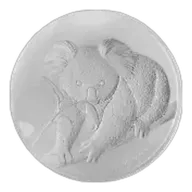
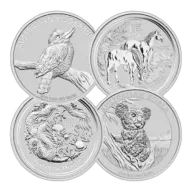
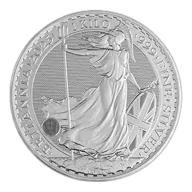
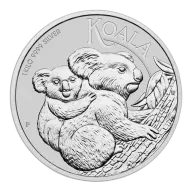
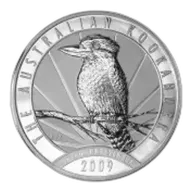
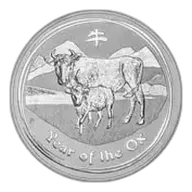
The kilo silver coin market is dominated by the Perth Mint, which strikes kilo versions of its flagship annual series. The Perth Mint Lunar, the Koala, and the Kookaburra are all produced at the 1 kg weight. The Kookaburra series dates from 1990 and changes its design annually, a feature that drives the collector appeal these large coins trade on. The Royal Mint also produces kilo silver coins. The Perth Mint Kookaburra moved to .9999 fine silver in 2017, matching the purity standard the Canadian Maple Leaf established.
Buyers comparing alternatives at this weight will mostly be looking at bars. Kilo silver bars are produced by all the major LBMA-accredited refiners, including PAMP Suisse, Valcambi, Royal Canadian Mint, Umicore, Heraeus, Argor-Heraeus, Asahi, Perth Mint, Nadir, and Geiger Edelmetalle. They come in two styles: cast bars, which are chunkier and often cheaper, and minted bars, which are polished, serialised, and sold in assay cards. Cast bars run 1-2% cheaper than minted bars of the same weight, and both undercut the kilo coin on price.
The choice between a kilo coin and a kilo bar therefore comes down to what the extra premium buys. The coin offers legal tender status, sovereign mint security and design detail, and in the UK a CGT exemption on sale that applies to UK legal tender coins. The bar offers the lowest cost per gram. Buyers focused purely on accumulating weight generally take the bar; buyers who want a sovereign product, an annual design series, or the UK tax treatment take the coin.
Selling and Storing 1 Kilo Silver Coins
The defining liquidity constraint at this weight is that partial liquidation is not possible. Each kilo piece is an all-or-nothing sale, so an investor who may need to raise small amounts of cash gives up the flexibility that holding the same weight in smaller units provides. A kilo also represents a larger single transaction than a 10 oz unit, which narrows the pool of casual buyers, though dealers maintain ready markets for recognised kilo products and the format itself is recognised globally.
Silver coins from major sovereign mints are highly liquid and widely recognised by dealers worldwide, and that recognition carries over to the kilo versions from the Perth Mint and Royal Mint. Buy-sell spreads on silver coins are wider in percentage terms than on gold coins, reflecting the higher purchase premiums; a coin bought at 20% over spot might sell at 10-18% over spot. In VAT jurisdictions such as the UK and EU, resale of silver coins to dealers may fall under a margin scheme, which partially offsets the VAT originally paid.
Storage is the other practical consideration. Silver is heavy relative to its value: at current prices, $100,000 in silver weighs approximately 90 kg, against roughly 1 kg for the same value in gold. A single kilo coin weighs 2.2 lbs on its own. Silver tarnishes when exposed to sulphur compounds in the air, turning dark grey or black; tarnish does not affect metal content or melt value, but it can reduce appeal for resale above melt. Store kilo silver in a low-humidity environment, below 50% relative humidity with desiccant packets if the location is a basement or garage, and use anti-tarnish strips in storage containers. There are no tube or monster box conventions at this weight; those packaging formats belong to 1 oz coins, which ship in mint tubes of 20 or 25 and boxes of 500.
1 Kilo Silver Coins: frequently asked questions
-
A 1 kilo silver coin contains 32.15 troy oz of silver, so its metal value is 32.15 times the live spot price, currently $67.63 per troy oz. Coins carry a premium above that metal value, which varies by programme and dealer. The comparison table shows current prices across all tracked listings.
-
Both contain 1 kilogram of silver but differ in character. Kilo coins are struck by a mint, often carry a face denomination, and are frequently produced in smaller runs, which can make them more collectable. Kilo bars are produced by refineries for straightforward bullion investment and typically carry a lower premium over spot. Both are commonly available at this weight.
-
Reporting rules differ by country. In the UK, gains above the £3,000 annual allowance must be reported on your self-assessment return. In the US, silver is a taxable collectible and gains may be subject to up to 28%. In Canada, 50% of any gain is included in taxable income and reported on your return. Check with a tax adviser for your specific situation.
-
A 1 kilo coin requires a rigid, airtight capsule sized for its large diameter. Store it flat in a cool, dry environment away from humidity and direct light. A home safe or bank safe deposit box provides both environmental stability and security for a piece of this size and value.
- 1 Kilo Aztec Calendar Silver Coin
- 1 Kilo Britannia Silver Coin
- 1 Kilo Chinese Lunar Silver Coin
- 1 Kilo Dragon Silver Coin
- 1 Kilo Kookaburra Silver Coin
- 1 Kilo Libertad Silver Coin
- 1 Kilo Noah's Ark Silver Coin
- 1 Kilo Panda Silver Coin
- 1 Kilo Perth Mint Koala Silver Coin
- 1 Kilo Perth Mint Lunar Silver Coin
- 1 Kilo Queen's Beasts Silver Coin
- 1 Kilo Silver Coin
- 1 Kilo Somalia Elephant Silver Coin
- 1 Kilo Somali Leopard Silver Coin
- 1 Kilo St George and the Dragon Silver Coin
- Pre-Owned 1 Kilo Britannia Silver Coin
- Pre-Owned 1 Kilo Libertad Silver Coin
- Pre-Owned 1 Kilo Perth Mint Koala Silver Coin
- Pre-Owned 1 Kilo Perth Mint Lunar Silver Coin
- Pre-Owned 1 Kilo Silver Coin