1 listing
Filters
| Product | /oz | Premium | Price | |
|---|---|---|---|---|

 Canadian PMX
|
$74.96 | +12.64% |
$75.09
CA$105
|
View Deal |
Prices are fetched automatically and may not reflect current merchant prices. Currency conversions and tax treatment are approximate. Rankings are based solely on price. We are not a dealer and accept no responsibility for transactions with listed merchants. Past performance is not indicative of future results. This site does not provide investment advice. Full disclaimer
About the 1 oz Beaver Bullion Silver Bar
The 1 oz Beaver Bullion Silver Bar
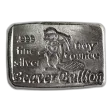
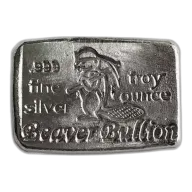
The 1 oz Beaver Bullion Silver Bar contains one troy ounce (31.1035g) of .999 fine silver, the standard purity for silver bars worldwide. One troy ounce is the benchmark unit for bullion, and all silver premiums are quoted against the spot price per troy ounce, which makes a 1 oz bar the simplest format for tracking exactly what you paid over metal value.
Bars carry the lowest premiums of any silver format. Government-minted 1 oz silver coins run 15-25% over spot in 2026 market conditions, rounds 5-10%, and bars 3-8%. Manufacturing costs for blanking, striking and quality control are roughly similar per piece regardless of what is being made, and on a low-value silver item those costs represent a large share of the price; a plain bar keeps them to a minimum. The trade-off is at resale: bars generally carry slightly wider buy-sell spreads than sovereign mint coins, and bars from lesser-known producers typically sell at melt value with no brand premium recovery.
The 1 oz size suits buyers who want divisibility. A position built from 1 oz bars can be sold off a single ounce at a time, something a 10 oz silver bar or kilo bar cannot do. The cost of that flexibility is a higher per-ounce premium than larger bars, since the biggest premium drop on the silver bar scale happens between 1 oz and 10 oz.
1 oz Beaver Bullion Silver Bar Specifications
| Attribute | Value |
|---|---|
| Metal | Silver |
| Weight | 1 troy oz (31.1035g) |
| Purity | .999 fine silver |
| Form | Bar |
| Face value | None (not legal tender) |
At .999 fine, the bar meets the standard purity for silver bullion bars. Silver bars are produced by two methods: cast bars are poured into moulds and have a more rustic appearance, while minted bars are cut, stamped and polished, often sealed in packaging. Minted bars run slightly higher in premium; cast bars are more common at 10 oz and above.
As a private bar rather than a sovereign coin, it carries no face value and no legal tender status. That has practical consequences in some tax regimes (notably UK capital gains treatment, covered in the tax tab) but no bearing on the silver content itself.
Tax Treatment for 1 oz Silver Bars by Country
Silver bars receive the same purchase-tax treatment as silver coins in most jurisdictions. The critical divide is between gold, which is often exempt, and silver, which is often taxed.
- UK: 20% VAT on purchase, and no CGT exemption on sale since bars have no legal tender status. This double exposure makes new silver bars the least tax-efficient silver format for UK buyers. Pre-owned silver sold under the VAT margin scheme is taxed only on the dealer's margin, which brings the effective rate near zero.
- US: No federal sales tax; most states exempt bullion, while roughly ten tax it and around five apply threshold-based exemptions. Long-term capital gains are taxed at the collectibles rate of up to 28%. IRA-eligible silver must be at least 99.9% pure, which a .999 bar meets.
- Canada: 0% GST/HST on silver refined to at least 99.9% purity in bar, ingot, coin or wafer form. This exemption is federal, with no provincial variation.
- Australia: 0% GST on investment-grade silver of at least 99.9% purity.
- New Zealand: Fine silver of at least 99.9% purity is GST-exempt.
- EU: Full standard VAT at national rates (17-27%) on new silver bars.
- Singapore: 0% GST under the Investment Precious Metals scheme for silver of at least 99.9% purity. Hong Kong has no sales tax at all.
1 oz Silver Bars vs Rounds, Coins, and Larger Bars
Against silver rounds at the same weight, a 1 oz bar competes directly on price. Rounds are privately minted discs with no face value, typically carrying 5-10% premiums, while 1 oz bars run 3-8%. Both formats sell on their metal content rather than collector appeal, and both lack the legal tender status that matters for UK capital gains treatment.
Against sovereign 1 oz coins such as the 1 oz American Silver Eagle, the gap is wider. Government-minted 1 oz silver coins carry 15-25% premiums in 2026 conditions, but they bring a government purity guarantee, the tightest bid-ask spreads of any silver format, and recognition at every dealer worldwide. Coins also retain more of their premium at resale than bars or rounds, so part of the higher entry cost comes back when you sell.
Against larger bars, the 1 oz size pays for its divisibility. A 10 oz silver bar typically runs 4-8% over spot against 8-15% for 1 oz bars, a saving of roughly 4-5 percentage points, and the marginal saving from each further step up the scale is smaller. Buyers maximising ounces per dollar generally move up to 10 oz or kilo bars; buyers who value the option of selling in single-ounce increments stay at 1 oz.
1 oz Beaver Bullion Silver Bar: frequently asked questions
-
The cheapest listing we track is $75.09, currently 12.6% over the silver spot price of $67.63. Like all 1 oz silver bars, the price moves closely with the silver spot price, with the premium reflecting dealer margins and market conditions.
-
Beaver Bullion is a private mint that produces generic .999 fine silver bars in a range of sizes. Their bars are straightforward investment-grade bullion aimed at stackers who want silver content at a competitive premium, without collectible or numismatic features.
-
Dealers we track are currently listing this bar at 12.6% over spot, with a best price of $75.09 against a silver spot of $67.63. Premiums on 1 oz silver bars tend to be higher than on larger bars, as manufacturing and handling costs are spread across less metal.
-
.999 fine silver (three nines fine) is the accepted industry standard for investment-grade silver bars. It meets the minimum purity required for investment purposes in most markets, making it straightforward to buy, sell, and verify. Generic .999 bars are widely recognised and easy to trade in most bullion markets.