
 Best Bullion

Prices are fetched automatically and may not reflect current merchant prices. Currency conversions and tax treatment are approximate. Rankings are based solely on price. We are not a dealer and accept no responsibility for transactions with listed merchants. Past performance is not indicative of future results. This site does not provide investment advice. Full disclaimer
About the 1 Kilo Intrinsic Tender Silver Bar
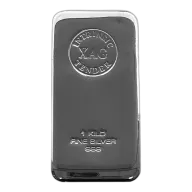
A Kilo of Silver in One Bar
The 1 kilo Intrinsic Tender silver bar packs 1,000 grams of 999 fine silver, equal to 32.15 troy ounces, into a single piece. The kilo is the international standard large-format silver weight, the metric counterpart to North America's 100 oz bar, and it exists for one reason: cost efficiency. Silver kilo bars carry premiums of roughly 3-6% over spot, among the lowest available in retail bullion, against 8-15% for 1oz silver bars. On a purchase of around $1,000 at current silver prices, switching from one-ounce units to a kilo bar saves something like $50-$70 in premium alone.
The trade-off is flexibility. A kilo bar is an all-or-nothing sale; you cannot liquidate a quarter of it when you need a small amount of cash, which is the standing argument for holding at least part of a stack in smaller units. Resale of a private-mint kilo bar also asks slightly more of the seller than a bar from an LBMA-accredited refiner would, since dealers maintain the readiest markets for accredited names and bars without that recognition may sell closer to melt value. Buyers optimising for the lowest cost per gram of silver, and content to transact in roughly kilogram-sized chunks, are the natural audience. At about 114 x 57 x 13 mm and 2.2 lbs, the format stacks neatly in a home safe and stores more silver per shelf inch than any pile of coins.
1 Kilo Intrinsic Tender Silver Bar Specifications
| Attribute | Value |
|---|---|
| Metal | Silver |
| Weight | 1 kilogram (1,000 g / 32.15 troy oz) |
| Purity | 999 fine (99.9%) |
| Form | Bar |
| Face value | None (bars are not legal tender) |
At 999 fine, the bar meets the .999 standard purity for retail silver bars and the 99.9% threshold that drives GST exemption in Australia, New Zealand, and Singapore, as well as comfortably clearing Canada's 99.9% requirement. Kilo silver bars typically measure around 114 x 57 x 13 mm, though dimensions vary by manufacturer and by whether the bar is cast or minted; cast kilos are chunkier and often cheaper, while minted kilos are polished, serialised, and usually packaged. Silver tarnishes in humid conditions, so a bar this size benefits from dry storage below 50% relative humidity, with desiccant packets doing the work in a home safe.
Tax on Kilo Silver Bars by Country
Silver bars get the same tax treatment as silver coins in most places; the meaningful split is between gold, which is widely exempt, and silver, which is not in Europe.
- UK: 20% VAT on new silver, with no CGT exemption since that is reserved for UK legal tender coins. The kilo format softens the blow somewhat: the larger the bar, the more its low premium offsets the fixed percentage VAT hit, which is why kilo bars are popular with serious UK stackers despite the tax.
- EU: full standard VAT at national rates, from 17% in Luxembourg to 27% in Hungary. Margin scheme relief in Germany and the Netherlands covers pre-owned silver, not new refiner bars.
- US: no federal sales tax; most states exempt bullion, and a kilo bar's price clears the partial-exemption thresholds in states like Florida ($500) and New York ($1,000). Long-term gains are taxed at the 28% collectibles rate. IRA-eligible silver must be 99.9%+ pure from an accredited refiner.
- Canada: 0% GST/HST on silver refined to 99.9%+ purity in bar form.
- Australia and New Zealand: GST-free at 99.9% purity as investment-grade silver.
- Singapore and Hong Kong: no GST and no capital gains tax. The kilo is the standard large bullion format in Asian markets, and these zero-tax hubs are where it trades most heavily.
Kilo Bar vs 10 oz Bars and the 100 oz Format
The decision below the kilo is the 10oz silver bar, the most popular silver bar size and the sweet spot for most retail stackers. Ten-ounce bars run 4-8% premiums against the kilo's 3-6%, so the marginal saving from stepping up is real but small, often under 1% per ounce. What the 10 oz keeps is divisibility: a kilo holding split across three 10 oz bars can be sold in stages, while the kilo sells in one transaction or not at all. The premium gap matters most to buyers accumulating in volume, where small percentages compound across many bars.
The decision beside the kilo is the 100 oz bar, the traditional North American large format at roughly three times the kilo's weight. Premiums are similar between the two, so the choice is mostly regional convention and transaction size: the 100 oz dominates in the US and Canada, while the kilo is the international standard, prevalent across Europe and especially Asia. A kilo bar also represents a smaller single outlay, around $900-$1,000 at current spot, making it easier to buy and sell incrementally than a 100 oz slab. Against branded kilos from LBMA-accredited refiners such as a 1 kilo PAMP Suisse silver bar, this bar competes on price; the accredited names command better buyback offers, so the private-mint kilo needs a lower asking price to come out ahead over a full buy-sell cycle.
1 Kilo Intrinsic Tender Silver Bar: frequently asked questions
-
Intrinsic Tender is a bullion brand that produces bars to 999 fine silver. No details about their country of origin, manufacturing facility, or the intended meaning of the brand name are available from our sources.
-
A 1 kilo silver bar contains 1 Kilo of silver. One troy ounce equals 31.1035 grams, so 1,000 grams divides to approximately 32.15 troy ounces. This is the weight used to calculate the spot metal value of the bar.