2 products · 7 deals Prices & premiums exclude tax to compare across countries


Prices are fetched automatically and may not reflect current merchant prices. Currency conversions and tax treatment are approximate. Rankings are based solely on price. We are not a dealer and accept no responsibility for transactions with listed merchants. Past performance is not indicative of future results. This site does not provide investment advice. Full disclaimer
About 1000 oz Silver Bars
The Institutional Standard for Physical Silver
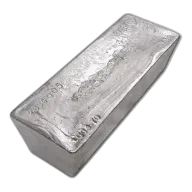
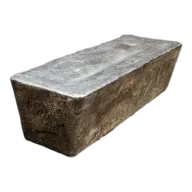
The 1000 oz silver bar is the COMEX futures delivery standard and the settlement vehicle that underpins the wholesale silver market. Unlike retail bars, these are not made to an exact weight: actual weight ranges from approximately 900 to 1,100 ounces, and each bar is individually stamped with its precise weight. Minimum fineness is .999, and bars come from LBMA and COMEX-accredited refiners.
Buyers at this size are almost always making a large, deliberate allocation to silver. A single bar runs to roughly $30,000 to $35,000 or more depending on spot, weighs 68 to 70 lbs (about 31 kg), and measures approximately 11.5 x 5.0 x 3.5 inches. That weight makes the bar theft-resistant by default, since it is difficult to move quickly, but it also makes home storage impractical for most owners. Professional vault storage with allocated segregation is the norm.
The economic case is simple: this is the cheapest way to own physical silver. Premiums sit at the very bottom of the market, and a $100,000 silver position costs roughly $101,000 in 1000 oz bars versus $110,000 in 1 oz silver bars at typical 1% versus 10% premiums. The trade-off is divisibility and buyer pool: you cannot sell part of a bar, and most local coin shops will not handle one. Note that the 1000 oz denomination refers almost exclusively to silver; there is no standard 1000 oz gold bar, as institutional gold trades in roughly 400 oz LBMA Good Delivery bars and roughly 100 oz COMEX bars.
This is predominantly a North American retail product. Institutional traders worldwide deal in 1000 oz bars, but through commodity exchanges rather than retail channels. In the UK and Europe, VAT on silver makes large physical silver purchases expensive, so bars held in bonded or VAT-free storage are the common route for positions of this size.
The Lowest Premiums in the Silver Market
1000 oz bars carry the lowest premiums of any silver product: typically 0.5 to 2% over spot under normal market conditions. For comparison, 100 oz silver bars run 2 to 4%, and 1 oz silver bars run 5 to 15%. Per-unit manufacturing, shipping, and handling costs are relatively fixed, so spreading them across a thousand ounces compresses the premium to a fraction of what smaller formats carry.
The savings compound at scale. At a 1% premium, a $100,000 position in 1000 oz bars costs about $101,000; the same position in 1 oz bars at a 10% premium costs about $110,000. That $9,000 difference buys no additional silver, only smaller packaging.
Premium behaviour during market stress also favours this format. Because 1000 oz bars sit inside institutional trading infrastructure with tight bid-ask spreads, their premiums are more stable during demand spikes than those of retail formats, where premiums can detach sharply from spot.
Refiner accreditation matters more here than at any other size. Bars from COMEX-recognised refiners trade at tighter spreads than generic bars, and buyback prices are typically near spot with modest handling fees. A bar that has left LBMA or COMEX custody may need to be re-assayed before it can re-enter the wholesale market, which is a cost worth factoring in if you plan to take physical delivery rather than keep the bar vaulted.
COMEX-Deliverable Bars by Refiner
There is no single branded product at this weight in the way there is for coins; the product is the COMEX-deliverable bar itself, produced to a minimum fineness of .999 by LBMA and COMEX-accredited refiners. The dealers on this page list generic accredited 1000 oz silver bars alongside named-refiner bars.
Refiners whose 1000 oz bars circulate in the retail market include Asahi, Sunshine Minting, Republic Metals, and the Royal Canadian Mint, whose COMEX-deliverable bars are also available through Canadian dealers. Bars from now-closed refiners, notably Engelhard and Johnson Matthey, may carry collector premiums on top of their metal value. A 1000 oz Johnson Matthey silver bar is the same trading unit as a current-production bar, but its historic brand can attract buyers willing to pay above the generic rate.
Whichever refiner produced it, each bar is stamped with its exact weight, since the format runs from roughly 900 to 1,100 ounces rather than a precise 1,000. Pricing is calculated on that stamped weight, not a nominal figure. Recognised refiner marks matter for resale on two counts: bars from accredited names enjoy tighter spreads and buyback prices near spot, while a bar from an unrecognised refiner, or one that has left LBMA or COMEX custody, faces re-assay before it can re-enter the wholesale market.
Institutional Liquidity, Narrow Retail Buyer Pool
Liquidity at this size is a paradox. These bars are the settlement vehicle for COMEX silver futures and form the backbone of the physical silver market, so institutional liquidity is as deep as it gets. At the retail level, the buyer pool for an individual bar is narrower than for 10 oz silver bars or 100 oz products, simply because of the high unit cost of $30,000 or more per bar.
Most local coin shops do not handle 1000 oz bars. Resale typically goes through bullion desks, online dealers, refiners, or depositories. Some major dealers, including APMEX, Monument Metals, and SD Bullion, sell and buy back 1000 oz bars directly from retail customers. Expect to sell slightly below spot plus handling fees, though the buy-sell spread is the smallest of any silver format.
Storage is the other practical constraint. At 68 to 70 lbs and roughly 292 x 127 x 89 mm, the bar is too heavy and bulky for casual home storage; most owners use private vault facilities, dealer storage programs, or specialised precious metals depositories with allocated segregation. Insurance costs are proportional to value but lower per ounce than for dispersed smaller holdings. There is also a chain-of-custody consideration: a bar that remains in LBMA or COMEX-recognised custody can re-enter the wholesale market without question, while one that has been delivered out may need re-assay first. For owners who never intend to take delivery, keeping the bar vaulted preserves both liquidity and resale value.
1000 oz Silver Bars: frequently asked questions
-
A 1000 oz silver bar's melt value is 1,000 times the $67.63 silver spot price. The bar weighs 31,103.4768 g, making it the standard wholesale format traded on the LBMA and COMEX exchanges. Dealer prices track spot closely, with a small per-ounce premium. Live offers tracked on this page come from 8 dealers across 8 listings.
-
A 1000 troy ounce silver bar weighs 1000 oz, or approximately 31.1 kilograms (31,103 grams, roughly 68.6 pounds). This is the standard LBMA good-delivery bar specification. The bars are heavy enough that most owners use vault storage rather than taking physical delivery.
-
LBMA good-delivery silver bars must weigh between 750 and 1,100 troy ounces; exact dimensions vary between refineries because bars are cast rather than struck to a fixed die. There is no single mandated size, though the bars are roughly brick-shaped to allow vault stacking. The LBMA publishes full good-delivery specifications including acceptable shape and marking requirements.
-
The 1,000 troy ounce bar is the standard LBMA and COMEX good-delivery format and the largest size widely traded through refineries and professional dealers. For almost all buyers, the 1,000 oz bar represents the top of the practically available size range.
-
Silver bar purchases attract purchase tax in several markets. UK buyers pay 20% VAT on silver bars. In Canada, investment silver bullion is generally GST-exempt. In Australia, silver bullion is subject to GST. At this bar size, some jurisdictions also have reporting requirements for large cash transactions, so buyers should verify local rules before purchasing.