 Go Gold
1 listing
Filters
| Product | /oz | Premium | Price | |
|---|---|---|---|---|
| $72.78 | +10.27% |
$2,338.76
NZ$4,095
|
View Deal |

Prices are fetched automatically and may not reflect current merchant prices. Currency conversions and tax treatment are approximate. Rankings are based solely on price. We are not a dealer and accept no responsibility for transactions with listed merchants. Past performance is not indicative of future results. This site does not provide investment advice. Full disclaimer
About the 1 Kilo New Zealand Mint Silver Bar
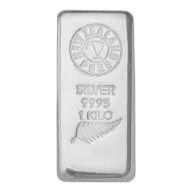
The 1 Kilo New Zealand Mint Silver Bar
This bar contains one kilogram of .9999 fine silver, equal to 32.15 troy ounces, produced under the New Zealand Mint name. The kilo is the standard metric bullion weight and one of the most premium-efficient ways to buy silver at retail: kilo bars typically run 3-6% over spot, among the lowest premiums available alongside 100 oz bars. Switching from 1 oz units to a kilo bar saves roughly 6% on the silver value, which on a purchase of around $1,000 translates to $50-$70 kept in metal rather than spent on fabrication.
The kilo format is recognised globally and is particularly prevalent in Asian markets, while in Europe it sits naturally alongside the other standard metric weights. Kilo buyers are optimising for the lowest cost per gram rather than flexibility: each bar is an all-or-nothing sale, so a holder who needs to raise a small amount of cash cannot liquidate part of the position the way an owner of 10 oz silver bars can. At .9999 purity this bar exceeds the .999 standard most silver bars use, which keeps it comfortably above every purity threshold that matters for tax exemptions. Physically, a silver kilo bar measures roughly 114mm x 57mm x 13mm depending on manufacturer, weighs 2.2 lbs, and stacks neatly in a home safe; store it below 50% relative humidity, since silver tarnishes in humid conditions.
Tax Treatment of 1 Kilo Silver Bars
Silver bars do not enjoy the broad exemptions that investment gold receives, so the buyer's country determines most of the tax cost.
- New Zealand: Fine silver of 99.9%+ purity in bar form is GST-exempt, so a .9999 kilo bar qualifies. New Zealand has no formal capital gains tax, though gains can be taxed as income if the IRD determines the bullion was bought for resale.
- Australia: GST-free as investment-grade silver at 99.9%+ purity from accredited sources. CGT applies on disposal, with a 50% discount for individuals after a 12-month hold.
- United Kingdom: 20% VAT on purchase and no CGT exemption, since bars have no legal tender status. This is the least tax-efficient market for silver bars.
- United States: Roughly 35 states exempt bullion from sales tax; long-term gains are taxed at the collectibles rate of up to 28%. IRA-eligible silver requires 99.9%+ purity, which this bar's .9999 fineness meets, subject to custodian acceptance.
- Canada: GST/HST exempt for silver refined to 99.9%+ purity in bar form.
- EU: Full standard VAT at national rates, from 17% in Luxembourg to 27% in Hungary; margin scheme relief generally covers second-hand stock rather than new bars.
- Singapore and Hong Kong: Singapore exempts 99.9%+ silver from accredited refiners under its Investment Precious Metals scheme; Hong Kong levies no sales tax, duty, or CGT at all.
Kilo Bars vs 100 oz Bars, 10 oz Bars, and Kilo Coins
The closest rival is the 100 oz silver bar, the traditional large format in North America. A kilo bar is roughly one-third of a 100 oz bar and the premiums are similar, so the choice is mostly regional convention and transaction size: the 100 oz bar suits North American buyers making a larger single commitment, while the kilo is the international standard and the easier unit to sell in metric markets.
Against the 10 oz bar, widely considered the most popular silver bar size, the kilo's marginal premium saving is small, often under 1% per ounce. What the 10 oz format buys with that small extra cost is divisibility: a stacker holding three 10 oz bars can sell a third of the position, where the kilo holder sells everything or nothing. For buyers accumulating in stages or expecting piecemeal sales, smaller bars are the more practical structure; for buyers making a single cost-optimised purchase, the kilo wins.
Kilo coins also exist, including Perth Mint's Lunar, Koala, and Kookaburra issues and Royal Mint pieces, but they carry collector premiums above bar prices. They are bought for design and mintage appeal rather than cost efficiency, and a buyer comparing them against a plain kilo bar is paying a meaningful surcharge for the sovereign-mint format. As with all bars, recognised refiner branding matters at resale; bars from major names sell readily, while obscure brands may need assay testing before a dealer will quote.
1 Kilo New Zealand Mint Silver Bar: frequently asked questions
-
The cheapest 1 kilo New Zealand Mint silver bar tracked here is $2,338.76 from Go Gold, currently at around 10.3% over the $67.63 silver spot price. A kilo bar contains 32.15 troy ounces of silver, so its value moves closely with the silver spot price.
-
The New Zealand Mint is a private mint based in New Zealand. It is not a central or government mint but produces a range of investment and commemorative silver and gold products sold through dealers worldwide. Its bars and coins are widely available through major bullion retailers in multiple countries.
-
The New Zealand Mint 1 kilo silver bar is 999.9 fine silver, meaning 999.9 parts per thousand are pure silver. It weighs exactly 1 Kilo (one kilogram). At this purity it meets the investment-grade specification used by major refineries and bullion exchanges.
-
Investment-grade 1 kilo silver bars from accredited refineries are largely interchangeable by metal content, so buyers naturally compare on price rather than brand. Dealers stock multiple brands to serve different buyer preferences and ensure supply availability. We track 1 dealer offering this bar, so you can compare current prices and premiums across all of them in one place.