1 listing
Filters
| Product | /oz | Premium | Price | |
|---|---|---|---|---|

 Australian Bullion Company
|
$72.47 | +8.54% |
$11,643.99
A$16,354
|
View Deal |
Prices are fetched automatically and may not reflect current merchant prices. Currency conversions and tax treatment are approximate. Rankings are based solely on price. We are not a dealer and accept no responsibility for transactions with listed merchants. Past performance is not indicative of future results. This site does not provide investment advice. Full disclaimer
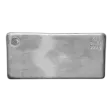
About the 5 Kilo Gold Bullion Australia Silver Bar
The 5 Kilo Gold Bullion Australia Silver Bar
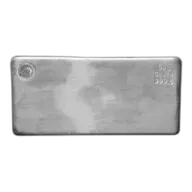
This bar from Gold Bullion Australia contains 5 kilograms of .999 fine silver: 160.75 troy ounces, around 11 lbs of metal in one piece. The 5 kg format sits at the upper end of what individual investors typically buy; beyond it, only the 100 oz (3.11 kg) and the 31.1 kg COMEX-size 1,000 oz bars are common. The case for going this large is premium efficiency. Premiums at 5 kg typically run 2-4% over spot, among the lowest in retail silver and comparable to 100 oz bars, with a modest but meaningful edge over kilo bars (3-5%) and 10 oz bars (4-6%) that compounds when accumulating at scale.
The trade-offs scale with the bar. It is completely indivisible, so the whole position sells at once. Liquidity is lower than for standard sizes because 5 kg is not a standard trading denomination in most markets; fewer dealers stock the size, buyback spreads can be wider than for 1 oz, 10 oz, kilo, or 100 oz bars, and shipping an 11 lb bar costs more than shipping smaller formats. The secondary market is primarily institutional buyers and large accumulators.
The natural home for metric large-format silver is Europe; in troy-ounce markets like the US and Canada the 100 oz bar is the equivalent size and the more liquid choice, and in Australia kilo and 100 oz bars are the more standard formats. Buyers choosing 5 kg are usually committed accumulators who have already decided silver weight per dollar is the priority.
5 Kilo Silver Bar Specifications and Handling
| Attribute | Detail |
|---|---|
| Producer | Gold Bullion Australia |
| Weight | 5 kilograms (5,000 g / 160.75 troy oz / approx. 11 lbs) |
| Purity | .999 fine silver |
| Legal tender | No; privately produced bar with no face value |
| LBMA Good Delivery size | No; LBMA silver Good Delivery bars are approximately 1,000 oz (31.1 kg) |
There are no standard packaging conventions at this weight; 5 kg bars typically ship in individual protective wrapping rather than capsules or tubes. Handling and storage deserve real thought before purchase. The bar weighs about as much as a large bag of flour, needs a sturdy safe or professional vault, and may not fit a bank safe deposit box. Silver's unfavourable value-to-weight ratio is the perennial issue: the same value in gold would fit in your palm.
Verification follows the standard silver playbook scaled up: precise weight and dimension measurement, the magnet slide test (silver is diamagnetic), and specific gravity testing. Counterfeit silver bars use copper, lead, or zinc cores rather than tungsten, since tungsten is nearly twice silver's density, and core substitutions show up in weight and dimension checks. Store the bar dry and wrapped, as silver tarnishes on exposure to sulphur compounds, and expect a dealer to weigh and test any large bar from a non-LBMA producer before buying it back.
Tax on a 5 Kilo Silver Bar by Country
At a 5 kg silver bar's value, sales tax differences between jurisdictions amount to serious money, and silver lacks gold's near-universal exemptions.
- Australia (the producer's home market): investment-grade silver of 99.9%+ purity is GST-free, so a .999 bar qualifies. Capital gains apply on disposal, with a 50% CGT discount for individuals holding longer than 12 months.
- New Zealand: silver of 99.9%+ purity is GST-exempt, which .999 meets.
- United States: no federal sales tax; most states exempt bullion and a bar of this value clears every threshold-based exemption (the highest is California's $2,000). Long-term gains are taxed at the collectibles rate of up to 28%. IRA-eligible silver requires 99.9%+ purity from accredited refiners, so check the producer's accreditation before assuming eligibility.
- Canada: GST/HST-exempt at 99.9%+ purity; gains taxed at the 50% inclusion rate.
- United Kingdom: 20% VAT on new silver, which on a bar this size is a four-figure sum at recent prices, plus CGT exposure on disposal since bars have no legal tender exemption. Bonded or offshore storage schemes can defer the VAT only while the bar stays vaulted.
- EU: full national VAT rates on new silver, roughly 17-27% depending on country.
- Singapore and Hong Kong: no GST on qualifying silver (Singapore's IPM scheme covers 99.9%+ silver) and no capital gains tax.
The practical upshot: large silver bars make most sense in GST-exempt or no-tax jurisdictions. In VAT countries the tax wipes out many times over the premium saved by buying big.
5 kg Bar vs 100 oz Bars and Recognised-Refiner Alternatives
The closest rival to any 5 kg silver bar is the 100 oz bar (3.11 kg). The two compete directly on premium efficiency, both in the 2-4% over spot range, with the 5 kg bar holding more silver per piece. The 100 oz format wins on liquidity: it is a standard unit of trade in the North American silver market, stocked and bought back by every major dealer, while 5 kg bars may need to be special-ordered and can attract wider buyback spreads. For US and Canadian buyers the 100 oz bar is generally the better choice; 5 kg suits metric-market buyers.
Within the 5 kg weight class itself, the most prominent products are the Geiger Edelmetalle 5 kg cast bar, known for its anti-counterfeiting security features, and the PAMP Suisse 5 kg cast bar, though even these are less commonly stocked than the same refiners' smaller bars. Various private mints produce 5 kg bars with inconsistent availability. A bar from a recognised refiner resells with tighter spreads, typically 1-3% below spot, so a cheaper bar from a less-known producer needs a meaningful purchase discount to come out ahead after resale.
If flexibility matters more than the last point of premium, stepping down to kilo bars costs roughly an extra 1 percentage point of premium but splits the position into five sellable pieces. The biggest premium saving in silver bars happens well below this size anyway, between 1 oz and 10 oz; everything above 10 oz is incremental optimisation paid for with reduced divisibility.
5 Kilo Gold Bullion Australia Silver Bar: frequently asked questions
-
The cheapest offer we track is $11,643.99. The bar contains 5 Kilo of 999 fine silver, equivalent to roughly 160.75 troy oz, so its metal value rises and falls directly with the silver spot price of $67.63 per troy ounce.
-
The bar is produced by Gold Bullion Australia, an Australian bullion brand that fabricates bars in both gold and silver. The manufacturer is based in Australia and produces bullion across a range of weights for retail and institutional buyers.
-
A 5 kg silver bar weighs 5 kilograms, roughly 11 pounds. It is a substantial piece, considerably larger and heavier than a standard 1 kg bar. Exact dimensions vary by manufacturer; check the product listing or contact the dealer for precise measurements before ordering.