1 listing
Filters
| Product | /oz | Premium | Price | |
|---|---|---|---|---|

 Best Bullion
Out of Stock
$237.18 for 10+
Best Bullion
Out of Stock
$237.18 for 10+
|
$74.03 | +12.37% |
$238.32
NZ$417
|
View Deal |
Prices are fetched automatically and may not reflect current merchant prices. Currency conversions and tax treatment are approximate. Rankings are based solely on price. We are not a dealer and accept no responsibility for transactions with listed merchants. Past performance is not indicative of future results. This site does not provide investment advice. Full disclaimer
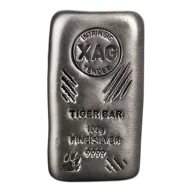
About the 100g Intrinsic Tender Silver Bar
The 100g Intrinsic Tender Silver Bar
This bar contains 100 grams of .999 fine silver, the standard purity for silver bullion bars. At 3.22 troy ounces, the 100g format is the metric world's practical equivalent of the 10 oz weight class scaled down: a meaningful chunk of silver without a large outlay, and a natural fit for buyers who think in grams rather than troy ounces. Metric weights dominate silver trading in Europe, Asia, and Australia, where 100g, 250g, 500g, and 1 kg bars are the standard sizes, in contrast to North America's troy-ounce conventions.
Premiums on 100g silver bars run broadly comparable to 10 oz bars, since the two sizes are close in weight. That places the format usefully down the premium curve from 1 oz units, where per-ounce costs are highest, while remaining far more affordable per bar than the kilo sizes. Bars in general are the cheapest way to hold silver: they carry the lowest premiums of any silver form, which is the whole argument for choosing a bar over a sovereign coin if maximising metal per dollar is the goal.
The consideration with any bar at this weight is the producer's name. Bars from LBMA-accredited refiners command better resale prices and wider dealer acceptance, while bars from lesser-known producers typically sell back at melt value with no brand premium recovered. A buyer choosing this bar over an accredited-refiner equivalent should be getting a meaningful price advantage at purchase to compensate for the thinner buyback market later, and should keep any original sealed packaging intact, since sealed bars resell better than loose ones.
100g Silver Bar Specifications
| Attribute | Detail |
|---|---|
| Silver content | 100 grams (3.2151 troy oz) |
| Purity | .999 fine silver |
| Format | Bar |
Silver bars at this weight are produced by both methods used across the industry: cast bars, poured into moulds with a more rustic finish and slightly lower premiums, and minted bars, cut, stamped, and polished, often sealed in protective packaging. A 100g silver bar is larger than its gold counterpart because silver is far less dense, but it remains a very manageable object for home storage.
Silver's storage quirk applies at any size: the metal tarnishes when exposed to sulphur compounds in the air. Tarnish does not affect metal content or melt value, but it can reduce resale appeal, so the bar should be kept dry, ideally in sealed packaging, with anti-tarnish strips a worthwhile addition to any storage container. Authentication at this weight relies on the standard tests: precise weight and dimension checks, the magnet slide test (silver is diamagnetic), and specific gravity. Counterfeit silver is less common than counterfeit gold because the lower metal value gives forgers less incentive, with plated copper, lead, or zinc cores the usual approach, all detectable by weight and dimension mismatch.
Tax Treatment of 100g Silver Bars
Silver bars follow the standard non-gold bullion rules, which vary sharply by country.
- UK: 20% VAT on purchase, and CGT applies on sale since bars have no legal tender status. This makes bars the least tax-efficient way to hold silver in the UK despite their lower premiums.
- EU: full national VAT on new silver bars, typically 17-27% depending on the country. Margin scheme treatment can reduce the effective rate on pre-owned bars in some jurisdictions, but new bars are taxed in full.
- US: no federal sales tax; most states exempt bullion while some tax it or apply purchase thresholds. Long-term gains are taxed at the collectibles rate of up to 28%. IRA-eligible silver must be 99.9%+ purity from an accredited refiner, so eligibility for this bar depends on the producer's accreditation status and custodian acceptance.
- Canada: GST/HST exempt; .999 fineness clears the federal 99.9% threshold for refined silver in bar form.
- Australia and New Zealand: GST-free as investment-grade silver at 99.9% purity.
- Singapore and Hong Kong: Singapore's Investment Precious Metals scheme exempts qualifying silver from GST, and Hong Kong charges no sales tax or duty. Neither taxes capital gains.
100g Silver Bars vs 10 oz Bars and Accredited Alternatives
The closest functional rival is the 10 oz silver bar, which weighs only slightly more (311g against 100g's 3.22 oz equivalent is roughly a third of it; the comparison in premium terms is with three 100g bars). The 10 oz size is widely considered the most popular silver bar format and is the default quote at North American dealers, so buyers in troy-ounce markets will find 10 oz easier to resell, while buyers in metric markets will find 100g the more natural trading size. Premiums between the formats are broadly comparable weight for weight.
Within the 100g format itself, the established names are the European refiners: Valcambi, PAMP, Heraeus, and Umicore all produce 100g silver bars, available cast or minted, with LBMA accreditation behind them. Those bars carry the strongest chain-of-custody assurance and the best buyback treatment. The generic alternative, including bars from newer or smaller producers, competes on purchase price alone; the saving is real, but it comes with the expectation of selling at melt value.
The other direction worth weighing is consolidation. Moving up to 500g or 1 kg bars improves premium efficiency further, with the kilo bar the international standard for retail silver in Europe, Asia, and Australia. The 100g bar earns its place lower down the ladder as an affordable, divisible metric unit: easier to liquidate in parts than one large bar, at a modest premium cost for the flexibility.
100g Intrinsic Tender Silver Bar: frequently asked questions
-
Intrinsic Tender is a bullion brand whose name reflects the idea that metal holds value by its own physical content rather than by decree. The brand produces silver, gold, and platinum bars in standard investment weights. No detailed founding or manufacturing history is confirmed in available sources; assay details appear on the bar's packaging.
-
Keep the bar in its original airtight capsule or sealed plastic sleeve to limit contact with air and moisture. Anti-tarnish strips inside a storage box add further protection. Avoid handling the bar surface directly; use cotton gloves or hold it by the edges. A cool, dry location away from humidity and household chemicals preserves the finish longest.