 SD Bullion
1 listing
Filters
| Product | /oz | Premium | Price | |
|---|---|---|---|---|
| $72.45 | +34.05% | $72.45 | View Deal |

Prices are fetched automatically and may not reflect current merchant prices. Currency conversions and tax treatment are approximate. Rankings are based solely on price. We are not a dealer and accept no responsibility for transactions with listed merchants. Past performance is not indicative of future results. This site does not provide investment advice. Full disclaimer
About the 1 oz World's Wildlife Silver Coin
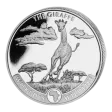
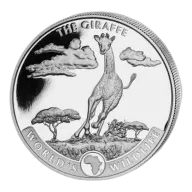
The 1 oz World's Wildlife Silver Coin
The 1 oz World's Wildlife Silver Coin is an annual bullion series issued by the Republic of Congo and struck by Geiger Edelmetalle, a German precious metals firm, in cooperation with the Bavarian Main Mint. Each coin contains one troy ounce of .9999 fine silver, a four-nines purity that is unusually high for a bullion coin series; most silver bullion coins are .999, and four-nine silver is typically associated with Canadian, Australian and some Austrian products.
The series' other defining trait is scarcity by design. The standard silver mintage is capped at 30,000 coins per year, which positions World's Wildlife as a premium low-mintage bullion series: modest premiums above spot, structured collectibility, and a new animal design every year rotating between land, air and water creatures. Colourised and gilded variants are limited further to 5,000 pieces each, and each coin ships in a capsule with a numbered certificate of authenticity.
Despite carrying a 20 Francs face value as Republic of Congo legal tender, the coins have no connection to Africa beyond the licensing arrangement; they are designed, struck and primarily distributed in Germany, where annual-design series with mintages in the 30,000-50,000 range are particularly popular with collectors who stack bullion. Geiger Edelmetalle is better known for its security-line silver bars, and this series is the firm's most prominent coin programme.
World's Wildlife Silver Coin Specifications
| Attribute | Value |
|---|---|
| Weight | 1 troy oz (31.1g) |
| Purity | .9999 fine silver |
| Diameter | 38.6mm |
| Face value | 20 Francs (Republic of Congo) |
| Edge | Reeded |
| Finish | Brilliant Uncirculated |
| Mintage | 30,000 per year (standard); 5,000 per colourised/gilded variant |
The common obverse carries the coat of arms of the Republic of Congo, with a prominent leopard's head, a spear and an elephant's tusk, alongside the face value and country name. The reverse changes annually, showing each year's featured animal in a naturalistic habitat setting. Beyond the standard silver coin, the programme includes gold versions in 0.5g proof (5,000 mintage) and 1 oz uncirculated (just 1,000 pieces) sizes, all at .9999 fineness.
World's Wildlife Silver Coin Tax Treatment by Country
At .9999 fineness the coin clears every purity threshold that matters for silver, so its tax treatment follows the standard rules for investment silver in each country.
- Germany/EU: Silver attracts VAT at national rates (19% in Germany, 17-27% across the EU). Germany's margin scheme (Differenzbesteuerung) can reduce the effective rate on qualifying coins to tax on the dealer's margin only, which is part of why this German-struck series competes well in its home market.
- US: No federal sales tax; most states exempt bullion. The .9999 purity comfortably exceeds the 99.9% IRA requirement for silver, making the coin IRA-eligible with an approved custodian. Long-term gains are taxed at the collectibles rate of up to 28%.
- UK: 20% VAT on new silver, and no CGT exemption since the coin is not UK legal tender. Availability through mainstream UK dealers is limited.
- Canada: 0% GST/HST for silver of at least 99.9% purity in coin form.
- Australia and New Zealand: 0% GST on investment-grade silver of at least 99.9% purity.
- Singapore and Hong Kong: Hong Kong has no sales tax; Singapore exempts qualifying investment precious metals from GST.
A New Animal Every Year Since 2019
World's Wildlife launched in 2019 with the Giraffe and has followed a strict land, air and water rotation ever since: the Whale in 2020, the Bald Eagle in 2021, the Brown Bear in 2022, Manta Rays in 2023, the Peregrine Falcon in 2024, the Lion in 2025 and the Shark in 2026. The rotation gives the series a structured collectibility that encourages set completion, since each three-year cycle covers one creature from each habitat.
The production arrangement behind the series is a model used by several small nations: the Republic of Congo (Congo-Brazzaville) provides the legal tender authority and earns seigniorage revenue, while Geiger Edelmetalle and the Bavarian Main Mint handle design, striking and distribution from Germany. The country never sees the coins in circulation; the 20 Francs face value exists to confer legal tender status, which matters for tax classification in some jurisdictions and for collector appeal.
No dedicated anti-counterfeiting technology has been documented for the series. Authentication rests on Geiger Edelmetalle's production quality, the detail of the engraving, and the numbered certificate of authenticity supplied with each capsuled coin, an approach more typical of collector-oriented bullion than of high-volume sovereign coins with laser-engraved security marks.
World's Wildlife vs Silverback Gorilla, Somali Elephant, and Kookaburra
The most frequent confusion is with the Congo Silverback Gorilla, and the two are entirely separate: World's Wildlife is issued by the Republic of Congo (Congo-Brazzaville) and struck by Geiger Edelmetalle in Germany, while the Silverback Gorilla is Democratic Republic of Congo legal tender struck by Scottsdale Mint in the US. The Gorilla runs a larger 75,000 mintage at .999 purity against World's Wildlife's 30,000 at .9999, so the World's Wildlife coin is both scarcer and finer.
The closest structural rival is the Somali Elephant, struck by the Bavarian Mint: the same .9999 purity, the same 30,000 silver mintage, and the same annual-design formula under an African nation's legal tender authority. The choice between them is largely aesthetic, one rotating through different animals and the other reworking the elephant theme each year.
Against a major sovereign series like the 1 oz Australian Kookaburra, the trade-off is mintage versus market depth. The Perth Mint coin runs to 500,000 pieces with the global liquidity of a top-tier mint behind it; World's Wildlife offers a mintage one-seventeenth that size with correspondingly more scarcity appeal but a narrower resale market concentrated in Germany and among series collectors. Buyers who prioritise easy resale lean to the big sovereign coins; buyers who want low-mintage annual designs at close-to-bullion pricing are the audience this series was built for.