6 products · 26 deals
Filters






Prices are fetched automatically and may not reflect current merchant prices. Currency conversions and tax treatment are approximate. Rankings are based solely on price. We are not a dealer and accept no responsibility for transactions with listed merchants. Past performance is not indicative of future results. This site does not provide investment advice. Full disclaimer
About 2 oz Silver Rounds
2 oz Silver Rounds: Double-Weight Stacking Without the Mint Markup
A 2 oz silver round contains 62.207 grams of silver in a coin-shaped format struck by private mints. Rounds carry no face value, no legal tender status and no government backing; what they offer instead is metal at a smaller markup than sovereign coins. The 2 oz weight itself is a relatively modern bullion size rather than a traditional standard, and while 1 oz remains overwhelmingly dominant among silver rounds, the 2 oz format has carved out a niche among stackers who want fewer, heavier pieces.
The buyer at this weight is almost always optimising for silver per dollar. Rounds occupy the middle of the silver premium hierarchy, cheaper than government coins because there is no legal tender status or sovereign branding to pay for, while keeping the stackable, countable coin shape that bars lack. Doubling the weight per piece appeals to buyers consolidating a growing stack: half as many pieces to count, tube and store for the same ounces.
The 2 oz weight class also has a different character from the generic 1 oz market. Sovereign mints made the weight famous through coins like the Royal Mint's Queen's Beasts series, which used the larger format as a bigger canvas for detailed artwork, and private mints have followed the same logic. Our dealer listings at this weight feature design-led series such as the Scottsdale Stacker, the Aztec Calendar, and Golden State Mint's Incuse Indian alongside plain generic rounds, so a buyer here is often choosing between pure commodity silver and a design they like at a small extra cost.
The main tradeoffs to weigh before buying: against 2oz silver coins like the Queen's Beasts, rounds give up brand recognition, government security features and, for UK buyers, CGT exemption. Against 1 oz rounds, the 2 oz piece gives up granularity at resale, since each piece sold is a larger chunk of the stack. And one tax note matters in Britain and the EU: rounds attract full VAT there just as bars and new coins do, so the premium saving is the entire advantage, with no tax angle to add to it.
How 2 oz Round Premiums Compare
Silver rounds as a category typically carry premiums of 5-10% over spot, positioned between silver bars (3-8% for common sizes) and government silver coins, which run 15-25% in normal market conditions. That positioning is the whole sales pitch: the coin format at near-bar premiums. A 2 oz round inherits that economics, delivering two ounces of .999 fine silver in one piece without the sovereign-mint markup that a 2 oz Queen's Beasts or Tudor Beasts coin commands.
Within the rounds market, brand and design move the price modestly. Well-known mints such as Sunshine and Asahi carry slightly higher premiums than plain generic rounds, and special-edition or popular design series can carry collector premiums above generic product, though that is the exception rather than the rule. The 2 oz weight class leans toward the design-led end: series like the 2 oz Scottsdale Stacker and the Aztec Calendar trade partly on their designs, while plain generic 2 oz rounds price closest to melt. A buyer who cares only about ounces should compare the generic listings first.
It is worth being clear about what the bigger piece does not buy. The significant per-ounce discounts that come with size in bullion belong to bars, particularly at 10 oz and above; the 2 oz coin-shaped format is about convenience and design canvas rather than a meaningful premium step-down. The honest comparison for a cost-focused stacker is between a 2 oz round, two 1 oz rounds, and a small bar, and the spread between those options at any given dealer is usually narrow enough that dealer-to-dealer comparison matters more than format choice.
Tax determines where rounds make sense at all. In the US, most states exempt bullion from sales tax, and rounds compete purely on premium. Canada, Australia, New Zealand and Singapore exempt qualifying .999+ silver from GST. In the UK and EU, rounds attract full VAT (20% in the UK) with no margin-scheme relief and no CGT exemption, which is why rounds are hard to justify there against CGT-exempt Britannias or lower-premium bars, and why the format remains primarily a North American phenomenon.
2 oz Silver Rounds Worth Knowing
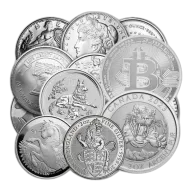
Generic 2 oz silver rounds are the most widely stocked product in this weight class according to our dealer data, and they behave exactly like commodity silver: .999 fine metal, priced on weight, with the design secondary to the content. For pure stacking they are the baseline against which everything else at this weight should be compared.
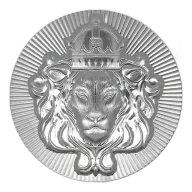
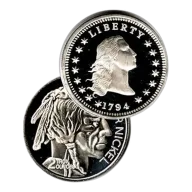
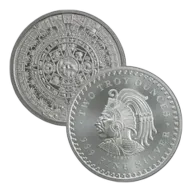
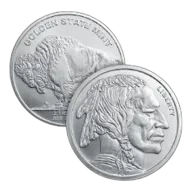
The branded entries bring designs that the generic market lacks. The Scottsdale Stacker is nearly as widely stocked as the generics and comes from Scottsdale Mint with a format built for stacking, fitting the consolidation logic that draws buyers to the 2 oz weight in the first place. The Aztec Calendar round is the other major design series at this weight, and Golden State Mint contributes both its Buffalo round, a 2 oz take on the classic design based on the US Buffalo nickel that is the most widely produced generic silver round at 1 oz, and the Incuse Indian, one of the mint's popular design series. Rounding out the listings are themed pieces such as the Privateer, Second Amendment, Bull and Bear, Walking Liberty (based on the classic Walking Liberty half dollar design) and Texas rounds.
Two buying notes follow from that line-up. First, classic-design rounds like the Buffalo and Walking Liberty are produced by various mints, so two listings with the same design name may come from different manufacturers; the metal content is the same, but established mints resell more easily than obscure ones. Second, the design series at this weight can develop secondary-market followings, but rounds are primarily purchased for metal content, and any collector premium should be treated as a bonus rather than a plan.
For buyers comparing across formats at this weight, the alternatives are 2oz silver coins such as the Royal Mint's Queen's Beasts and Tudor Beasts series (sovereign products at sovereign premiums) and stepping up to the 5 oz Scottsdale Stacker or other larger rounds for buyers consolidating further. Bars at 2 oz barely exist, as most refiners jump from 1 oz to 5 oz or 10 oz, which leaves rounds as the practical private-mint option at exactly this weight.
Selling and Storing 2 oz Rounds
Resale at this weight follows the general rules for silver rounds, with one extra consideration for the non-standard size. Rounds from well-known private mints, Scottsdale and Golden State Mint among the names in this weight class, sell without difficulty to any reputable dealer. Generic or obscure-brand rounds are saleable but may take longer to move and recover less of their original premium, and the research on the 2 oz weight specifically notes that generic rounds at non-standard sizes have limited resale appeal compared with recognised coins. Brand matters more here than at 1 oz, where the sheer volume of the market absorbs everything.
The exit economics are the flip side of the cheap entry. A round bought at 8% over spot might sell back at 4-6% over spot, while a sovereign coin bought at 20% might sell at 15-18%; the round buyer gets more metal upfront and the coin buyer recovers more premium at exit. For a long-term holder the round usually still wins on total cost, but sellers should not expect to recoup design or collector premiums unless the specific series has developed a following.
Geography shapes the market for these pieces. Silver rounds are primarily a North American phenomenon, strongest in the US where the dense dealer network makes resale straightforward. In Europe and Asia, sovereign coins and bars dominate retail and dealers are less familiar with rounds, doubly so at a non-standard weight. A holder likely to sell outside North America should factor that in.
Storage is simple and familiar. Rounds share the coin format, so they are compatible with standard tubes and capsules, and a 2 oz round at 62.2 grams simply takes a larger capsule than its 1 oz counterpart. The usual silver care rules apply in full: silver tarnishes on exposure to sulphur compounds in air, and although tarnish does not affect melt value, it dulls resale appeal, so dry storage conditions and anti-tarnish strips are worthwhile. Per ounce of metal, the space and weight demands are the same as any silver, which means a serious stack of 2 oz rounds needs the same safe capacity planning as coins or bars of equal weight.
2 oz Silver Rounds: frequently asked questions
-
The metal value of a 2oz silver round is twice the silver spot price, currently $67.63 per troy ounce. Dealer ask prices sit above this floor because of fabrication and distribution costs. We track 13 dealers selling 2oz rounds, so you can compare their premiums directly on this page.
-
A premium is the percentage a dealer charges above the silver spot price ($67.63 per troy ounce). On 2oz rounds the per-ounce premium tends to run slightly higher than on 1oz rounds because the format is less liquid and produced in smaller volumes. Use the premiums tab above to compare live dealer premiums across the 13 sellers we track.
-
Silver rounds are privately minted discs of silver with no face value and no legal-tender status. Silver coins are struck by government mints and carry a nominal face value, making them legal tender in their country of issue. Because rounds are not backed by a sovereign guarantee, they typically command a lower premium than government-issued coins of the same weight.
-
2oz silver rounds are commonly sold in tubes of 10, giving 20 troy ounces per tube. This differs from the 20-round tubes typical for 1oz rounds. Tube quantities can vary by manufacturer, so check the product listing to confirm the count before ordering.
- 2 oz Allegories Silver Round
- 2 oz Aztec Calendar Silver Round
- 2 oz Bull and Bear Silver Round
- 2 oz Bull & Bear Silver Round
- 2 oz Call of the Wild Silver Round
- 2 oz Day of the Dead Silver Round
- 2 oz Eagle Stacker Silver Round
- 2 oz Egyptian Gods Silver Round
- 2 oz Golden State Mint Buffalo Silver Round
- 2 oz Golden State Mint Lunar Silver Round
- 2 oz GSM Silver Eagle Silver Round
- 2 oz Incuse Indian Silver Round
- 2 oz Monarch Precious Metals Zodiac Silver Round
- 2 oz Morgan Silver Round
- 2 oz Privateer Silver Round
- 2 oz Scottsdale Stacker Silver Round
- 2 oz Signs of the Zodiac Silver Round
- 2 oz Silver Buffalo Silver Round
- 2 oz Silver Round
- 2 oz The Awakening Series Silver Round
- 2 oz US Mint Liberty Silver Round
- 2 oz Walking Liberty Silver Round
- Pre-Owned 2 oz Silver Round
- Allegories
- Aztec Calendar
- Bull and Bear
- Bull and Bear
- Call of the Wild
- Day of the Dead
- Eagle Stacker
- Egyptian Gods
- Golden State Buffalo
- Golden State Lunar
- GSM Silver Eagle
- Incuse Indian
- Liberty
- Morgan
- Privateer
- Scottsdale Stacker
- Silver Buffalo Round
- The Awakening Series
- Walking Liberty
- Zodiac
- Zodiac