26 products · 238 deals Prices & premiums exclude tax to compare across countries
Filters
| Product | /oz | Premium | Price (ex. tax) | |
|---|---|---|---|---|

10 deals
|
$69.17 | +2.28% | $69.17 | Compare |
| $71.25 | +5.36% | $71.25 | Compare | |
| $71.42 | +5.61% | $71.42 | Compare | |
| $72.20 | +6.76% | $72.20 | View Deal | |

3 deals
|
$72.72 | +7.53% | $72.72 | Compare |

111 deals
|
$72.22 |
+8.33%
+30% inc.VAT
|
$72.22
£65 inc.VAT
|
Compare |

4 deals
|
$73.82 | +9.16% | $73.82 | Compare |
| $74.74 | +10.52% | $74.74 | Compare | |

22 deals
|
$74.83 | +10.65% | $74.83 | Compare |
| $74.88 | +10.72% | $74.88 | View Deal | |
| $76.86 | +13.65% | $76.86 | Compare | |

4 deals
|
$76.88 | +13.68% | $76.88 | Compare |
| $76.88 | +13.68% | $76.88 | View Deal | |

15 deals
|
$76.88 | +13.68% | $76.88 | Compare |
| $77.46 | +14.54% | $77.46 | View Deal | |
| $77.98 | +15.31% | $77.98 | View Deal | |

8 deals
|
$78.30 | +15.78% | $78.30 | Compare |
| $81.39 | +20.35% | $81.39 | View Deal | |

14 deals
|
$85.90 | +28.85% |
$85.90
£64
|
Compare |
| $91.88 | +35.86% | $91.88 | View Deal | |

2 deals
|
$95.12 |
+42.68%
+71% inc.VAT
|
$95.12
£86 inc.VAT
|
Compare |
| $95.62 |
+43.44%
+72% inc.VAT
|
$95.62
£86 inc.VAT
|
Compare | |
| $97.13 |
+45.71%
+75% inc.VAT
|
$97.13
£87 inc.VAT
|
View Deal | |
| $97.27 |
+45.91%
+75% inc.VAT
|
$97.27
£87 inc.VAT
|
Compare | |
| $97.44 |
+46.17%
+75% inc.VAT
|
$97.44
£88 inc.VAT
|
Compare | |
| $100.99 |
+51.49%
+82% inc.VAT
|
$100.99
£91 inc.VAT
|
View Deal |




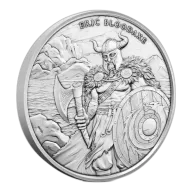

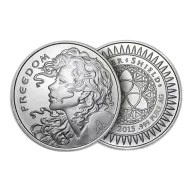

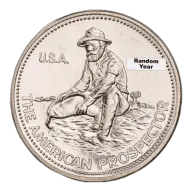
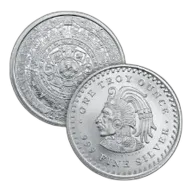

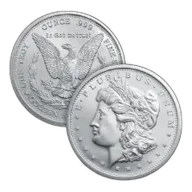
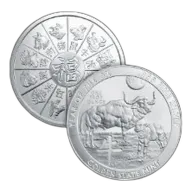

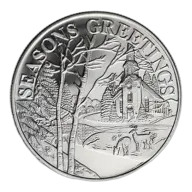

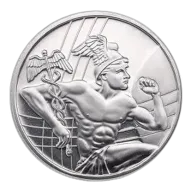







Prices are fetched automatically and may not reflect current merchant prices. Currency conversions and tax treatment are approximate. Rankings are based solely on price. We are not a dealer and accept no responsibility for transactions with listed merchants. Past performance is not indicative of future results. This site does not provide investment advice. Full disclaimer
About 1 oz Silver Rounds
Coin Format at Near-Bar Premiums
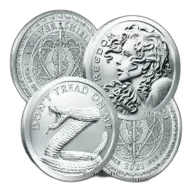
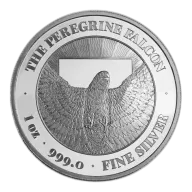
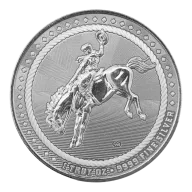
A 1oz silver round is a coin-shaped piece of .999 fine silver struck by a private mint. It has no face value, no legal tender status and no government backing; what it offers instead is the practical format of a coin, stackable, countable, tube-compatible, at a price much closer to a bar. The 1oz size dominates the round market the way it dominates bullion generally, and rounds are far more popular in silver than in gold because at roughly USD 30-40 per ounce of metal, shaving premium actually moves the needle for a retail stacker.
The buyer is the ounce-maximiser. Rounds typically run 5-10% over spot, between silver bars at 3-8% and government 1oz silver coins at 15-25%. Every dollar not spent on a sovereign strike buys more metal, and for buyers who plan to hold for the silver itself rather than the brand, that arithmetic is the whole case. Some private mints add modest collectible appeal through themed design series, but rounds are fundamentally a commodity product where the design is secondary to the metal content.
The trade-offs concentrate at resale and at the border. Rounds sell at a discount to equivalent sovereign coins and lack the global, automatic recognition coins enjoy; they are primarily a North American phenomenon, less familiar to dealers in Europe and Asia, where sovereign coins and bars dominate. Tax treatment matches bars, not coins: in the UK a round carries 20% VAT on purchase and CGT liability on sale, with none of the Silver Britannia's legal tender exemption, which makes rounds hard to justify for UK buyers against either Britannias or cheaper bars.
Elsewhere the picture is friendlier. Rounds at 99.9%+ purity are GST-exempt in Canada, Australia and New Zealand, and Singapore's exemption covers rounds from LBMA-accredited sources. In the tax-neutral US market, where the dealer network makes resale straightforward, the round competes purely on premium against liquidity, and that is the market where it wins most often.
The Middle Tier of Silver Pricing
1oz silver rounds carry premiums of roughly 5-10% over spot, occupying the deliberate middle ground of the silver market: above bars at 3-8% for common sizes, far below sovereign coins at 15-25%. The discount to coins exists because a round buyer pays for none of the things that make coins expensive, no legal tender status, no sovereign mint branding, no government security programmes; the small markup over bars pays for the coin-like format and per-piece striking.
Against the alternatives at the same weight, the maths is simple. Versus a 1oz American Silver Eagle at the top of the coin premium range, a generic round can save 15 or more percentage points per ounce, which compounds into many extra ounces over a sustained stacking programme. Versus a 1oz bar, the round costs a point or two more for a format many stackers find easier to handle, count and tube. Moving up the weight scale leaves rounds behind entirely: 2oz and 5oz rounds exist but are uncommon, so buyers scaling up migrate to 10oz bars and beyond, where premiums drop to 4-8% and below.
Within the round market, brand creates a narrow price hierarchy. Well-known mints such as Sunshine and Asahi carry slightly higher premiums than fully generic rounds, and special edition or popular design series can command collector premiums above generic pricing, though that is the exception rather than the rule.
The premium saved at purchase is partly returned at exit. A round bought at 8% over spot might sell back at 4-6% over; a sovereign coin bought at 20% might sell at 15-18%. The round buyer gets more metal upfront, the coin buyer recovers more premium at resale, and which side wins depends on holding intentions and the local market. One more caveat for VAT jurisdictions: rounds offer no VAT advantage over coins or bars in the UK and EU, and no margin scheme benefit since they are not second-hand coins, so the saving there is confined to the product markup itself.
The Designs and Mints Behind 1oz Rounds
Silver rounds are more commodity than brand, but a handful of designs and private mints account for most of the market, and the name on the round affects what a dealer will pay for it later.
| Round | Mint | Notable |
|---|---|---|
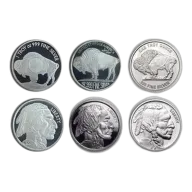
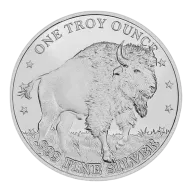
| Buffalo round | Various | Classic design based on the US Buffalo nickel; the most widely produced generic silver round |
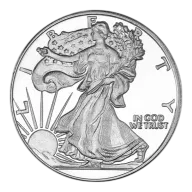
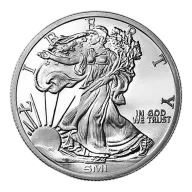
| Walking Liberty round | Various | Based on the Walking Liberty half dollar design |
| Sunshine Minting round | Sunshine Minting | MintMark SI security feature; widely recognised |
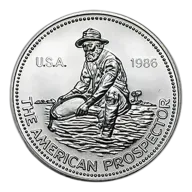
| SilverTowne Prospector | SilverTowne | Established US brand; popular generic round |
| Asahi round | Asahi | Successor to Johnson Matthey; major refiner branding |
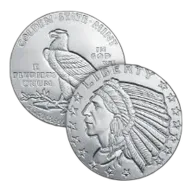
| Incuse Indian | Golden State Mint | Popular design series |
| Provident Prospector | Provident Metals | Dealer house brand |
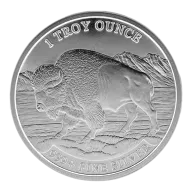
The Buffalo round deserves its top billing: produced by multiple private mints to the same classic design, it functions as the de facto generic standard, priced on metal content and traded on sight in the North American market. The heritage designs, Buffalo and Walking Liberty, borrow familiar American coin artwork precisely because recognisability eases resale, while mints like Golden State produce original series that occasionally develop secondary followings.
Standard purity is .999 fine, with some mints producing .9999 rounds, and standard weight is a true troy ounce of 31.1g. The major private mints behind the market include Sunshine Minting, SilverTowne, Asahi, Golden State Mint, Highland Mint and Elemetal, and several large dealers sell house-brand rounds struck by these mints. Fractional rounds at 1/2oz, 1/4oz and 1/10oz exist from some mints for buyers wanting smaller pieces without sovereign coin pricing, though the 1oz remains overwhelmingly dominant. For buyers weighing rounds against their closest substitutes, the comparison set is the generic 1oz bar on price and the sovereign coin, such as the Silver Maple Leaf, on liquidity.
Resale Reality for Private-Mint Silver
Rounds from well-known private mints, Sunshine, SilverTowne, Asahi, sell without difficulty to any reputable dealer, particularly in the US and Canada where the format is a market staple. Generic or obscure-brand rounds remain sellable but may take longer to place and recover less of their original premium. The standing advice is blunt: if resale liquidity matters, stick to established mints, because the few cents saved on a no-name round are usually surrendered with interest at exit.
The spread profile sits where the premium profile predicts. Rounds generally sell at a discount to equivalent sovereign coins but at parity with, or a small premium to, generic bars. A round bought at 8% over spot might fetch 4-6% over from a dealer, a narrower absolute spread than coins even though coins recover a larger share of their bigger premium. Quantity helps: tubes of 20 and monster-box volumes trade efficiently with tight spreads, making rounds well suited to bulk stacking strategies. Geography matters too; outside North America, dealers are less familiar with rounds, and sovereign coins or bars resell more smoothly in Europe and Asia.
Authentication relies on physics rather than mint security programmes. Rounds carry no Bullion DNA or government specification registry; Sunshine Minting's MintMark SI, readable with a proprietary decoder lens, is the main anti-counterfeiting technology in the category. Basic checks cover the rest: a true 1oz round weighs 31.1g at the correct dimensions, and the magnet slide test exploits silver's diamagnetism, with a rare earth magnet sliding slowly down a tilted round while ferrous fakes stick and lead or tin fakes slide wrong. Counterfeit rounds exist but are less common than counterfeit coins, since there is no collector premium to exploit.
Storage is identical to coins. Rounds fit standard tubes, typically 20 per tube, and capsules, stacking exactly as sovereign coins do, and the usual silver rules apply: dry conditions, anti-tarnish strips, sealed packaging where practical, no PVC or rubber contact. Tarnish remains cosmetic and melt value is unaffected, but clean pieces in tubes present better when the stack eventually goes back to the dealer.
1 oz Silver Rounds: frequently asked questions
-
A 1 oz silver round contains exactly 1 oz of .999 fine silver, so its melt value tracks the live $67.63 silver spot price one-to-one. Dealer prices add a premium above spot to cover minting and handling. The premiums tab on this page shows the current spread across tracked dealers.
-
Investment-grade silver rounds are .999 fine, meaning 99.9% pure silver. This is the standard for most privately minted rounds and is the same purity as government bullion coins such as the Silver Britannia and American Silver Eagle. Sterling silver (.925) and older junk silver coins carry lower purity and are not classified as investment grade.
-
A standard tube or roll of 1 oz silver rounds holds 20 rounds. This is the near-universal convention for 1 oz rounds across most private mints, making it straightforward to calculate cost per round from tube prices. Some specialty rolls hold 25, so confirm the count in the listing.
-
Several quick tests help verify a silver round. Check that weight and diameter match the maker's specifications. Silver is non-magnetic, so a strong magnet should not attract it. The ping test (dropping the coin and listening for a clear ring) can indicate authenticity, as fakes often sound dull. An acid test kit gives a more definitive result for any doubtful piece.
- 1 oz African Lion Silver Round
- 1 oz Allegories Silver Round
- 1 oz American Buffalo Silver Round
- 1 oz American Prospector Silver Round
- 1 oz APMEX Lunar Silver Round
- 1 oz Asahi Refining Lunar Silver Round
- 1 oz Aztec Calendar Silver Round
- 1 oz Bull and Bear Silver Round
- 1 oz Bull & Bear Silver Round
- 1 oz Cayman Marlin Silver Round
- 1 oz Christmas Coins Silver Round
- 1 oz Day of the Dead Silver Round
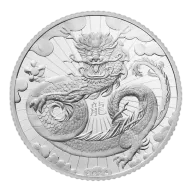
- 1 oz Dragon Silver Round
- 1 oz Dwelling Taniwha Silver Round
- 1 oz Eagle Stacker Silver Round
- 1 oz Egyptian Silver Round
- 1 oz Engelhard Bar Silver Round
- 1 oz Eureka Silver Round
- 1 oz First Mint Lunar Silver Round
- 1 oz Fortuna Silver Round
- 1 oz Germania Silver Round
- 1 oz Golden State Mint Lunar Silver Round
- 1 oz GSM Silver Eagle Silver Round
- 1 oz Holiday Silver Round
- 1 oz Humpback Whale Silver Round
- 1 oz Incuse Indian Silver Round
- 1 oz Lady Justice Silver Round
- 1 oz Legendary Warriors Silver Round
- 1 oz Liberty Bell Round Silver Round
- 1 oz Liberty Trade Silver Round
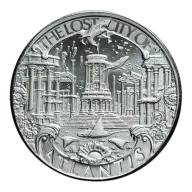
- 1 oz Lost Cities Silver Round
- 1 oz Mason Mint Vikings Silver Round
- 1 oz Medusa Silver Round
- 1 oz Mercury Silver Round
- 1 oz Mermaid Silver Round
- 1 oz MMTC-PAMP Lakshmi Ganesh Silver Round
- 1 oz Monarch Precious Metals Zodiac Silver Round
- 1 oz Morgan Silver Round
- 1 oz Mythical Cities Silver Round
- 1 oz National Bank of Ukraine Archangel Michael Silver Round
- 1 oz Nikola Tesla Silver Round
- 1 oz Noah's Ark Silver Round
- 1 oz Panda Silver Round
- 1 oz Patriot Silver Round
- 1 oz Perth Mint Lunar Silver Round
- 1 oz Phoenix Silver Round
- 1 oz Poker Silver Round
- 1 oz Santa Silver Round
- 1 oz Scottsdale Cowboy Silver Round
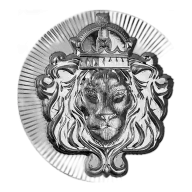
- 1 oz Scottsdale Stacker Silver Round
- 1 oz Signs of the Zodiac Silver Round
- 1 oz Silver Buffalo Silver Round
- 1 oz Silver Fern Silver Round
- 1 oz Silver Round
- 1 oz Silver Shield Silver Round
- 1 oz SilverTowne Buffalo Silver Round
- 1 oz Somalia Elephant Silver Round
- 1 oz South Korean Tiger Silver Round
- 1 oz Sunshine Eagle Silver Round
- 1 oz Taekwondo Silver Round
- 1 oz Texas Silver Round
- 1 oz Themed Gift Bullion Silver Round
- 1 oz Themed Rounds Silver Round
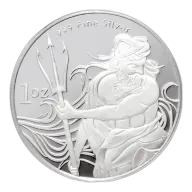
- 1 oz Trident Silver Round
- 1 oz US Mint Liberty Silver Round
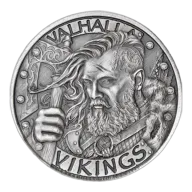
- 1 oz Viking Silver Round
- 1 oz Vivat Humanitas Silver Round
- 1 oz Walking Liberty Silver Round
- 1 oz Zombucks Silver Round
- Pre-Owned 1 oz American Prospector Silver Round
- Pre-Owned 1 oz APMEX Lunar Silver Round
- Pre-Owned 1 oz APMEX Silver Round
- Pre-Owned 1 oz Aztec Calendar Silver Round
- Pre-Owned 1 oz Golden State Mint Silver Round
- Pre-Owned 1 oz Johnson Matthey Silver Round
- Pre-Owned 1 oz Legendary Warriors Silver Round
- Pre-Owned 1 oz Libertad Silver Round
- Pre-Owned 1 oz Scottsdale Mint Silver Round
- Pre-Owned 1 oz Scottsdale Stacker Silver Round
- Pre-Owned 1 oz Silver Round
- Pre-Owned 1 oz Silver Shield Silver Round
- Pre-Owned 1 oz SilverTowne Silver Round
- Pre-Owned 1 oz Sunshine Eagle Silver Round
- Pre-Owned 1 oz Sunshine Minting Silver Round
- Pre-Owned 1 oz Taekwondo Silver Round
- Pre-Owned 1 oz Walking Liberty Silver Round
- African Lion
- Allegories
- A-Mark Liberty Bell Silver Round
- American Buffalo
- American Prospector
- APMEX Lunar
- Archangel Michael
- Asahi Lunar
- Aztec Calendar
- Bull and Bear
- Bull and Bear
- Cayman Marlin
- Christmas Coins
- Day of the Dead
- Dragon
- Dwelling Taniwha
- Eagle Stacker
- Egyptian Series
- Engelhard Silver Bars
- Eureka
- First Mint Lunar
- Fortuna
- Germania
- Golden State Lunar
- GSM Santa
- GSM Silver Eagle
- Holiday
- Humpback Whale
- Incuse Indian
- Lady Justice
- Legendary Warriors
- Libertad
- Liberty
- Liberty Trade
- Lost Cities
- Medusa
- Mermaid
- MMTC-PAMP Lakshmi Ganesh
- Morgan
- Mythical Cities Series
- Nikola Tesla
- Noah's Ark
- Panda
- Patriot Series
- Perth Lunar
- Phoenix
- Poker Series
- Scottsdale Cowboy
- Scottsdale Stacker
- Silver Buffalo Round
- Silver Fern
- Silver Shield
- SilverTowne Buffalo
- SilverTowne Themed Gift Bullion
- Somalia Elephant
- South Korean Tiger
- Sunshine Mercury
- Sunshine Silver Round
- Taekwondo
- Texas Silver
- Themed Rounds
- Trident
- Vikings
- Viking Series
- Vivat Humanitas
- Walking Liberty
- Zodiac
- Zodiac
- Zombucks