1 product · 2 deals
Filters
| Product | /oz | Premium | Price | |
|---|---|---|---|---|

2 deals
|
$67.49 | -0.20% | $2,169.85 | Compare |
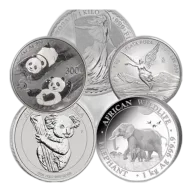
Prices are fetched automatically and may not reflect current merchant prices. Currency conversions and tax treatment are approximate. Rankings are based solely on price. We are not a dealer and accept no responsibility for transactions with listed merchants. Past performance is not indicative of future results. This site does not provide investment advice. Full disclaimer
About 1 Kilo Silver Rounds
Kilo Silver Rounds for Bulk Stacking
One kilogram is 1,000 grams, or 32.1507 troy ounces, and it is the standard metric bullion weight. Silver rounds are coin-shaped products struck by private mints: they carry no face value, no legal tender status, and no government backing. At the kilo size, the round format takes the cost logic of rounds to its endpoint. Buyers at this weight are optimising for the lowest cost per gram of silver, not for flexibility, and a single kilo round packs roughly a full tube and a half of 1 oz pieces into one object.
The economics are straightforward. A kilo of silver costs approximately $900 to $1,000 at current spot prices, so each piece represents a meaningful single purchase. Rounds sit between bars and government coins on price: they offer a coin-like format without the legal tender premium attached to sovereign mint products. Stackers who want countable, coin-shaped silver but have outgrown 1 oz purchases are the natural audience. The trade-off is divisibility. A kilo round, like a 1 kilo silver bar, can only be sold whole, so anyone who may need to raise small amounts of cash is better served holding part of their stack in smaller units.
Geography matters here too. Rounds are primarily a North American phenomenon; in Europe and Asia, sovereign coins and bars dominate the retail market and dealers are less familiar with rounds. The kilo weight, by contrast, is the international metric standard, particularly prevalent in Asian markets such as Singapore and Hong Kong. A kilo round therefore combines an internationally recognised weight with a format that trades most easily in the US and Canada.
Tax treatment follows the metal and purity, not the shape. Rounds receive the same treatment as silver bars in every jurisdiction. In Canada, Australia, New Zealand and Singapore, .999 or finer silver rounds escape GST under each country's investment bullion rules. In the UK the picture is worse: 20% VAT applies on purchase and, because rounds are not legal tender coins, there is no CGT exemption on sale. UK buyers comparing a kilo round against CGT-exempt silver Britannias should weigh that double tax exposure before chasing the lower sticker price.
Where Kilo Rounds Sit on the Premium Scale
Silver rounds as a category carry premiums of roughly 5-10% over spot, positioned between bars at 3-8% for common sizes and government coins at 15-25%. The kilo weight pulls that figure toward the bottom of the range, because premiums fall as unit size rises. Kilo silver bars run 3-6% over spot, among the lowest premiums available for retail bullion, and a kilo round competes directly against those bars on price.
The saving from moving up the weight scale is substantial. Switching from 1 oz pieces to kilo format saves approximately 6% on the silver value, around $50 to $70 on a purchase of roughly $1,000. Above the kilo, the gains flatten out: the marginal premium saving from 10 oz to kilo is already small, often under 1% per ounce, and it is scale across repeated purchases rather than any single transaction that makes the difference. Buyers at this weight are paying for silver, not fabrication.
Brand affects the number on the page. Well-known private mints command slightly higher premiums than unbranded generic rounds, and special edition or popular design series can carry collector premiums above generic pieces, though that is the exception rather than the rule. At the kilo weight there is also a separate comparison worth making: 1 kg silver coins exist from sovereign mints, including the Perth Mint Lunar, Koala and Kookaburra series and Royal Mint issues, but they carry collector premiums above bar prices. A kilo round or 10 oz silver bar stack is the cheaper route to the same metal.
One caveat for buyers in VAT jurisdictions: in the UK and EU, rounds offer no VAT advantage over coins or bars, so the entire saving is in the product markup. With 20% VAT layered on top in the UK, the percentage gap between a kilo round and a sovereign coin narrows in absolute significance, and the after-tax case for rounds weakens accordingly. In tax-neutral markets such as the US, the premium comparison is the whole story, which is why rounds sell strongest there.
Kilo Silver Rounds on the Market
The 1 oz round dominates private mint production, with 2 oz and 5 oz pieces existing but uncommon, so the kilo round occupies the far end of the size spectrum and the product list is short. Listings tracked at this weight include the generic 1 Kilo Silver Round, the 1 Kilo Germania Silver Round, the 1 Kilo Scottsdale Stacker Silver Round and the 1 Kilo Tombstone Nugget Silver Round. As with rounds at any weight, the design is secondary to the metal content for most buyers, and rounds are more of a commodity product than branded goods.
Standard purity for silver rounds is .999 fine, with some private mints producing .9999 pieces. That purity level is what matters for tax: it clears the GST exemption thresholds in Canada (99.9%+) and in Australia, New Zealand and Singapore (99.9%+). The major names in private minting, Sunshine Minting, SilverTowne, Asahi, Golden State Mint and Highland Mint among them, built their reputations on 1 oz products, and brand recognition from those lines carries over to larger formats where the same mints produce them.
Buyers shopping at this weight should also know the alternatives. Kilo silver bars are produced by every major refiner, including PAMP Suisse, Valcambi, the Royal Canadian Mint, Umicore, Heraeus, Argor-Heraeus, Asahi, the Perth Mint, Nadir and Geiger Edelmetalle, in both cast and minted finishes, and they price at 3-6% over spot. Sovereign mints strike 1 kg silver coins, such as the Perth Mint Kookaburra, but at collector premiums above bar prices. The kilo round sits between these options: coin-shaped like the sovereign issues, priced closer to the bars. A buyer choosing the round over a 1 kilo silver coin is trading away legal tender status and mint backing for a lower entry price; a buyer choosing it over a bar is paying for the format preference rather than any functional advantage.
Selling and Storing a Kilo Round
The defining liquidity constraint at this weight is indivisibility. Each kilo piece is an all-or-nothing sale, and partial liquidation is impossible. For investors who may need to raise small amounts of cash, that is a real disadvantage against holding the same silver as 1 oz rounds or 10 oz bars, where a few pieces can be sold while the rest stays put.
Brand drives resale at every round weight. Pieces from well-known private mints sell without difficulty to any reputable dealer, whereas generic or obscure-brand rounds may take longer to sell and recover less of their original premium. The exit numbers illustrate the trade: a round bought at 8% over spot might sell back to a dealer at 4-6% over spot, a narrower recovery than sovereign coins achieve but from a much lower starting price. Rounds settle at a discount to equivalent coins and at parity with, or a small premium to, generic bars. One regional note applies: rounds are less familiar to dealers outside the US and Canada, so a kilo round is easiest to sell in North America, where the dealer network for the format is deepest.
Storage is where the kilo weight is kind to the owner. A single piece weighs 1 kg (2.2 lbs), and consolidated weights are more space-efficient per ounce than the same silver held as 1 oz pieces. The trade-off against a sovereign coin stack is that standard tube conventions are built around smaller pieces; a kilo round is stored as an individual object rather than in mint packaging designed for twenty coins at a time.
Silver care rules apply regardless of format. Silver tarnishes when exposed to sulphur compounds in the air, forming a dark surface layer that is cosmetic and does not reduce the metal content or resale value, since dealers buy by weight and purity rather than appearance. Even so, prevention is cheap: store in dry conditions below 50% relative humidity with desiccant packets, use anti-tarnish strips, and avoid rubber bands or PVC holders, which release sulphur. Basement or garage storage needs humidity control before it is suitable for any silver, kilo rounds included.