 Bulk Bullion


Prices are fetched automatically and may not reflect current merchant prices. Currency conversions and tax treatment are approximate. Rankings are based solely on price. We are not a dealer and accept no responsibility for transactions with listed merchants. Past performance is not indicative of future results. This site does not provide investment advice. Full disclaimer
About the 1 Kilo Germania Mint Silver Bar
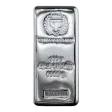
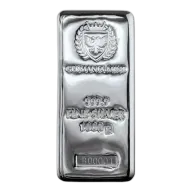
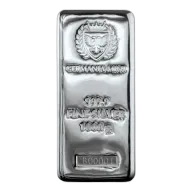
The 1 Kilo Germania Mint Silver Bar
The 1 Kilo Germania Mint silver bar is produced by one of the largest private bullion mints in the world, headquartered in Jelenia Gora, Poland. Germania Mint was founded as a coin shop in 1986 by numismatist Apolinary Kurowski and is now operated by his son Szymon Kurowski, employing approximately 200 workers. The mint has grown rapidly from a small operation into a producer whose output rivals established names in the private mint sector.
This bar is struck at 999 fine silver and weighs one kilogram (32.15 troy ounces), the standard metric weight for large-format retail silver bars. The kilo format is particularly prevalent in European and Asian markets, where metric weights are the natural convention. In North America, the 100 oz bar fills a similar role as the large-format standard, but internationally, the kilo is the more widely traded size.
Germania Mint's branding draws heavily on Germanic cultural heritage. The name references "Germania," the Latin term the Romans used for the lands north of the Rhine and Danube, and the mint's products feature allegorical Germanic imagery despite the company being physically located in Poland. This positioning targets the large German-speaking precious metals market spanning Germany, Austria, and Switzerland, though the products have gained distribution through major dealers in the US and UK as well.
The kilo bar format optimises for the lowest possible premium per ounce of silver. At this weight, premiums typically fall in the 3-6% range, comparable to 100 oz silver bars and representing the bottom end of the retail premium spectrum. The trade-off is reduced flexibility: a kilo bar is an all-or-nothing sale, unlike a stack of 10 oz bars that can be liquidated incrementally. For buyers committed to accumulating silver at the lowest cost per gram and comfortable with the indivisibility, the kilo format delivers the best value in the retail market.
1 Kilo Germania Mint Silver Bar Specifications
| Attribute | Detail |
|---|---|
| Weight | 1 kilogram (32.1507 troy ounces) |
| Purity | 999 fine silver |
| Manufacturer | Germania Mint |
| Country of origin | Poland |
| Legal tender | No |
| Serial number | Yes |
| Certificate | Certificate of authenticity |
| LBMA accredited | No |
The bar carries the Germania Mint hallmark alongside weight, purity, and serial number stampings. Each bar is individually serialised and accompanied by a certificate of authenticity. The design incorporates Germanic allegorical motifs consistent with the mint's broader product line, drawing on the imagery of the two-headed eagle and laurel wreaths that appear across Germania's coin and bar range.
Germania Mint does not employ proprietary anti-counterfeiting technology comparable to sovereign mint features such as the Royal Canadian Mint's Bullion DNA or Sunshine Minting's MintMark SI. Authentication relies on the serial number, certificate, physical characteristics (weight, dimensions, sound), and dealer verification. For buyers concerned about counterfeiting risk, standard testing methods are effective for silver: precise weight measurement, the magnet slide test (silver is diamagnetic, meaning a magnet slides slowly down a silver surface), and specific gravity measurement via water displacement. The most common counterfeiting materials for silver (copper, lead, zinc) have distinctly different densities from silver at 10.49 g/cm3 and cannot replicate its weight-to-dimension ratio at the correct size.
Tax Treatment of the 1 Kilo Germania Mint Silver Bar
As a private-mint silver bar without legal tender status, the Germania Mint kilo bar follows standard silver bullion tax rules in all jurisdictions.
United Kingdom
Silver bars carry 20% VAT on purchase. No exemption exists for any silver bars, regardless of manufacturer. On disposal, Capital Gains Tax applies at 18% or 24% with a GBP 3,000 annual exemption. Silver bars are not CGT-exempt.
United States
Most states exempt investment bullion from sales tax. The Germania bar is not IRA-eligible, as IRS rules for precious metals IRAs require products from sovereign mints or approved refiners, and Germania Mint is a private mint without IRA-approved status. Capital gains are taxed at the collectibles rate of up to 28%.
Canada
Silver at 99.9%+ purity is GST/HST exempt. The bar at 999 fine qualifies. Capital gains use a 50% inclusion rate.
Australia and New Zealand
Investment-grade silver at 99.9%+ purity is GST-free in Australia and GST-exempt in New Zealand. At 999 fine (99.9%), the bar meets these thresholds. No capital gains tax in New Zealand; Australia offers a 50% CGT discount for holdings over 12 months.
European Union
Silver bars attract the standard VAT rate in each EU member state. In Germany (the primary European market for Germania Mint products), the rate is 19%. A margin scheme (Differenzbesteuerung) may apply to pre-owned silver in Germany, but new bars from the mint attract full VAT. In Poland, where the mint is located, the VAT rate is 23%.
Singapore and Hong Kong
Singapore exempts Investment Precious Metals (silver at 99.9%+) from 9% GST. Hong Kong has no sales tax, duties, or capital gains tax.
Germania Mint vs Other 1 Kilo Silver Bars
The 1 kilo silver bar market includes products from LBMA-accredited Swiss refiners, sovereign mints, and other private producers. The Germania Mint bar competes primarily on price and design appeal, since it lacks the institutional accreditations that define its main competitors.
Against the 1 Kilo PAMP Suisse bar, the Germania bar is typically the cheaper option by a meaningful margin. PAMP carries LBMA Good Delivery accreditation, VeriScan digital authentication, and the Lady Fortuna branding, all of which command a premium that the Germania bar does not carry. For buyers focused purely on accumulating silver weight at the lowest cost, the Germania bar delivers more silver per dollar. For buyers who value international brand recognition and the ability to verify authenticity digitally, the PAMP bar justifies its higher price.
Against the 1 Kilo Royal Canadian Mint bar, the gap is wider. The RCM bar is a sovereign mint product at 999.9 purity with Bullion DNA authentication and LBMA accreditation. The Germania bar is a private mint product at 999 purity with serial-number authentication only. The RCM bar carries stronger resale credentials and wider dealer acceptance, particularly in North American markets. The Germania bar's advantage is its lower premium.
Against the 1 Kilo Metalor bar, the comparison highlights the difference between a private mint and an established LBMA-accredited refiner. Metalor's Swiss heritage (dating to 1852), five LBMA-accredited refineries worldwide, and BullionProtect authentication technology give it institutional credentials that the Germania Mint does not match. The Metalor bar trades on provenance and global acceptance; the Germania bar trades on competitive pricing and design character.
1 Kilo Germania Mint Silver Bar: frequently asked questions
-
The cheapest 1 kilo Germania Mint silver bar we track is listed at A$3,280.55, which works out to around 9.4% over the A$93.63 spot price per 1 Kilo. The lowest-priced offer currently comes from Bulk Bullion. Use the comparison table above to see all dealers side by side.
-
Germania Mint is a precious metals minting facility based in Germany. It produces silver and gold bullion bars and coins, with silver bars refined to .999 fineness and above. Its products are sold through dealers across Europe and internationally.
-
No. 'German silver' (also called Neusilber or nickel silver) is a copper-nickel-zinc alloy that contains no silver at all. It is used in cutlery, musical instruments, and decorative items. Germania Mint silver bars are .999 fine silver, a genuine precious metal. The name similarity causes confusion, but the two products are entirely different materials.
-
Check that the bar comes with its original sealed packaging and assay certificate, which carry a unique serial number. Physically, genuine .999 silver bars pass a magnet slide test (silver is only weakly affected by magnets) and produce a clear, long ring when tapped (the 'ping test'). Purchasing from an established bullion dealer with a returns policy is the most reliable protection against counterfeits.
-
Silver bars attract VAT or sales tax in most markets, unlike investment gold which is commonly exempt. In the UK, 20% VAT applies to silver bars. In Germany, 19% VAT is charged. Canada is an exception: investment-grade silver qualifies for 0% GST. Check the tax tab on this page for your country's rate.