1 listing
Filters

 APMEX
APMEX
Prices are fetched automatically and may not reflect current merchant prices. Currency conversions and tax treatment are approximate. Rankings are based solely on price. We are not a dealer and accept no responsibility for transactions with listed merchants. Past performance is not indicative of future results. This site does not provide investment advice. Full disclaimer
About the 1/2 oz Merrill Lynch Gold Bar
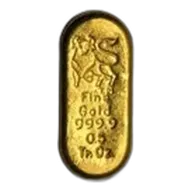
The 1/2 oz Merrill Lynch Gold Bar
The 1/2 oz Merrill Lynch Gold Bar contains half a troy ounce (15.5518g) of 999.9 fine gold, the four-nines standard for retail gold bars. The 1/2 oz weight is the largest fractional gold size, and it occupies an unusual position in bar form: every major sovereign mint produces a 1/2 oz gold coin, but bars at this weight are a niche product made by a smaller set of producers.
The case for the weight itself is a moderate compromise. At half the outlay of a 1 oz piece, it offers meaningful gold content with a smaller premium penalty than the 1/4 oz or 1/10 oz sizes, where fixed manufacturing costs loom larger over the metal value. The case for bar form at any weight is cost: gold bars carry the lowest premiums of any gold format because production is simpler than coining, and they carry no face value or legal tender status.
The trade-off sits at resale. Bars from recognised refiners are liquid, but they generally show slightly wider buy-sell spreads than well-known sovereign coins, and bars from producers outside the LBMA accreditation system may need assay testing at the buyer's expense before a dealer will pay full value. Keeping a bar sealed in its original packaging matters; a broken seal can mean re-assaying and a weaker buyback price.
1/2 oz Merrill Lynch Gold Bar Specifications
| Attribute | Value |
|---|---|
| Metal | Gold |
| Weight | 1/2 troy oz (15.5518g) |
| Purity | 999.9 fine gold |
| Form | Bar |
| Face value | None (not legal tender) |
At 999.9 fine, the bar exceeds the 995 minimum that defines investment gold for VAT purposes in the UK and EU and the LBMA Good Delivery floor. Gold bars are made by one of two methods: cast bars are poured from molten gold into moulds and show a rougher finish, while minted bars are cut from rolled sheet, polished, and usually sealed in assay card packaging with a certificate stating serial number, weight, purity and hallmark. Minted bars carry slightly higher premiums for the finer finish; cast bars are the cheaper route to the same gold content.
Tax Treatment for 1/2 oz Gold Bars by Country
Gold bars at 999.9 purity qualify as investment gold in every major jurisdiction, so purchase taxes are rarely an issue. The differences emerge on disposal.
- UK: 0% VAT, since investment gold of at least 995 fineness is exempt. Bars are not CGT-exempt, though: only UK legal tender coins escape capital gains tax. Gains above the £3,000 annual allowance are taxed at 18-24% depending on income.
- US: No federal sales tax, and most states exempt bullion. Long-term gains are taxed at the collectibles rate of up to 28%. IRA-eligible gold must be at least 99.5% pure from an accredited refiner and held at an approved depository.
- EU: Investment gold bars of at least 995 fineness are VAT-exempt across all member states. Capital gains rules vary by country; Germany taxes nothing on gold held more than a year.
- Canada: 0% GST/HST on gold of at least 99.5% purity.
- Australia and New Zealand: 0% GST on investment-grade gold of at least 99.5% purity.
- Singapore and Hong Kong: No purchase tax and no capital gains tax in either jurisdiction.
1/2 oz Gold Bar vs 1/2 oz Coins and 1 oz Bars
At this weight, the main alternative is a sovereign 1/2 oz gold coin. The 1/2 oz American Gold Eagle carries a $25 face value and premiums of roughly 5-8% over spot, and the 1/2 oz Gold Britannia adds CGT exemption for UK buyers as legal tender. Coins of this size rank second only to 1 oz for liquidity among gold coin weights, with tight bid-ask spreads and universal dealer acceptance. A bar gives up that recognition in exchange for a lower purchase premium.
Moving up the scale, a 1 oz gold bar is the sweet spot of the bar market: minted 1 oz bars run roughly 1-4% over spot, premiums fall as weight rises, and the 1 oz size offers the best balance of premium efficiency and resale liquidity. Buying one 1 oz bar instead of two 1/2 oz bars gets the same gold for less premium, at the cost of being able to sell half the position at a time.
For UK buyers specifically, the bar-versus-coin decision is a lifecycle calculation: bars are cheaper on entry but CGT-liable on exit, while a CGT-exempt coin like the Britannia costs more upfront and nothing on gains. Where expected gains exceed the £3,000 annual allowance, the coin's exemption can outweigh the bar's premium saving.