 BGASC
BGASC
1 listing
Filters
| Product | /oz | Premium | Price | |
|---|---|---|---|---|
| $5,070.17 | +21.68% | $407.54 | View Deal |

Prices are fetched automatically and may not reflect current merchant prices. Currency conversions and tax treatment are approximate. Rankings are based solely on price. We are not a dealer and accept no responsibility for transactions with listed merchants. Past performance is not indicative of future results. This site does not provide investment advice. Full disclaimer
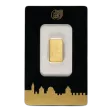
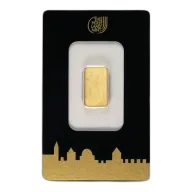
About the 2.5g Holy Land Mint Gold Bar
A 2.5g Gold Bar: The Workhorse Fractional Size
The 2.5g Holy Land Mint gold bar contains 2.5 grams of fine gold, equal to 0.0803 troy ounces, roughly one-twelfth of an ounce. The 2.5g denomination is the most common fractional gold bar size, sitting at the intersection of small enough to be affordable and large enough to be worth trading. At current gold prices a bar of this weight represents a few hundred dollars, one of the most accessible routes into a physical gold bar, which is why the size is the dominant fractional denomination in German-speaking Europe and a standard gifting weight across the Middle East, India, and metric-system Asian markets.
The cost of that accessibility is premium. Bars at this weight typically run 8-15% over spot depending on brand and dealer, a significant penalty against a 1oz gold bar for anyone accumulating gold by weight. The comparison runs the other way too: against 1g bars at 15-30% over spot, the 2.5g is markedly more efficient, making it the rational floor for buyers who want small denominations without the steepest small-bar mark-ups. Fractional bars of this size are supplied sealed in assay cards, typically credit-card sized and carrying the weight, purity, and certification details. The card matters: sealed bars sell to dealers readily, while opened ones face more friction. One practical caveat at this value point is that shipping and insurance costs are proportionally high when selling a single bar, so small bars are best sold in quantity or in person.
2.5g Gold Bar Specifications
| Attribute | Value |
|---|---|
| Metal | Gold |
| Weight | 2.5 grams (0.0803 troy oz) |
| Form | Minted bar |
| Face value | None (bars are not legal tender) |
| Packaging | Sealed assay card (typical for this weight) |
The standard purity for 2.5g gold bars is .9999 fine, comfortably above the 995 minimum that defines investment gold in the UK and EU. The weight is exclusively a gold denomination; no 2.5g silver bars are produced, since silver's value density makes a bar that small impractical. Physically the format is about as compact as bullion gets: the assay card is credit-card sized, and a dozen such bars occupy less space than a deck of cards, which is part of why the size is favoured for portable wealth and gifting. The assay card doubles as the bar's certification, so it should be kept sealed and stored flat.
Tax Treatment of 2.5g Gold Bars by Country
Provided the bar meets the investment-gold purity standards typical of this weight, purchase taxes are rarely an issue; the small transaction value is the main wrinkle.
- UK: 0% VAT on investment gold of 995+ purity. Bars carry no CGT exemption, which is reserved for UK legal tender coins, though gains on a holding of small bars would need to exceed the £3,000 annual allowance before CGT bites.
- EU: 0% VAT under the Investment Gold Directive for bars of 995+ fineness. Germany, the core market for this denomination, makes gains tax-free after a 12-month holding period.
- US: no federal sales tax; around 35 states exempt bullion outright. The threshold states matter at this price point: a single 2.5g bar worth a few hundred dollars falls below the exemption floors in California ($2,000), New York, Massachusetts, and Louisiana ($1,000), and may fall below Florida's $500 line, so tax can apply where larger purchases would escape it. Long-term gains are taxed at the 28% collectibles rate. Bars from LBMA-accredited refiners at this weight can meet IRS requirements for precious metals IRAs.
- Canada: 0% GST/HST on gold refined to 99.5%+ purity in bar or wafer form.
- Australia and New Zealand: GST-free as investment-grade gold at 99.5%+ purity.
- Singapore and Hong Kong: no GST (Singapore's Investment Precious Metals scheme covers 99.5%+ gold) and no capital gains tax in either jurisdiction.
2.5g Bar vs the Swiss Brands, the CombiBar, and the 1/10 oz Coin
The reference products at this weight are the Swiss refiner bars. The 2.5g PAMP Fortuna is the single most recognisable small gold bar, with the strongest secondary market of any fractional bar and the highest premiums to match; Valcambi offers the lower-premium Swiss alternative, and Argor-Heraeus adds a holographic Kinebar version. A non-flagship 2.5g bar competes against those names on price. The gold is the same, so a lower asking premium is a genuine saving, with the trade-off that less familiar brands may face more scrutiny at buyback than a sealed Fortuna card that dealers recognise on sight.
For buyers who want 2.5g pieces in quantity, the Valcambi CombiBar restructures the deal: a 50g or 100g bar perforated into 2.5g segments that snap off individually, combining bulk pricing with small-denomination divisibility. Accumulators planning to hold multiple small units usually do better there than buying single carded bars one at a time. The other rival is the 1/10 oz gold coin, the standard small unit in troy-ounce markets. At 3.11g it contains 24% more gold than a 2.5g bar, costs correspondingly more, and brings legal tender status and a deep coin resale market. The choice often falls along regional lines, with the 2.5g bar the natural pick in metric Europe and Asia and the 1/10oz gold coin the default in the US and UK.