1 listing
Filters

 Aydin Coins
Prices are fetched automatically and may not reflect current merchant prices. Currency conversions and tax treatment are approximate. Rankings are based solely on price. We are not a dealer and accept no responsibility for transactions with listed merchants. Past performance is not indicative of future results. This site does not provide investment advice. Full disclaimer
About the 1 Kilo Jersey Mint Silver Bar
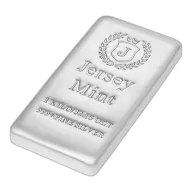
The 1 Kilo Jersey Mint Silver Bar
The 1 Kilo Jersey Mint Silver Bar contains 1,000 grams of .999 fine silver, which works out to 32.1507 troy ounces. The kilogram is the standard metric bullion weight and the international standard size for retail silver bars, popular across Europe, Asia, and Australia, while North American buyers have traditionally favoured the 100 oz format. Buying at this weight is a cost decision: silver bars carry the lowest premiums of any silver form, and within bars, 1 kilo silver bars sit at 3-6% over spot in normal market conditions, among the lowest available for retail bullion alongside 100 oz bars.
Jersey Mint is a private mint rather than an LBMA-accredited refiner, and that distinction matters more at resale than at purchase. Bars from lesser-known producers typically sell at melt value with no brand premium recovery, whereas LBMA-accredited refiner bars command better resale prices and can be sold to dealers more readily. The flip side is that private-mint bars are often priced keenly on the way in, so the buyer is trading resale brand recognition for a lower entry cost. Kilo buyers are optimising for the lowest cost per gram rather than flexibility, and a single bar of this size is an all-or-nothing sale; there is no way to liquidate part of it. Stackers who may need to raise smaller amounts of cash are better served holding the same weight in 10oz silver bars, accepting a slightly higher premium for the divisibility.
1 Kilo Jersey Mint Silver Bar Specifications
| Attribute | Detail |
|---|---|
| Producer | Jersey Mint (private mint) |
| Metal | Silver |
| Purity | .999 fine |
| Weight | 1 kilogram (1,000 g / 32.1507 troy oz) |
| Form | Bar |
.999 fine is the standard purity for silver bars; some sovereign mints such as the Royal Canadian Mint refine to .9999, but the difference is cosmetic for investment purposes and .999 clears the purity thresholds used by the tax authorities in Canada, Australia, New Zealand, and Singapore. A kilo silver bar typically measures somewhere around 114mm x 57mm x 13mm, though exact dimensions vary by manufacturer and by whether the bar is cast or minted. At 1 kg (2.2 lbs) the bar is hefty but stacks neatly in a home safe, and multiple kilo bars are more space-efficient per ounce than the same weight held as 1 oz bars or coins.
Storage is the practical consideration at this weight. Silver tarnishes when exposed to sulphur compounds and humid conditions, so bars should be kept dry, ideally wrapped or in sealed packaging, with humidity below 50% relative humidity if stored in a basement or garage; desiccant packets and anti-tarnish strips help. Silver's lower density (10.49 g/cm3 against gold's 19.32) also means a silver kilo bar is noticeably larger than the equivalent gold weight.
1 Kilo Silver Bar Tax Treatment by Country
Silver bars receive the same tax treatment as silver coins in most jurisdictions; the critical split is between gold, which is often exempt, and silver, which is often taxed.
- UK: 20% VAT on new silver bars, and no CGT exemption since bars carry no legal tender status. Bars face VAT on entry and CGT on exit, the least tax-efficient silver form for UK investors.
- US: No federal sales tax and most states exempt bullion bars. Capital gains are taxed at the 28% collectibles rate. IRA-eligible silver must be 99.9%+ purity from accredited refiners.
- EU: New silver attracts full local VAT, with standard rates ranging from 17% (Luxembourg) to 27% (Hungary) by country. Margin schemes in countries such as Germany and the Netherlands apply to pre-owned silver, not new bars from refiners.
- Canada: 0% GST/HST for silver at 99.9%+ purity in bar form, which a .999 fine kilo bar meets.
- Australia: GST-free as investment-grade silver at 99.9%+ purity.
- New Zealand: GST-exempt at 99.9%+ purity, and no capital gains tax.
- Singapore: 0% GST applies to Investment Precious Metals, defined as silver at 99.9%+ purity in bar, ingot, or wafer form from qualifying refiners; no capital gains tax.
- Hong Kong: No VAT, no GST, no import duty, no capital gains tax.
- South Africa: Full 15% VAT on silver bullion; the Krugerrand zero-rating covers gold only.
In VAT jurisdictions the kilo format softens the blow: the larger the bar, the more its premium savings offset the fixed percentage tax hit compared with buying the same weight as 1 oz units.
Jersey Mint Kilo Bar vs Accredited-Refiner Kilo, 100 oz, and 10 oz Bars
Against kilo bars from LBMA-accredited refiners such as PAMP Suisse, Valcambi, Heraeus, or the Royal Canadian Mint, the Jersey Mint bar competes on entry price rather than pedigree. Accredited-refiner kilo bars are widely accepted by dealers, often serialised, and the minted versions come sealed in assay cards; they resell at better prices because the brand carries recognition. A private-mint bar like this one will typically be bought back at melt value only. If the purchase price gap is wider than the expected resale discount, the generic bar wins on arithmetic; if not, the accredited name is the safer hold.
Against the 100oz silver bar, the kilo is roughly one-third of the weight (32.15 oz against 100 oz) with similar premiums, 3-6% for kilo bars versus 2-5% for 100 oz. The 100 oz format is the traditional large bar in North America and is more space-efficient per unit of value, but each bar weighs about 3.1 kg and represents a meaningful capital commitment in a single indivisible unit. The kilo is the international standard and the more manageable stacking increment.
Against the 10 oz bar, the most popular silver bar size, the trade-off reverses. Ten-ounce bars run 4-8% premiums, so the marginal saving from stepping up to a kilo is small, often under 1% per ounce, but it accumulates across large purchases. What the 10 oz format offers in return is divisibility: selling a third of a kilo bar is impossible, while selling three 10 oz bars from a stack of ten is routine. Buyers accumulating serious weight at the lowest cost per gram take the kilo; buyers who value staged exits take the smaller bar.
1 Kilo Jersey Mint Silver Bar: frequently asked questions
-
Jersey Mint is a bullion producer based in the Channel Islands. Their silver bars are produced to .999 fine purity and are aimed at investors buying standard generic bullion. Without a dedicated research file we cannot confirm further specifics such as accreditations or founding date; verify current details with the dealer before purchasing.
-
Keep a 1kg silver bar in its original sealed packaging where possible, as air and moisture exposure accelerates tarnishing. Store in a cool, dry environment with low humidity, away from direct contact with other metals that could scratch the surface. For significant holdings, a home safe or specialist vault storage adds security and insurance cover.