 APMEX
APMEX
1 listing
Filters
| Product | /oz | Premium | Price | |
|---|---|---|---|---|
| $90.41 | +37.87% | $90.41 | View Deal |

Prices are fetched automatically and may not reflect current merchant prices. Currency conversions and tax treatment are approximate. Rankings are based solely on price. We are not a dealer and accept no responsibility for transactions with listed merchants. Past performance is not indicative of future results. This site does not provide investment advice. Full disclaimer
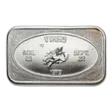
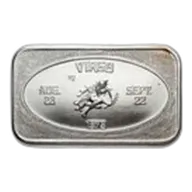
About the 1 oz U.S. Silver Corporation Silver Bar
The 1 oz U.S. Silver Corporation Silver Bar
This bar contains one troy ounce (31.1035 g) of .999 fine silver, the standard purity for silver bars. The 1 oz size is the entry point to silver bar stacking and the most widely handled unit in the bullion trade: every dealer worldwide buys and sells 1 oz silver products, and premiums across the whole market are quoted against the spot price per troy ounce.
Where this format earns its place is against 1 oz silver coins. Government-minted coins carried premiums of 15 to 25% in 2026 market conditions, because the cost of blanking, striking and quality control is roughly the same per piece regardless of metal value and lands hard on a low-priced silver unit. Bars at this weight typically run 3 to 8% over spot, and 1 oz bars sit at the higher end of that bar range, around 8 to 15%, since the same fixed manufacturing costs apply at the smallest size. Privately minted rounds occupy the middle ground at roughly 5 to 10%.
The 1 oz bar suits buyers who want divisibility, the ability to sell in small increments, without paying sovereign coin premiums. Buyers prioritising cost per ounce over divisibility should look up the scale: the single biggest premium drop in silver bars happens between 1 oz and 10 oz, where a 10oz silver bar typically shaves 4 to 5 percentage points off the per-ounce premium while remaining easy to resell.
Tax on .999 Silver Bars by Country
Silver is taxed far less kindly than gold in several jurisdictions, and the bar form gives up the legal tender exemptions some coins enjoy. The .999 purity of this bar matters for the thresholds below.
- United Kingdom: 20% VAT on new silver bullion, and no CGT exemption since bars have no legal tender status. Silver bars are the least tax-efficient silver form for UK buyers, paying tax on the way in and on gains above the £3,000 allowance on the way out.
- United States: No federal sales tax; roughly 35 states exempt bullion, while others tax it or apply thresholds such as New York's $1,000 exemption floor. Long-term capital gains are taxed at the collectibles rate of up to 28%. IRA-eligible silver must be at least 99.9% pure, which .999 bars from accredited refiners can meet.
- Canada: Silver refined to at least 99.9% purity in bar, ingot, coin or wafer form is GST/HST exempt, so a .999 bar qualifies. The exemption is federal, with no provincial variation.
- Australia: Investment-grade silver requires at least 99.9% purity for the GST exemption, which this bar meets.
- New Zealand: Silver of at least 99.9% purity is GST-exempt. No formal capital gains tax.
- Europe: Full standard VAT applies to new silver in EU states, anywhere from 17 to 27%, which is why EU silver stackers gravitate to margin scheme dealers or other workarounds.
- Singapore and Hong Kong: Both tax-free for qualifying silver bullion, with no capital gains tax.
1 oz Silver Bar vs Rounds, Coins and Bigger Bars
The three formats at this weight form a clean premium ladder. Sovereign coins like the 1oz American Silver Eagle or Maple Leaf sit at the top, 15 to 25% over spot in 2026 conditions, buying legal tender status, government purity guarantees and the tightest resale spreads. Privately minted rounds sit in the middle at roughly 5 to 10%. Bars sit at the bottom of the 1 oz market, which is exactly why cost-focused stackers choose them.
The coin premium is not pure waste: coins retain more of their premium at resale than bars or rounds, and in the UK a silver Britannia is CGT-exempt where a bar is not. But for buyers in jurisdictions without such distinctions, the United States, Canada, Australia, Singapore, the calculation usually favours the bar, since the coin's resale advantage rarely recovers the full gap paid on entry.
The stronger argument against the 1 oz bar comes from within the bar family. A 10 oz bar typically runs 4 to 8% over spot against 8 to 15% for 1 oz bars, and 10 oz remains one of the most dealer-friendly silver sizes. A 1 kilo silver bar pushes premiums to 3 to 6%. The 1 oz bar's answer is divisibility: ten 1 oz bars can be sold one at a time, a 10 oz bar cannot. Buyers who value that optionality pay a few points for it; buyers who do not should size up.
1 oz U.S. Silver Corporation Silver Bar: frequently asked questions
-
The cheapest listing we track is $90.41, around 37.9% over the silver spot price of $65.58. A 1 troy oz bar contains 31.1035 grams of 999 fine silver, so its metal value moves directly with spot.
-
U.S. Silver Corporation is a silver bar producer. Their 1 oz bars are stamped .999 fine silver and carry the standard weight and purity hallmarks expected of investment-grade silver bars. We do not have detailed background on the company's history or any third-party accreditations in our research files; verify any certification claims directly with the seller.
-
The U.S. Silver Corporation 1 oz silver bar weighs one troy ounce (31.1035 grams) and is 999 fine silver, meaning at least 99.9% pure silver. This purity meets the investment-grade standard recognised across major bullion markets.