
 APMEX
APMEX

Prices are fetched automatically and may not reflect current merchant prices. Currency conversions and tax treatment are approximate. Rankings are based solely on price. We are not a dealer and accept no responsibility for transactions with listed merchants. Past performance is not indicative of future results. This site does not provide investment advice. Full disclaimer
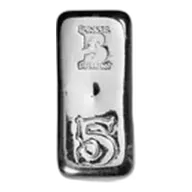
About the 5 oz Bunker Bullion Silver Bar
The 5 oz Bunker Bullion Silver Bar
This bar holds 5 troy ounces (155.52 grams) of .999 fine silver, the standard purity for silver bars. The 5 oz weight is a mid-range format: a clear step up in cost efficiency from 1 oz units without the larger per-unit commitment of a 10 oz bar. Premiums on 5 oz silver bars typically run 6-10% over spot, compared with 8-15% for 1 oz bars and 4-8% for 10 oz bars.
The honest framing for a bar like this is that it is bought for metal, not brand. Silver bars are the lowest-premium way to own silver at any given weight, and the silver content of a .999 bar is identical regardless of whose name is stamped on it. The flip side is resale: bars from lesser-known mints typically sell back at melt value with no brand premium recovered, while LBMA-accredited refiner bars command somewhat better buyback prices. That makes the purchase price the decisive variable. If this bar is offered below the big-name equivalents, the discount at entry can outweigh the flat treatment at exit; if it is priced level with them, the recognised brand is usually the better buy.
Physically, a 5 oz bar is compact, roughly half the volume of a 10 oz bar, and easy to accommodate in a home safe. Standard silver storage advice applies: silver tarnishes on exposure to sulphur compounds, so keep bars dry, ideally sealed or wrapped, with anti-tarnish strips if stored loose. Any established dealer will buy a 5 oz bar; expect spreads slightly wider than on sovereign mint coins, which is the trade-off for the lower premium paid upfront.
Where 5 oz Silver Bars Are Taxed, and Where They Are Not
Silver lacks the broad tax exemptions enjoyed by investment gold, so jurisdiction shapes the true cost of this bar more than anything else. At .999 fine it meets the purity thresholds in the exempting countries.
- United Kingdom: 20% VAT on new silver bullion, and CGT applies on disposal because bars have no legal tender status. The annual CGT allowance is currently £3,000.
- European Union: Full national VAT on new silver bars, ranging 17-27% by country. Margin schemes in Germany and the Netherlands apply to pre-owned silver, not new bars.
- United States: No federal sales tax; around 35 states exempt bullion, roughly 10 tax it, and several apply thresholds (Florida $500, New York $1,000, California $2,000). Long-term gains taxed at the collectibles rate, up to 28%.
- Canada: 0% GST/HST federally for silver refined to 99.9% or higher in bar form, with no provincial variation.
- Australia: GST-free at 99.9%+ purity in a commodity-traded form.
- New Zealand: GST-exempt at 99.9%+ purity for silver; no formal CGT, though gains can be taxed as income if bullion was acquired for resale.
- Singapore: 0% GST under the Investment Precious Metals scheme for qualifying silver at 99.9%+; no capital gains tax.
- Hong Kong: No sales tax of any kind and no capital gains tax.
5 oz Bar vs the Alternatives at This Budget
The 5 oz silver bar competes in three directions. Downward, against 1 oz bars, it wins on cost by several percentage points per ounce, and one bar is simpler to handle and store than five loose ounces. The 1 oz format keeps its appeal only for buyers who value selling in single-ounce increments.
Upward, against the 10 oz bar, it concedes ground. The largest premium drop in the silver bar scale happens between 1 oz and 10 oz, which is why 10 oz is widely considered the most popular silver bar size. Beyond that, each further step (1 kg at 3-6%, 100 oz at 2-5%) saves progressively less. A buyer purely maximising ounces per dollar should generally go to 10 oz or larger; the 5 oz case rests on the smaller outlay per purchase and finer granularity at sale.
Sideways, the same five ounces can be bought as coins. The US Mint's America the Beautiful 5 oz quarters, struck 2010-2021 as the largest silver bullion coins ever issued by the United States, and the low-mintage 5 oz Mexican Libertad both trade at collector premiums above bar pricing. They offer potential numismatic upside that a plain bar never will, at a correspondingly higher entry cost. For straightforward silver accumulation, the bar is the cheaper instrument; the coins are a different bet on collector demand.