1 listing
Filters

 APMEX
APMEX
Prices are fetched automatically and may not reflect current merchant prices. Currency conversions and tax treatment are approximate. Rankings are based solely on price. We are not a dealer and accept no responsibility for transactions with listed merchants. Past performance is not indicative of future results. This site does not provide investment advice. Full disclaimer
About the 5 oz Golden Analytical Silver Bar
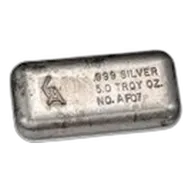
The 5 oz Golden Analytical Silver Bar
This bar contains five troy ounces (155.517 grams) of .999 fine silver. The 5 oz format sits between the two most heavily traded silver bar sizes, and its economics reflect that: per-ounce premiums on 5 oz silver bars typically run in the 4-7% range, lower than 1 oz bars but slightly higher per ounce than 10 oz bars. The appeal is partly practical, a step up from 1 oz buying without the outlay of a 10 oz piece, and partly about unit size: each bar represents a meaningful but not unwieldy amount of silver.
Liquidity at this weight is good. 5 oz bars are widely traded and accepted by all major dealers, though fewer change hands than 1 oz or 10 oz products simply because the format is less common. That has no real effect on the ability to sell to any established dealer, but it is worth knowing that 5 oz is not a traditional bar weight in European or Asian markets, where metric sizes like 100g, 250g, 500g, and 1 kg dominate.
As with all silver bars, resale value depends heavily on the refiner. Bars from recognised names command tighter buy-sell spreads, and generic or lesser-known brands typically sell at melt value with no brand premium recovery. Storage is straightforward: a 5 oz bar is roughly half the volume of a 10 oz bar and compact for a home safe.
5 oz Golden Analytical Silver Bar Specifications
| Attribute | Detail |
|---|---|
| Metal | Silver |
| Weight | 5 troy oz (155.517 g) |
| Purity | .999 fine silver |
| Form | Bar |
.999 is the standard fineness for retail silver bars. Silver bars are made by one of two methods: cast bars are poured into moulds, carry a more rustic appearance, and sell at lower premiums; minted bars are cut, stamped, and polished, often sealed in packaging, at slightly higher premiums. Cast bars run roughly 1-2% cheaper than minted bars of the same weight.
Verification of a 5 oz bar follows the standard silver checks: weight against the 155.517 g standard, dimension measurement, the magnet slide test (silver is diamagnetic), and specific gravity testing. Counterfeit silver bars use copper, lead, or zinc cores plated with silver, and these show up as a weight or dimension mismatch. Silver should be stored in dry conditions, ideally wrapped or in sealed packaging, since it tarnishes when exposed to sulphur compounds; sealed original packaging also aids resale.
5 oz Silver Bar Tax Treatment by Country
At .999 fineness this bar clears the purity thresholds that determine sales tax exemption for silver in the exempt jurisdictions.
- UK: 20% VAT on purchase, and bars are also liable for Capital Gains Tax on disposal since they have no legal tender status. This makes bars the least tax-efficient silver form for UK buyers.
- US: No federal sales tax; most states exempt bullion bars, though some tax them and a few apply thresholds. Long-term gains are taxed at the collectibles rate of up to 28%. Silver must be at least 99.9% pure for IRA eligibility.
- Canada: 0% GST/HST, as the bar exceeds the 99.9% federal purity threshold.
- Australia: GST-free; investment-grade silver requires at least 99.9% purity.
- New Zealand: GST-exempt at 99.9% silver purity, with no formal capital gains tax.
- Singapore: 0% GST under the Investment Precious Metals scheme; no capital gains tax.
- Hong Kong: no sales tax, no duties, no capital gains tax.
- EU: new silver attracts full national VAT, typically 17-27% depending on the country.
5 oz Bars vs 10 oz Bars, 1 oz Bars, and 5 oz Coins
Against 10 oz silver bars, the 5 oz format gives up a little on premium. 10 oz silver bars typically trade around 4-8% over spot and are widely considered the best balance of premium savings and liquidity; 5 oz bars run 4-7% but sit slightly higher per ounce. What the 5 oz buyer gets in return is a smaller resale unit, useful for selling in halves of what a 10 oz holder can.
Against 1 oz silver bars, the 5 oz bar is the cheaper way to hold weight. 1 oz bars carry premiums of roughly 8-15% over spot, so consolidating five ounces into one bar meaningfully reduces the cost per ounce, at the price of losing ounce-by-ounce liquidation flexibility.
Against 5 oz silver coins, bars compete purely on cost. The coins that made this weight mainstream, the US Mint's America the Beautiful 5 oz quarters (2010-2021) and the low-mintage 5 oz Mexican Libertad, carry collector premiums above standard bar levels, especially for desirable designs or years. A buyer who wants five ounces of silver at the lowest cost takes the bar; a buyer drawn to the large coin format pays extra for it.