1 listing
Filters

 APMEX
APMEX
Prices are fetched automatically and may not reflect current merchant prices. Currency conversions and tax treatment are approximate. Rankings are based solely on price. We are not a dealer and accept no responsibility for transactions with listed merchants. Past performance is not indicative of future results. This site does not provide investment advice. Full disclaimer
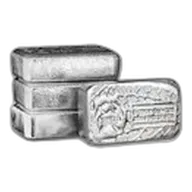
About the 5 oz Pioneer Metals Silver Bar
The 5 oz Pioneer Metals Silver Bar
This bar holds 5 troy ounces (155.5 g) of .999 fine silver, a mid-range weight that sits between the everyday 1 oz unit and the stacker-standard 10 oz bar. The format suits buyers who find 1 oz pieces too small to accumulate efficiently but do not want the per-unit outlay of a 10 oz bar. Each step up the weight scale buys a lower per-ounce premium, and the 5 oz size captures a useful part of that saving while keeping individual units affordable.
On cost, 5 oz silver bars typically run 4 to 7 percent over spot depending on manufacturer, which undercuts the 8 to 15 percent common on 1 oz bars but does not quite match the 4 to 8 percent on 10 oz silver bars. Because the differences between brands at this weight come down mostly to premium rather than specification, comparing prices across dealers matters more than the name stamped on the bar.
Liquidity at this weight is good. Five-ounce bars are widely traded and accepted by all major dealers, though fewer change hands than 1 oz or 10 oz products simply because the format is less common, particularly outside North America where metric weights like 100 g and 250 g dominate. For storage, a 5 oz bar is roughly half the volume of a 10 oz bar and compact enough that a meaningful stack fits easily in a home safe. One practical note on resale: bars from lesser-known producers typically sell at melt value, so the premium paid at purchase is the number to minimise.
Tax Position of 5 oz Silver Bars by Country
At .999 fine, this bar qualifies for the purity-based exemptions available to investment silver, but silver bars remain the least tax-favoured bullion form in several major markets.
- UK: New silver bars carry 20% VAT, and because bars have no legal tender status, gains are also subject to Capital Gains Tax. That double exposure makes bars the least tax-efficient silver format for UK buyers.
- US: No federal sales tax; most states exempt bullion, while a minority tax it and a few apply dollar thresholds. A single 5 oz bar may fall under threshold amounts such as Florida's $500 exemption floor, so order size can change the tax outcome. Long-term gains are taxed at the 28% collectibles rate, and .999 silver meets the 99.9% IRA purity requirement.
- Canada: GST/HST exempt; silver in bar form qualifies at 99.9% purity or above.
- Australia: GST-free as investment-grade silver (99.9% purity threshold).
- New Zealand: GST-exempt as fine bullion; silver must be at least 99.9% pure.
- EU: New silver bars attract the full local VAT rate, from 17% in Luxembourg to 27% in Hungary.
- Singapore: 0% GST as an Investment Precious Metal at 99.9% purity or better, and no capital gains tax.
- Hong Kong: No sales tax, no import duty, no capital gains tax.
5 oz Bars vs 10 oz Bars and 5 oz Coins
The main alternative one step up is the 10 oz silver bar, widely considered the most popular silver bar size. It generally offers better per-ounce premiums than 5 oz with comparable liquidity, and the single biggest premium drop on the whole silver weight scale happens between 1 oz and 10 oz. If the per-unit cost of a 10 oz bar is not a constraint, it is usually the more efficient buy. The 5 oz bar earns its place when you want finer divisibility: two 5 oz bars can be sold separately where one 10 oz bar cannot.
At the same weight, the alternative format is the large 5 oz coin. The America the Beautiful 5 oz coins struck by the US Mint from 2010 to 2021 were the largest silver bullion coins the United States has ever produced, at 76.2 mm across, and the Mexican 5 oz Libertad has very low annual mintages that make it sought-after internationally. Both carry collector premiums above standard bar premiums, especially for low-mintage years, and can resell above melt for desirable designs, though that is not guaranteed. The bar is the choice for accumulating silver weight at the lowest cost; the coins are part bullion, part collectible, and you pay for that upfront.
Compared with the 1 oz silver bar, the 5 oz format trades flexibility for a meaningfully lower premium per ounce. One-ounce units are easier to sell in small amounts but cost the most per ounce of any common bar size.
5 oz Pioneer Metals Silver Bar: frequently asked questions
-
Pioneer Metals is a precious metals refiner that produces silver bars across a range of standard weights. Their bars are .999 fine silver and available through bullion dealers in multiple markets.
-
Yes, 5oz is a recognised standard weight for silver bars and is produced by multiple refiners and mints. It sits between the widely traded 1oz and 10oz formats, offering a mid-range option for buyers who want more silver per unit than a 1oz bar without committing to a larger size.
-
The Pioneer Metals 5oz silver bar is .999 fine silver, meaning it is 99.9% pure and contains five troy ounces of fine silver. This meets the investment-grade purity threshold used in most major bullion markets.