
83 products Prices & premiums exclude tax to compare across countries
Filters
| Product | /oz | Premium | Price (ex. tax) | |
|---|---|---|---|---|

Gold
|
$4,288.46 | +3.17% |
$137,876.96
£104,189
|
View Deal |

Gold
|
$4,309.27 | +3.67% |
$69,273.14
£52,348
|
View Deal |
| $4,354.89 | +4.32% |
$14,001.28
£10,580
|
View Deal | |

Gold
|
$4,375.84 | +4.69% |
$7,034.31
£5,316
|
View Deal |
| $4,375.05 | +4.80% |
$7,033.04
£5,315
|
View Deal | |
| $4,380.05 | +4.92% |
$4,380.05
£3,310
|
View Deal | |
| $4,380.05 | +4.92% |
$4,380.05
£3,310
|
View Deal | |
| $4,385.79 | +4.92% |
$2,064.90
£1,560
|
View Deal | |
| $4,387.13 | +4.96% |
$4,387.13
£3,315
|
View Deal | |
| $4,394.17 | +5.12% |
$1,034.42
£782
|
View Deal | |
| $4,369.74 | +5.13% |
$4,369.74
£3,302
|
View Deal | |
| $4,373.90 | +5.23% |
$4,373.91
£3,305
|
View Deal | |
| $4,387.11 | +5.54% |
$2,065.52
£1,561
|
View Deal | |

Gold
|
$4,407.33 | +5.57% |
$2,833.98
£2,142
|
View Deal |
| $4,415.02 | +5.62% |
$1,039.33
£785
|
View Deal | |
| $4,415.75 | +5.64% |
$441.58
£334
|
View Deal | |
| $4,422.66 | +5.81% |
$2,211.34
£1,671
|
View Deal | |
| $4,432.29 | +6.04% |
$4,432.29
£3,349
|
View Deal | |
| $4,430.87 | +6.14% |
$1,043.06
£788
|
View Deal | |
| $4,437.21 | +6.15% |
$2,853.19
£2,156
|
View Deal | |
| $4,442.21 | +6.27% |
$444.23
£336
|
View Deal | |
| $4,437.34 | +6.29% |
$522.29
£395
|
View Deal | |
| $4,451.50 | +6.50% |
$2,225.76
£1,682
|
View Deal | |
| $4,447.90 | +6.54% |
$444.80
£336
|
View Deal | |
| $4,477.05 | +7.11% |
$4,477.05
£3,383
|
View Deal | |
| $4,477.05 | +7.11% |
$4,477.05
£3,383
|
View Deal | |
| $4,477.05 | +7.11% |
$4,477.05
£3,383
|
View Deal | |
| $4,477.05 | +7.11% |
$4,477.05
£3,383
|
View Deal | |

Gold
|
$4,471.95 | +7.12% |
$4,471.95
£3,379
|
View Deal |
| $4,474.33 | +7.18% |
$526.65
£398
|
View Deal |










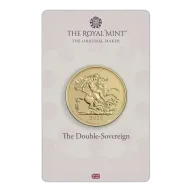
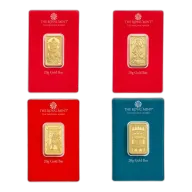

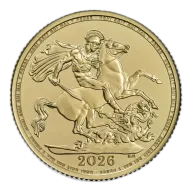

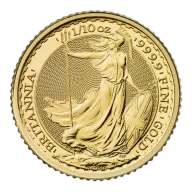












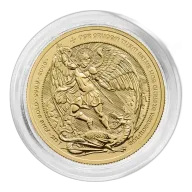

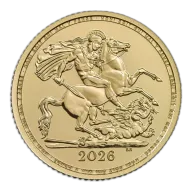
Prices are fetched automatically and may not reflect current merchant prices. Currency conversions and tax treatment are approximate. Rankings are based solely on price. We are not a dealer and accept no responsibility for transactions with listed merchants. Past performance is not indicative of future results. This site does not provide investment advice. Full disclaimer
About The Royal Mint
Britain's Official Mint, from Tower Hill to Llantrisant
The Royal Mint is the United Kingdom's official maker of coins, with a history the institution traces to circa AD 886 and the reign of King Alfred the Great. It operates today as The Royal Mint Limited, a private limited company incorporated in 2009 (Companies House number 06964873) and wholly owned by His Majesty's Treasury; the Chancellor of the Exchequer holds the historic title of Master of the Mint. The business has run as a Government Trading Fund since 1 April 1975 and holds the exclusive contract to supply the UK's circulating coinage, alongside minting coins for international customers.
Operations are based on a site of more than 30 acres at Llantrisant in South Wales, around ten miles north of Cardiff, where the Mint has been striking coins since 1968. The same site houses the Royal Mint Experience visitor attraction, opened in 2016, and a Precious Metals Recovery facility announced in 2022 that extracts gold from discarded circuit boards. Gold recovered there supplies 886 by The Royal Mint, a jewellery and homeware division named after the institution's symbolic founding date.
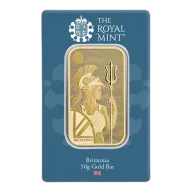
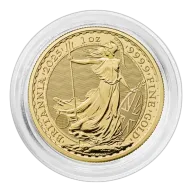
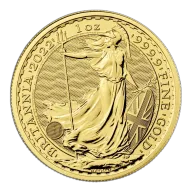
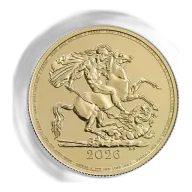
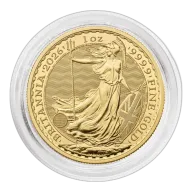
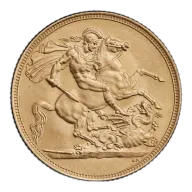
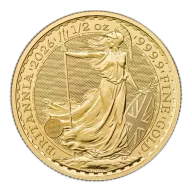
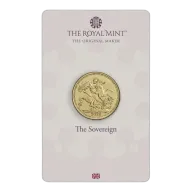
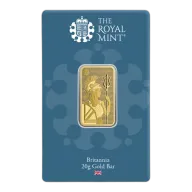
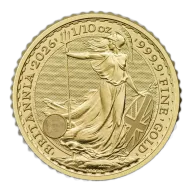
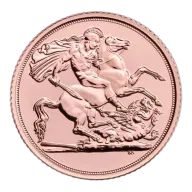
For bullion buyers, the Mint's flagship products are the gold Sovereign, struck in its current form since 1817, and the Britannia range: the gold Britannia first issued in 1987 and upgraded to 999.9 fine in 2013, the silver Britannia introduced in 1997, and a platinum Britannia at 999.5 fine added in 2018. Beyond bullion coins and bars, the Mint sells collectible and commemorative coins, historic coins, and jewellery, and offers depository storage services. Quality is checked through the Trial of the Pyx, a judicial ceremony dating to the thirteenth century that is held each year at the Worshipful Company of Goldsmiths in London.
Eleven Centuries of Minting: Alfred the Great to E-Waste Gold
The Royal Mint dates its continuous history to around AD 886, during the reign of King Alfred the Great. In 1279 Edward I centralised English coin production within the Tower of London, where the Mint then operated for several hundred years. Isaac Newton served as Warden of the Mint from 1696, taking an active part in the fight against counterfeiting during the Great Recoinage of that year, and later became Master of the Mint.
In 1809 the Mint moved to a purpose-built home on Tower Hill in East Smithfield, designed by James Johnson and completed by Robert Smirke after construction began in 1805. The site, later known as Royal Mint Court, remained its home for more than 160 years. During the nineteenth and early twentieth centuries the Mint also followed imperial gold production overseas, opening branch mints in Sydney (1855), Melbourne (1872), Perth (1899), Ottawa (1908), Bombay (1918) and Pretoria (1923); the mint-marked Sovereigns those branches struck still trade on the secondary market. From January 1852 a separate refinery operated beside the Tower Hill mint under a lease held by N M Rothschild and Sons, trading as the Royal Mint Refinery. Its output was recognised internationally as Good Delivery, and the refinery served as one of two London Good Delivery referees, alongside Johnson Matthey, when the modern accreditation process took shape after the Second World War. It was sold to Engelhard Industries in the late 1960s.
Decimalisation drove the next move. In 1967 the Government announced relocation to Llantrisant in South Wales, and Queen Elizabeth II opened the first phase of the new works on 17 December 1968. Production transferred progressively from London; the last coin struck there was a gold Sovereign in November 1975, and the Tower Hill buildings closed in 1980. Full melting, rolling and blanking capability was commissioned at Llantrisant in 1975, the same year the Mint became a Government Trading Fund. Design oversight has its own lineage: the Royal Mint Advisory Committee, established in 1922 with the personal approval of King George V, advises on the design of coins, medals, seals and decorations.
Since the 1980s commemorative coins and medals have grown into a major share of output. The Royal Mint Experience visitor attraction opened at Llantrisant in 2016, and from 2018 the business diversified into precious metals investment, historic coins and luxury collectibles, reporting an operating profit of £12.7 million in its 2020 to 2021 year. In 2022 it announced a Precious Metals Recovery facility in South Wales, using patented chemistry developed by the Canadian clean-tech firm Excir to recover gold from electronic waste. That recovered gold feeds the 886 by The Royal Mint jewellery division, which takes its name from the year the whole story began.
The Royal Mint: frequently asked questions
-
The Royal Mint is the United Kingdom's official coin producer, with a continuous history dating to around AD 886. It is wholly owned by His Majesty's Treasury, with the Chancellor of the Exchequer holding the title of Master of the Mint. Incorporated as The Royal Mint Limited (Companies House number 06964873), it operates as a government trading fund from its site in Llantrisant, Wales.
-
Yes. The Royal Mint sells bullion coins and bars directly through its online shop, including Sovereigns, Britannias, and a range of silver products. BullionFerret tracks their listed prices alongside other dealers, so you can compare The Royal Mint's prices against the wider market before buying.
-
BullionFerret currently tracks 156 Royal Mint listings, spanning gold and silver coins and bars. Prices update regularly so you can see where The Royal Mint sits relative to other dealers at any given time.
-
The Royal Mint does ship to selected countries outside the UK through its online shop. International buyers should check the checkout for country availability and factor in any import duties, local taxes, and shipping costs that may apply in their country, as these vary by destination.