
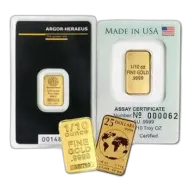
 SD Bullion


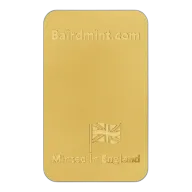
 Baird & Co.
Prices are fetched automatically and may not reflect current merchant prices. Currency conversions and tax treatment are approximate. Rankings are based solely on price. We are not a dealer and accept no responsibility for transactions with listed merchants. Past performance is not indicative of future results. This site does not provide investment advice. Full disclaimer
1/10 oz Gold Bar: frequently asked questions
-
The cheapest 1/10 oz gold bar tracked here is $498.83, with prices across dealers ranging from $496.84 to $498.83. That works out to roughly 13.2% over the $4,408.10 gold spot price. Prices move with spot throughout the day, so the live figure from SD Bullion reflects the current market.
-
A 1/10 troy oz gold bar weighs 3.1104 g. The troy ounce used for precious metals is slightly heavier than an avoirdupois ounce, so one troy ounce equals approximately 31.1 g and one-tenth of that is just over 3.1 g. This weight is consistent across all standard 1/10 oz bars regardless of brand.
-
Yes. Smaller gold bars typically carry higher premiums per troy ounce than larger ones because fabrication, packaging, and certification costs are spread over less metal. A 1/10 oz bar at 13.2% over spot reflects those fixed costs more acutely than a 1 oz or 1 kg bar would. Buyers prioritising cost efficiency usually favour larger sizes.
-
Not quite the smallest, but it is among the smaller standard sizes available. Minted bars are also produced in 1 g, 2.5 g, and 5 g denominations, all smaller than 3.1 g. The 1/10 oz size is a common fractional weight and is widely stocked by bullion dealers alongside those smaller options.
-
Reporting rules vary by country. In the UK, sellers must declare capital gains above the £3,000 annual exemption. In the US, dealers are required to report certain large cash transactions to the IRS, and gains are taxable at up to 28%. In Canada, 50% of any capital gain is included in taxable income. Check the rules in your own jurisdiction before buying or selling.