 APMEX
APMEX
1 listing
Filters
| Product | /oz | Premium | Price | |
|---|---|---|---|---|
| $5,005.92 | +23.21% | $1,609.44 | View Deal |

Prices are fetched automatically and may not reflect current merchant prices. Currency conversions and tax treatment are approximate. Rankings are based solely on price. We are not a dealer and accept no responsibility for transactions with listed merchants. Past performance is not indicative of future results. This site does not provide investment advice. Full disclaimer
About the 10g Asahi Refining Lunar Gold Bar
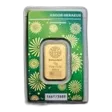
The 10g Asahi Lunar Gold Bar
The Asahi Lunar series launched in August 2023 with the 2024 Year of the Dragon release, described by Asahi as the first in an ongoing series of gold and silver bullion celebrating the Chinese Lunar New Year. The producer matters here: Asahi Refining is an LBMA Good Delivery refiner with facilities in Salt Lake City, Brampton (Ontario) and Miami, formed when Asahi Holdings of Japan acquired Johnson Matthey's gold and silver refining businesses in 2015. The brand name is younger than the heritage behind it.
The design formula pairs a debossed Asahi logo on a reverse-proof background with a zodiac reverse that changes annually: a dragon entwined around a cypress tree for 2024, a snake hanging from a branch with plum blossoms and lanterns for 2025. If the series runs the full 12-year zodiac cycle it would continue through 2035. Asahi is one of very few LBMA refiners producing a zodiac-themed bullion line, placing these bars in an unusual middle ground between sovereign mint collectibles and plain refiner bars. They are not legal tender and carry no face value.
At 10 grams (0.3215 troy oz), this is a mid-range metric bar weight, slightly heavier in gold content than a 1/4 oz coin and at a similar price point of roughly $1,000 to $1,100 at current gold prices. Premiums on 10g bars typically run 8 to 12% over spot, elevated by fixed manufacturing costs but a clear improvement on 1g and 2.5g sizes, the smallest weights in the Asahi Lunar gold line-up.
Tax Treatment of Small Asahi Gold Bars
Gold bars from LBMA-accredited refiners sit comfortably inside the investment gold rules of most jurisdictions, where the thresholds are purity-based rather than dependent on legal tender status. The standard purity for retail minted gold bars is 999.9 fine, well above every exemption floor.
- United States: Asahi's primary market, with refining operations in Salt Lake City and Miami. No federal sales tax; roughly 35 states exempt bullion while a minority tax it or apply thresholds, and note that a single 10g bar at around $1,000 sits near the exemption floors in threshold states such as New York and Louisiana ($1,000) and below California's $2,000 line. IRA-eligible gold bars must be 99.5%+ purity from accredited refiners and held at an approved depository; Asahi's LBMA Good Delivery status is the relevant credential. Long-term gains are taxed at the collectibles rate of up to 28%.
- Canada: Asahi refines in Brampton, Ontario, and gold bars at 99.5%+ purity are GST/HST exempt federally.
- United Kingdom: Investment gold bars of at least 995 fineness are 0% VAT, but bars are never CGT-exempt; that privilege is reserved for UK legal tender coins.
- Australia: Investment-grade gold at 99.5%+ purity from accredited refiners is GST-free. The series competes here on Perth Mint's home turf at a brand disadvantage.
- Singapore and Hong Kong: No purchase tax on qualifying investment gold and no capital gains tax in either jurisdiction.
Asahi Lunar vs Perth Mint, PAMP and the 1/4 oz Coin
The dominant competitor is the Perth Mint Lunar programme: government-backed, legal tender, with a history spanning more than 25 years and correspondingly higher collectibility and premiums. PAMP Suisse also produces lunar zodiac bars in gold and silver, commanding higher prices on Swiss branding and Fortuna heritage, and the Royal Canadian Mint issues its own zodiac-themed bullion. Asahi's position against all three is the same: similar annual zodiac themes from an LBMA Good Delivery refiner at more competitive pricing. For buyers who want the Year of the Snake on their gold without paying sovereign mint collectible premiums, that is the entire pitch.
The other comparison is within the weight class. A 10g bar and a 1/4 oz sovereign coin cost roughly the same $1,000 to $1,100, but split the value differently. The bar contains 10g of gold against the coin's 7.78g, so the bar buys more metal per dollar. The coin answers with generally lower percentage premiums, stronger brand recognition and better liquidity in ounce-denominated markets like the US and UK, where dealers and buyers default to troy ounce sizes. Buyers prioritising metal content take the bar; buyers prioritising exit ease take the coin.
Within the gram bar range itself, 10g is still on the expensive part of the curve. The big premium step-change arrives at 50g, where rates drop from the 8 to 12% band to roughly 3 to 6%. A themed bar like the Asahi Lunar is bought partly for the design, so that trade-off is understood, but stackers who only want weight should look at larger plain gold bars instead.