
21 products
Filters
| Product | /oz | Premium | Price | |
|---|---|---|---|---|
| $4,121.40 | +3.31% |
$2,650.06
A$3,841
|
View Deal | |

Gold
|
$4,133.47 | +3.61% |
$4,133.48
A$5,991
|
View Deal |
| $4,133.47 | +3.61% |
$4,133.48
A$5,991
|
View Deal | |
| $4,133.47 | +3.61% |
$4,133.48
A$5,991
|
View Deal | |
| $4,133.47 | +3.61% |
$4,133.48
A$5,991
|
View Deal | |
| $4,313.60 | +8.13% |
$1,078.40
A$1,563
|
View Deal | |

Silver
|
$64.61 | +13.01% |
$646.06
A$936
|
View Deal |
| $4,523.87 | +13.40% |
$452.38
A$656
|
View Deal | |
| $4,603.98 | +15.41% |
$460.39
A$667
|
View Deal | |
| $4,603.98 | +15.41% |
$460.39
A$667
|
View Deal | |
| $66.33 | +16.02% |
$132.66
A$192
|
View Deal | |
| $66.33 | +16.02% |
$132.66
A$192
|
View Deal | |
| $67.37 | +17.83% |
$67.37
A$98
|
View Deal | |
| $68.05 | +19.04% |
$68.06
A$99
|
View Deal | |
| $68.05 | +19.04% |
$68.06
A$99
|
View Deal | |

Silver
|
$68.05 | +19.04% |
$68.06
A$99
|
View Deal |

Silver
|
$68.05 | +19.04% |
$68.06
A$99
|
View Deal |

Silver
|
$68.05 | +19.04% |
$68.06
A$99
|
View Deal |
| $68.05 | +19.04% |
$68.06
A$99
|
View Deal | |
| $71.51 | +25.08% |
$35.75
A$52
|
View Deal | |

Platinum
|
$2,047.99 | +31.05% |
$204.80
A$297
|
View Deal |

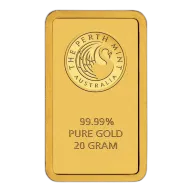
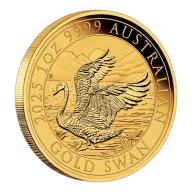

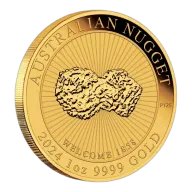

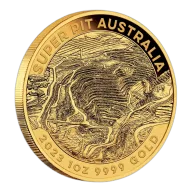

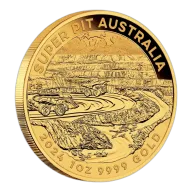

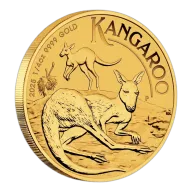
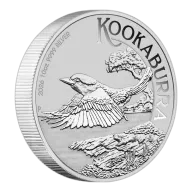

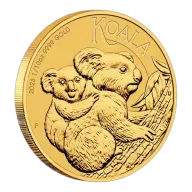









Prices are fetched automatically and may not reflect current merchant prices. Currency conversions and tax treatment are approximate. Rankings are based solely on price. We are not a dealer and accept no responsibility for transactions with listed merchants. Past performance is not indicative of future results. This site does not provide investment advice. Full disclaimer
About Perth Mint
The Perth Mint: Western Australia's Government-Owned Bullion Producer
The Perth Mint is the trading name of Gold Corporation (ABN 98 838 298 431), a statutory authority wholly owned by the Government of Western Australia. It opened on 20 June 1899 as a branch of the United Kingdom's Royal Mint and has operated from the same site at 310 Hay Street, East Perth ever since. The original limestone building, constructed between 1896 and 1898 to a Romanesque Revival design by chief architect George Temple-Poole, was the first structure entered on the State Register of Heritage Places in the City of Perth. An 8,400 square metre manufacturing facility opened alongside it in 2003.
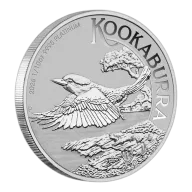
The Mint produces gold, silver and platinum bullion coins and bars together with numismatic coins, jewellery and loose pink diamonds, and is responsible for minting most of Australia's legal-tender precious metal coinage, including the gold Kangaroo, silver Kookaburra, Koala and Swan series. Its refinery holds LBMA Good Delivery accreditation for gold and silver, UAE Good Delivery accreditation for gold bars through the Dubai Multi Commodities Centre, and accreditations with the New York Commodity Exchange, the Shanghai Gold Exchange, the Osaka Exchange and the Dubai Gold and Commodities Exchange. It has also been appointed one of seven global referees of the LBMA Good Delivery Programme, supporting accreditation applications from other refiners and providing assaying services.
Beyond manufacturing, the Mint operates the Perth Mint Depository, offering allocated and unallocated storage backed by a Western Australian government guarantee, and backs PMGOLD, an ASX-listed investment product secured by physical bullion held at the Mint. The heritage premises house a visitor centre, retail shop and jewellery boutique, and the Mint's website has been online since at least April 1997.
From Gold Rush Royal Mint Branch to Gold Corporation
The Perth Mint owes its existence to the Western Australian gold rush. Gold discoveries at Coolgardie, Kalgoorlie and in the Murchison region drove the colony's population from 23,000 in 1869 to 180,000 by 1900, and the new mint was built to refine that gold and strike it into coin. Premier John Forrest laid the foundation stone on 23 September 1896; contractors Atkins and Law completed the limestone building in 1898 for £22,199, and the Mint opened on 20 June 1899 as the third and final Australian branch of the United Kingdom's Royal Mint, following Sydney and Melbourne.
From opening until 1931 the Perth Mint struck more than 106 million gold sovereigns and nearly 735,000 half-sovereigns for circulation across Australia and the British Empire, with production ending when Britain abandoned the gold standard. Although Western Australia federated with Australia in 1901, the Mint remained under UK government control for a further 69 years. During World War II it began producing Australian circulation coinage from base metals, a role it kept in lower denominations until the end of 1983. In 1957 it produced a 13 troy ounce proof plate assaying at nearly 999.999 parts per 1,000, verified by the Goldsmiths' Company; the Royal Mint subsequently ordered examples as a benchmark for its own standards.
Ownership transferred from the UK government to the Government of Western Australia on 1 July 1970 under the Perth Mint Act 1970. The Gold Banking Corporation Act 1987 then created Gold Corporation, with an agreement from the Commonwealth empowering it to mint and market legal-tender gold, silver and platinum coins to investors and collectors worldwide. Prime Minister Bob Hawke launched the Australian Nugget gold bullion coin on 23 April 1987; first-day sales reached 155,000 troy ounces, worth A$103 million, beating a target of 130,000 ounces set for the end of June. The series was renamed the Australian Kangaroo from 1989, when its designs shifted from historic gold nuggets to kangaroos.
By 2000 the refinery's cumulative output had reached 4,500 tonnes of gold, around 3.25 per cent of all the gold ever produced. A new 8,400 square metre manufacturing facility opened next to the original building in 2003, and in October 2011 the Mint struck a record-setting coin of 1,012 kilograms of 99.99 per cent pure gold, roughly 80 centimetres across, with a face value of A$1 million. In the 2018 financial year it sold approximately A$18.9 billion of pure gold, silver and platinum bullion, and by late 2019 the refinery was processing around 79 per cent of Australasian gold production. Its later appointment as a global referee of the LBMA Good Delivery Programme placed it among seven such institutions worldwide.
Perth Mint: frequently asked questions
-
In 2023, ABC's Four Corners reported that Perth Mint had supplied gold bars to the Shanghai Gold Exchange (SGE) that contained silver levels above the SGE's non-gold specification limit. The episode attracted significant public scrutiny and a government response. The LBMA's review concluded it found no instances of zero-tolerance non-conformance.
-
The Perth Mint is wholly owned by the Government of Western Australia. It operates as a statutory authority under Gold Corporation (ABN 98 838 298 431), established by the Gold Banking Corporation Act 1987. Ownership transferred from the UK government to the Western Australian state government on 1 July 1970 under the Perth Mint Act 1970.
-
The Perth Mint both refines and mints its own bullion, then sells directly through its own retail channels. That vertical integration removes the intermediary margin a typical dealer would add when buying from a third-party refiner and reselling. Buying direct from the producer can mean a lower premium over spot, though prices still vary by product and quantity.
-
Perth Mint products carry a Swan logo as a hallmark of authenticity. For serialised bars, the Perth Mint website provides an online serial number verification tool where you can confirm a bar's details. Purchasing from an authorised dealer or directly from the Mint is the most reliable way to ensure you are receiving genuine product.
-
In Australia, investment-grade gold bullion is exempt from GST on purchase. When you sell, capital gains tax applies, though a discount may be available for metal held long term. In the UK, investment gold carries no VAT; gains are taxed at 18% or 24% above the annual allowance of £3,000. In Canada, investment gold is also GST-free, and 50% of any gain is included in taxable income.