1 listing
Filters
| Product | /oz | Premium | Price | |
|---|---|---|---|---|

 Australian Bullion Company
|
$4,526.18 | +4.05% |
$4,526.09
A$6,357
|
View Deal |
Prices are fetched automatically and may not reflect current merchant prices. Currency conversions and tax treatment are approximate. Rankings are based solely on price. We are not a dealer and accept no responsibility for transactions with listed merchants. Past performance is not indicative of future results. This site does not provide investment advice. Full disclaimer
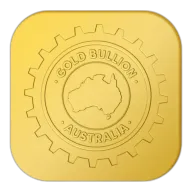
About the 1 oz Gold Bullion Australia Gold Bar
The 1 oz Gold Bullion Australia Gold Bar
This bar contains one troy ounce (31.1035 g) of 999.9 fine gold, the four nines standard for modern retail gold bars. One ounce is the benchmark weight for bullion worldwide: every premium is quoted against the spot price per troy ounce, and every dealer buys and sells at this size, which makes the 1 oz bar the sweet spot between premium efficiency and resale liquidity in the gold bar range.
The case for a 1 oz bar over a 1 oz coin is straightforwardly about cost. Bars carry the lowest premiums of any gold form, typically 2 to 4% over spot at this weight, against roughly 3 to 8% for sovereign mint coins. The bar gives up legal tender status, a face value and sovereign mint anti-counterfeiting features in exchange for that saving. Coins also tend to retain more of their premium at resale, so the bar's advantage is largest for buyers who plan to hold rather than trade frequently.
Retail gold bars are normally sold sealed in tamper-evident assay cards carrying a certificate with the bar's serial number, weight, purity and the producer's hallmark. Keeping that seal intact matters: bars in original assay packaging achieve the best buyback prices, while a loose bar may need re-assaying at the seller's expense. For buyers scaling up, larger formats like the 100g gold bar push premiums down further, at the cost of a narrower retail buyer pool when it is time to sell.
Tax on 1 oz Gold Bars by Country
At 999.9 fineness this bar clears the investment gold purity thresholds in every major jurisdiction, so purchase taxes are rarely an issue. The differences show up on disposal.
- United Kingdom: Investment gold bars of at least 995 fineness are 0% VAT. Bars are not CGT-exempt, though; only UK legal tender coins escape Capital Gains Tax, so gains above the £3,000 annual allowance are taxed at 10 to 20% depending on income band.
- Australia: Investment-grade gold of at least 99.5% purity is GST-free. CGT applies on disposal, with a 50% discount for individuals holding longer than 12 months.
- United States: No federal sales tax; most states exempt bullion, with a few taxing it or applying purchase thresholds. Long-term gains are taxed at the collectibles rate of up to 28%. IRA-eligible bars must be 99.5%+ purity from LBMA, COMEX or NYMEX accredited refiners and held at an approved depository.
- Canada: Gold bars at 99.5%+ purity are GST/HST exempt. Capital gains are taxable at the 50% inclusion rate.
- New Zealand: Gold of at least 99.5% purity is GST-exempt, and unlike with 22 carat coins there is no purity trap for standard 999.9 bars. No formal capital gains tax.
- Singapore and Hong Kong: No GST on qualifying investment gold (Singapore's IPM scheme) or no sales tax at all (Hong Kong), and no capital gains tax in either, making bars the straightforward cost-efficient choice there.
1 oz Bar vs 1 oz Coins and Larger Bars
Against a 1 oz sovereign coin like the 1oz Gold Kangaroo or Maple Leaf, the bar wins on entry price and loses on everything else. Sovereign coins are legal tender, carry government purity guarantees, and the major issues include advanced security features such as the Maple Leaf's Bullion DNA micro-engraving or the Britannia's laser-cut tincture lines. They command tighter bid-ask spreads at resale. The bar's 2 to 4% premium against a coin's 3 to 8% is the entire argument, and on a single ounce that difference narrows in cash terms.
The UK case deserves its own line: a 1oz Gold Britannia is both VAT-exempt and CGT-exempt for UK residents, while a bar is only VAT-exempt. For UK investors expecting gains beyond the annual allowance, the CGT bill on a bar can outweigh its lower purchase premium over a full holding period.
Against larger bars, the trade-off runs the other way. Premiums scale inversely with size: around 2 to 4% at 100g and 1 to 2% at a kilo, against 2 to 4% for a 1 oz minted bar. A buyer deploying serious capital saves meaningfully by sizing up, but larger bars face the tungsten-core counterfeiting concern that drives ultrasonic testing on secondary market pieces of 100g and above, and the retail buyer pool thins at higher unit prices. The 1 oz bar avoids both problems, which is why it remains the default bar size for retail stackers.
1 oz Gold Bullion Australia Gold Bar: frequently asked questions
-
The lowest current offer we track is $4,526.09 from Australian Bullion Company, sitting around 4.1% over the gold spot price of $4,408.10. Prices update as dealers change their listings, so check the comparison table for the most current figures.
-
The manufacturer listed for this bar is Gold Bullion Australia. Gold Bullion Australia is an Australian bullion brand producing 999.9 fine gold bars. For authoritative information on the producer's refining credentials and facility, check the assay card supplied with the bar or the manufacturer's own documentation.
-
Authentic bars typically come sealed in a tamper-evident assay card displaying the weight, purity, and a serial number. Check that the weight matches the stated 1 troy oz (31.1035 g) on a calibrated scale, and that the purity is marked as 999.9 fine gold. If in doubt, a reputable dealer or independent assayer can verify the bar.
-
We currently track 1 dealer listing 1 offer for this bar. Availability and pricing vary between sellers, so comparing live offers in the table above is the most reliable way to find the best deal at any given time.