
 Suisse Gold

Prices are fetched automatically and may not reflect current merchant prices. Currency conversions and tax treatment are approximate. Rankings are based solely on price. We are not a dealer and accept no responsibility for transactions with listed merchants. Past performance is not indicative of future results. This site does not provide investment advice. Full disclaimer
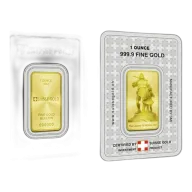
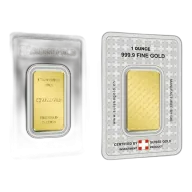
About the 1 oz Suisse Gold Bar
The 1 oz Suisse Gold Bar as a Benchmark-Weight Purchase
One troy ounce, 31.1035 grams, is the standard unit for bullion worldwide, and every premium you see quoted is expressed relative to the spot price per troy ounce. That makes the 1 oz gold bar the most directly comparable product on the market: you can line its price up against any other 1 oz bar or coin and see exactly what you are paying above the metal value. The 1 oz Suisse Gold Bar sits in this benchmark class.
Bars are the cheapest way to own gold at this weight. Minted 1 oz gold bars carry premiums of roughly 1-4% over spot, against 3-5% for 1 oz sovereign coins. The saving comes from simpler manufacturing: a bar is cut or cast rather than struck with the die work, quality control, and packaging that a legal tender coin requires. Bars carry no face value and are not legal tender, so the buyer is paying for metal, not minting.
The 1 oz size is also the sweet spot for resale. Bars from recognised refiners in sealed assay cards are accepted by dealers worldwide, and the 1 oz format keeps the buyer pool wide; larger bars save more on premium but narrow the number of people who can afford them second-hand. Buyers who want the lowest possible cost per ounce can step up to larger gold bars, where 100g bars run 2-4% and kilo bars 1-2% over spot.
Tax Treatment of 1 oz Gold Bars by Country
Gold bars enjoy wide tax exemptions on purchase, with the important caveat that most exemptions hinge on fineness. Investment gold is defined in the UK and EU as bars of 995 fineness or better, so check the stated fineness on the dealer listing before relying on any of the rules below.
- UK: Investment gold bars are VAT-exempt. They are not CGT-exempt, however; only UK legal tender coins escape Capital Gains Tax. Gains above the £3,000 annual allowance are taxed at 18% or 24% depending on your income band.
- EU: 0% VAT on investment gold bars at 995+ fineness across all member states. Capital gains rules vary by country; Germany taxes nothing on bars held for more than a year.
- US: No federal sales tax; state rules vary, and roughly 35 states exempt bullion. Long-term gains are taxed at the 28% collectibles rate. IRA-eligible bars must be 99.5%+ purity from accredited refiners and held at an approved depository.
- Canada: 0% GST/HST on gold refined to 99.5% or better.
- Australia: 0% GST on investment-grade gold of 99.5%+ purity.
- Singapore and Hong Kong: No sales tax on qualifying investment gold and no capital gains tax in either jurisdiction.
The UK position deserves emphasis: a bar saves premium on the way in but exposes the gain to CGT on the way out, which is why many UK buyers weigh bars against CGT-exempt coins before committing.
1 oz Gold Bar vs Coins, Cast Bars, and Larger Sizes
Against a 1 oz sovereign coin, the bar wins on price and loses on tax flexibility in some countries. Coins like the 1oz gold Britannia carry 3-5% premiums against 1-4% for minted bars, but UK legal tender coins are CGT-exempt where bars are not. Coins also hold brand recognition that translates into tighter bid-ask spreads at the retail level; bars rely on the refiner's hallmark and an intact assay card for the best buyback price.
Within the bar category, cast bars run 1-3% over spot, cheaper than minted bars of the same weight because the production process is simpler: molten gold poured into a mould rather than cut from rolled sheet and polished. The trade-off is a rougher finish and, for some buyers, less confidence at resale without the sealed assay packaging that minted bars come in.
Moving up the weight scale is the other lever. Premiums scale inversely with size: 100g bars run 2-4% over spot and 1kg bars 1-2%, so a large allocation built from kilo bars can save thousands against the same weight in 1 oz units. The cost is divisibility and a narrower resale market. For most buyers the 1 oz bar remains the balance point: institutional-adjacent pricing with a unit small enough that any dealer, anywhere, will make an offer on it.