1 product · 24 deals
Filters
| Product | /oz | Premium | Price | |
|---|---|---|---|---|

24 deals
|
$4,729.14 | +8.84% |
$2,280.68
£1,709
|
Compare |
Prices are fetched automatically and may not reflect current merchant prices. Currency conversions and tax treatment are approximate. Rankings are based solely on price. We are not a dealer and accept no responsibility for transactions with listed merchants. Past performance is not indicative of future results. This site does not provide investment advice. Full disclaimer
About 15g Gold Coins
The 15 Gram Gold Coin: A Metric Weight with Limited Options
The 15 gram denomination sits in an unusual position in the gold coin market. It exists almost entirely because of one product: the Chinese Gold Panda, which adopted metric weights in 2016, replacing its former 1/2 troy ounce (15.55g) size with a 15 gram coin. That conversion removed 0.55 grams of gold from what had been a standard half-ounce product, and 15g gold coins remain a largely Chinese phenomenon as a result.
For buyers considering this weight class, the practical question is whether the 15g Panda justifies its existence alongside the established 1/2 oz coins from Western mints. A standard 1/2 troy ounce coin contains 15.55 grams of gold. The 15g Panda contains 3.5% less metal at a comparable price point. That gap is not trivial: at current gold prices, the missing 0.55 grams represents a meaningful dollar amount.
The 15g Panda does offer genuine collector appeal that purely bullion-focused products lack. Each year features a new panda design, and specific vintages with popular artwork or lower mintages can trade above standard bullion premiums. Buyers who value the annual design variety and the series' long numismatic history may find the slight weight disadvantage acceptable. Those focused strictly on accumulating gold by weight will find better value in 1/2 oz gold coins from the Britannia, Maple Leaf, or American Eagle programmes.
The 15g weight is natural in metric-system countries across Asia, where gram-denominated products are standard. In troy-ounce markets like the UK, US, and Canada, it reads as an odd size. This affects resale: dealers who regularly handle Pandas will buy them back without difficulty, but the coin lacks the instant recognition of a half-ounce Maple Leaf or Britannia at a generalist dealer.
Premium Economics at 15 Grams
Premiums on the 15g Gold Panda typically fall in the 4-8% range over spot, varying by dealer, year, and market conditions. This places them in the mid-range for fractional gold coins, sitting above the 30g Panda (which benefits from its larger size) and below the premium-heavy 3g and 8g denominations where manufacturing costs dominate.
The comparison that matters most is against true 1/2 oz gold coins. A 1/2 oz Britannia or Maple Leaf contains 15.55g of gold versus the Panda's 15g. If a 15g Panda and a 1/2 oz Western coin are priced similarly, the Panda buyer is paying a higher effective premium per gram of gold. This arithmetic disadvantage compounds across multiple purchases.
Specific vintage years can command premiums well above the standard bullion range. Popular designs, anniversary issues, and years with lower mintage figures attract collector interest that pushes prices higher. This numismatic upside is genuine but unpredictable, and should not be confused with bullion value.
Indian-market 15g gold bars and coins offer competitive premiums within the domestic market but are less commonly available through international dealers. For buyers outside Asia, the Chinese Panda is effectively the only 15g gold coin option with broad dealer support.
Available 15 Gram Gold Coins
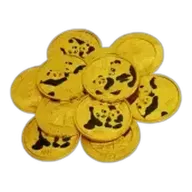
The product landscape at 15 grams is dominated by a single series. The Chinese Gold Panda 15g is the primary coin at this weight, issued annually since 2016 when the China Gold Coin Corporation converted the Panda programme from troy ounce to metric gram denominations. Each coin contains 15 grams of .999 fine gold with a 200 yuan face value and a 27mm diameter. The obverse depicts the Temple of Heaven in Beijing, while the reverse carries a new panda design each year.
The Panda's annual design changes are central to its appeal. Unlike static-design bullion coins such as the Maple Leaf or Philharmonic, where the imagery stays the same year after year, each Panda vintage is visually distinct. This drives collecting behaviour that sustains secondary market values, particularly for years with well-regarded artwork.
Beyond the Panda, the 15g weight class is thin. Generic 15g gold coins occasionally appear from various mints, but none have established the market presence or dealer recognition needed for confident buying and selling. Buyers seeking gold at this approximate size but without commitment to the Panda series should consider moving up to a standard 1/2 oz gold coin, where the selection is vastly broader and liquidity is stronger.
Resale and Storage at 15 Grams
The 15g Gold Panda is liquid among dealers who handle the Panda series and fractional gold generally. Major US and international dealers buy and sell them regularly, and the coin's sovereign backing from the People's Bank of China provides institutional credibility. Buyback spreads are reasonable at established dealers, though they tend to be slightly wider than for standard 1/2 oz coins from Western mints, reflecting the smaller dealer network for Pandas compared to Maples or Britannias.
Counterfeit risk is a real consideration with Chinese Pandas. The series has been a frequent target for counterfeiters, and buyers should purchase only from reputable, established dealers. Authentication through weight measurement, dimensions, and visual inspection of strike quality is important for secondary market purchases.
At 27mm diameter, the 15g Panda is comparable in physical size to a 1/2 oz coin. Individual coins are sold in sealed capsules, and year-specific collecting is common. Storage is straightforward: the coin is small enough for any home safe or safety deposit box, and the capsule protects against handling marks on the .999 fine gold surface.
For buyers in Singapore, Hong Kong, and other Asian markets where metric gram weights are standard, the 15g denomination is intuitive and trades naturally. In troy-ounce-denominated markets, the unusual weight can require explanation at resale, potentially slowing transactions at dealers unfamiliar with the Panda programme.