0 products · 0 deals
Filters
No products match your filters.
Prices are fetched automatically and may not reflect current merchant prices. Currency conversions and tax treatment are approximate. Rankings are based solely on price. We are not a dealer and accept no responsibility for transactions with listed merchants. Past performance is not indicative of future results. This site does not provide investment advice. Full disclaimer
About the Highland Mint Buffalo Silver
The Most Widely Traded Buffalo Silver Round
The Highland Mint Buffalo is a .999 fine silver round that reproduces James Earle Fraser's iconic 1913 Buffalo Nickel design, one of the most recognisable American coin motifs. Highland Mint, based in Melbourne, Florida, struck their first Buffalo round in 2014, and it has since become one of the most widely traded generic silver rounds in the US market.
Highland Mint itself is an unusual player in the bullion space. The company is primarily known for licensed sports memorabilia, holding official licences with the NFL, MLB, NBA, NHL, and NCAA. Their 50,000 square foot Melbourne facility is equipped for both commemorative medal production and investment-grade bullion. The Buffalo round represents their bullion division's output, and its market penetration is somewhat surprising given that bullion is not the company's core business.
The Buffalo Nickel design entered the public domain after the coin was demonetised in 1938, and dozens of private mints now reproduce it. Fraser's original obverse features a composite portrait of a Native American chief (reportedly modelled on Iron Tail of the Lakota Sioux, Two Moons of the Cheyenne, and John Big Tree of the Seneca, though this attribution is debated). The reverse depicts an American bison, reportedly modelled on "Black Diamond" from the New York Central Park Zoo, though this too is questioned by numismatists.
Highland Mint's version adapts Fraser's design with modified inscriptions ("Liberty" on the obverse, "Silver Bullion Round" on the reverse) and adds an "HM" mintmark on both sides. The rounds are year-dated, a small but useful provenance detail that most competing Buffalo rounds lack.
Highland Mint Buffalo Round Specifications
| Size | Weight | Purity | Diameter | Thickness | Edge | Packaging |
|---|---|---|---|---|---|---|
| 1 oz | 31.1 g | .999 silver | 39.04 mm | 2.9 mm | Smooth | Tubes of 20 |
| 1/2 oz | 15.55 g | .999 silver | — | — | — | Tubes of 25 |
| 1/4 oz | 7.78 g | .999 silver | — | — | — | Tubes of 25 |
| 1/10 oz | 3.11 g | .999 silver | — | — | — | — |
Design and Markings
- Obverse: Adapted portrait of a Native American chief from James Earle Fraser's 1913 design. "Liberty" inscription and "HM" mintmark. Current year date stamped
- Reverse: American bison (buffalo) adapted from Fraser's original reverse. "Silver Bullion Round" inscription with weight and purity. "HM" mintmark present on both sides
- Edge: Smooth (unlike the reeded edge of the original Buffalo Nickel)
Authentication Markers
The "HM" mintmark on both obverse and reverse identifies Highland Mint as the manufacturer, distinguishing these rounds from the dozens of other private mints producing Buffalo-design rounds. Year-dating provides production timeline verification. No assay card, serial number, or advanced authentication technology is included. These are generic rounds priced and traded as such, with authentication relying on standard weight and dimension verification by reputable dealers.
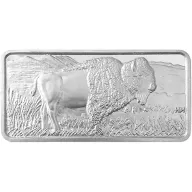
Highland Mint also produces a 10 oz silver bar with the Buffalo design, extending the line beyond the round format into a heavier option for buyers who prefer bars.
Tax Position of Highland Mint Buffalo Rounds
As private-mint rounds with no legal tender status, Highland Mint Buffalo rounds are taxed purely on the basis of their metal content and form.
United States
No federal sales tax applies. State exemptions cover roughly 35 states. The rounds are generally not IRA-eligible: IRA regulations under Section 408(m) typically require silver coins or bars from government mints, or bars from COMEX/NYMEX-approved refiners and assayers. Highland Mint is not on the standard approved lists. The .999 purity meets the IRS minimum for silver, but the manufacturer qualification is the barrier.
United Kingdom
Silver rounds attract the full 20% VAT rate. No margin scheme applies (that is reserved for pre-owned coins from certain dealers). No CGT exemption (reserved for UK legal tender coins). Highland Mint rounds are available from some UK importers but are less competitive against UK-sourced silver once VAT is factored in.
Canada
Silver of 99.9%+ purity in bar, ingot, coin, or wafer form is GST/HST-exempt. Highland Mint rounds at .999 qualify on purity, though the round form factor is sometimes treated differently from coins by certain dealers.
Australia
Investment-grade silver (99.9%+ purity from a recognised source, commonly traded on commodity markets) is GST-free. Private-mint rounds from non-recognised mints may face interpretive questions about whether they qualify. Perth Mint and Royal Australian Mint products dominate the domestic market, with imported private rounds carrying both GST risk and less favourable resale terms.
Fraser's Buffalo Nickel and Its Afterlife in Private Silver
James Earle Fraser designed the Buffalo Nickel for the US Mint in 1913, creating what many numismatists consider the most distinctly American coin design ever produced. The combination of a Native American portrait and an American bison captured two symbols deeply embedded in the national consciousness, and the coin circulated from 1913 to 1938 before being replaced by Jefferson's nickel.
The design's entry into the public domain after demonetisation opened it to reproduction by anyone, and it has since become arguably the single most reproduced coin design in the private silver round market. The reasons are straightforward: the design is legally free to use, it carries strong American cultural resonance, and the "Indian Head" and buffalo imagery appeal broadly to both coin collectors and bullion stackers.
Highland Mint introduced their Buffalo round in 2014, relatively late compared to some competitors. SilverTowne, Sunshine Minting, Golden State Mint, Republic Metals, and Asahi all produce their own versions. The US Mint itself adapted Fraser's design for the official American Buffalo gold coin, launched in 2006 as a .9999 fine gold legal tender coin. That government coin occupies an entirely different market tier, with substantial premiums and universal IRA eligibility.
The term "Buffalo round" has become almost generic in the bullion market, with many buyers making no distinction between manufacturers. This commoditised status is both the product's strength (instant recognition, deep liquidity among generic rounds) and its limitation (no brand premium, no collector demand). Highland Mint's "HM" mintmark and year-dating provide marginally more provenance than truly unbranded generics, but the price difference between Highland Mint and other Buffalo rounds is typically negligible.
Highland Mint Buffalo vs Other Generic Silver Rounds
The Highland Mint Buffalo competes in the lowest-premium segment of the physical silver market. Buying decisions at this level are driven almost entirely by cost per ounce, with design preference, security features, and brand reputation playing minor roles.
Against Other Buffalo Rounds
SilverTowne, Sunshine Minting, Golden State Mint, Asahi, and numerous other private mints all produce their own Buffalo-design rounds. Prices are nearly identical across manufacturers. Sunshine Minting distinguishes itself with the MintMark SI anti-counterfeiting feature, a micro-engraved mark readable with a proprietary decoder lens. Highland Mint's "HM" mark and year-dating are simpler provenance features but require no special equipment to identify. For buyers who want the cheapest ounce of silver regardless of manufacturer, the brand distinction is immaterial.
Against Government Silver Coins
The gap between Highland Mint rounds and sovereign-mint coins represents the fundamental premium tradeoff in silver bullion. A 1 oz silver Britannia, 1 oz Maple Leaf, or 1 oz American Silver Eagle commands a significantly higher per-ounce premium but provides legal tender status, tax advantages in specific jurisdictions, broader global resale liquidity, and in some cases IRA eligibility. A buyer accumulating 100 oz in Highland Mint rounds rather than Maple Leafs saves meaningfully on purchase premiums. The tradeoff is narrower resale margins and no preferential tax treatment.
Fractional Rounds
Highland Mint produces 1/2 oz, 1/4 oz, and 1/10 oz fractional rounds. Per-ounce premiums increase substantially as sizes decrease, making fractional rounds inefficient for pure silver accumulation. Their appeal is primarily as gifts or for buyers who want smaller individual units. Competing fractional rounds from GSM and other mints are priced similarly.
Highland Mint Buffalo Silver: frequently asked questions
-
Yes. Highland Mint Buffalo rounds are struck in .999 fine silver (one troy ounce per round), which is the standard purity for investment-grade silver bullion. Both the obverse and reverse carry an "HM" mint mark identifying Highland Mint as the manufacturer, and each round is year-dated. They carry no assay card or serial number, which is typical for generic silver rounds at this price point.
-
Highland Mint Buffalo rounds are priced against the live silver spot price, currently $62.18. We track 3 listings from 1 dealer so you can compare premiums side by side. Generic silver rounds like this typically trade at modest premiums over spot, making them one of the more cost-efficient ways to accumulate physical silver.
-
For Highland Mint Buffalo rounds, check the "HM" mint mark on both obverse and reverse and confirm the year date is present. Weigh the round with precision scales: a genuine 1 oz round should be 31.1 g. A strong magnet should not stick (silver is not magnetic, though a slight slide is normal). Genuine silver also cools rapidly on contact with ice. If purchasing from a reputable dealer, these tests are rarely necessary but useful for secondary-market buys.
-
No. Highland Mint is a private mint based in Florida; their Buffalo round is a silver product with no legal tender status. The US Mint's American Buffalo is a government-issued gold coin (.9999 fine gold, legal tender), first struck in 2006. The US Mint has never produced a standard silver Buffalo round. Both products draw on James Earle Fraser's original 1913 Buffalo Nickel design, which is now in the public domain, but they are entirely separate products from different producers.