0 products · 0 deals
Filters
No products match your filters.
Prices are fetched automatically and may not reflect current merchant prices. Currency conversions and tax treatment are approximate. Rankings are based solely on price. We are not a dealer and accept no responsibility for transactions with listed merchants. Past performance is not indicative of future results. This site does not provide investment advice. Full disclaimer
About the Phoenix Silver
A Korean Sovereign Mint's Take on Silver Bullion
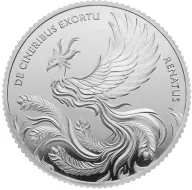
The KOMSCO Phoenix is a silver bullion medal produced by South Korea's state-owned mint, featuring the Bonghwang, a mythological phoenix rooted in Korean culture for over a thousand years. KOMSCO (Korea Minting, Security Printing and ID Card Operating Corporation) is South Korea's official mint, responsible for the country's banknotes, coins, passports, and national ID cards. The Phoenix series, launched in 2020, channels that security-printing expertise into bullion production.
Each 1 oz .999 fine silver medal carries a distinctive anti-counterfeiting feature borrowed from KOMSCO's banknote work: latent letter-changing technology that spells out "Bong Hwang" (Korean for phoenix) when viewed at certain angles. This is the same technology used on KOMSCO's higher-profile Chiwoo Cheonwang series, and it gives the Phoenix a level of security uncommon in the silver bullion market.
The Phoenix occupies an unusual position. KOMSCO is a sovereign mint, and the medal is inscribed "Republic of Korea," yet it carries no denomination and has no legal tender status. South Korea's monetary system does not include precious metal legal tender coins, so KOMSCO issues bullion medals under government authority without denominating them in Won. This classification as a medal rather than a coin has tax implications in some jurisdictions, particularly for CGT exemptions that only apply to legal tender coinage.
Mintages have been modest. The 2023 and 2024 issues were capped at 15,000 pieces each, rising to 30,000 for 2025. These figures are low compared to major sovereign bullion programmes but higher than KOMSCO's collector-focused Zi:Sin Guardian series. The Phoenix generally trades closer to bullion pricing than the Chiwoo Cheonwang, which has developed a strong collector following since its 2016 debut and commands higher secondary market premiums.
Phoenix Silver Medal Specifications
| Attribute | 1 oz Silver BU |
|---|---|
| Weight | 31.103 g (1 troy oz) |
| Purity | .999 fine silver |
| Diameter | 40.0 mm |
| Edge | Reeded |
| Finish | Brilliant Uncirculated |
| Face value | None (medal) |
| Legal tender | No |
| Manufacturer | KOMSCO (South Korea) |
Mintage History
| Year | Mintage (1 oz silver) |
|---|---|
| 2020 | No announced limit |
| 2021 | Not confirmed |
| 2022 | Not confirmed |
| 2023 | 15,000 |
| 2024 | 15,000 |
| 2025 | 30,000 |
The silver version is packaged in protective plastic flips individually, with tubes of 25 and boxes of 250 available for bulk purchases. KOMSCO also produces the Phoenix in 1 oz .9999 fine gold, with far tighter mintages (the 2023 gold issue was limited to 1,000 medals). A special 2.5 oz antiqued high-relief "Arcblade" shaped variant was introduced for 2025 alongside the standard bullion issue.
The 40 mm diameter matches many standard 1 oz silver coins, making the Phoenix compatible with common capsule sizes and storage tubes used across the bullion market.
Phoenix Silver Medal Tax and Legal Status
The Phoenix's classification as a medal rather than legal tender affects its tax treatment across several jurisdictions. Because it carries no face value, it does not qualify for the CGT exemptions or reduced VAT rates that some countries extend to legal tender coins.
United Kingdom
Silver medals are subject to the standard 20% VAT on purchase. The Phoenix does not qualify for margin scheme treatment (reserved for pre-owned items). On disposal, gains are subject to Capital Gains Tax at 18% or 24%, with the annual exemption (currently £3,000). The Phoenix is not CGT-exempt because it is not UK legal tender. Unlike a 1 oz Silver Britannia, which is CGT-free as legal tender coinage, the Phoenix offers no disposal tax advantage for UK buyers.
United States
State sales tax treatment varies. In the roughly 35 states that exempt precious metals, the .999 purity should qualify the Phoenix for exemption. IRA eligibility is uncertain. US IRS rules under Section 408(m) require coins to be legal tender for IRA inclusion, which these technically are not. Some dealers list them as IRA-eligible; buyers should confirm with their custodian.
Canada
GST/HST treatment is uncertain given the medal status. Canadian rules exempt bullion coins and bars at 99.9% or higher purity, but the exemption language references "coins" specifically. The medal classification may exclude the Phoenix from the exemption, depending on CRA interpretation.
Australia and New Zealand
In Australia, the Phoenix should qualify as GST-free if it meets the investment-grade definition (silver at 99.9% purity or above in a tradeable form). The .999 purity is on the threshold. New Zealand exempts fine silver at 99.9% or above from GST.
Singapore and Hong Kong
Singapore exempts Investment Precious Metals from the 9% GST, covering silver at 99.9% purity in bar, ingot, or wafer form, plus qualifying coins on the MAS-approved list. Whether KOMSCO medals qualify for the IPM scheme depends on the specific classification. Hong Kong has no sales tax or import duty on precious metals of any kind.
The Bonghwang and Korea's Newest Bullion Programme
KOMSCO entered the international bullion market in 2016 with the Chiwoo Cheonwang silver medal, making it one of the newest sovereign mints to produce bullion products. The Phoenix series followed in 2020, introduced as a companion to the Chiwoo and drawing on a different strand of Korean mythology.
The Bonghwang (Korean phoenix) has roots in Korean culture extending over a thousand years, with depictions found in ancient cave art on the Korean peninsula. During the Joseon Dynasty (from 1392), the phoenix symbolised imperial and royal power. When the modern South Korean government adopted a presidential seal in the 1970s, it chose two stylised phoenixes flanking the Taegeuk symbol from the Korean flag. That presidential seal is reproduced on the reverse of every Phoenix medal, lending the piece a direct connection to South Korea's government identity despite its lack of legal tender status.
The obverse design features one or two Bonghwang in flight, with ornate flowing feathers stretching from head and tail. The design has evolved subtly between years but maintains a consistent artistic style, with inscriptions reading "KOREAN," "PHOENIX," and the year-date. The hidden KOMSCO security mark (latent letter technology) is embedded in the central field. This security feature leverages the same technology KOMSCO uses on South Korea's banknotes and electronic passports.
In Korean mythology, the Bonghwang represents virtue, prosperity, and peace. It is one of four divine creatures alongside the dragon, turtle, and Qilin (unicorn). The phoenix's cultural significance in Korea parallels the dragon in Chinese culture or the eagle in Western heraldry, making it a natural choice for a national bullion programme.
When Europeans first encountered the concept during early contact with Korean culture, they mapped it onto the Western phoenix myth of a bird reborn from fire, but the Bonghwang is a distinct creature with its own symbolism rooted in East Asian tradition rather than Greco-Roman mythology.
Phoenix vs Other KOMSCO and Asian Silver Bullion
The Phoenix sits within KOMSCO's expanding bullion lineup and competes with established Asian bullion programmes. The comparisons that matter most are with KOMSCO's own products and with sovereign coins from the region.
Phoenix vs Chiwoo Cheonwang
Both are KOMSCO products with the same medal (not coin) status and the same latent-letter security feature. The Chiwoo Cheonwang, depicting a legendary Korean warrior, launched four years earlier and has developed a stronger collector following. Early Chiwoo releases (2016-2018) have appreciated significantly on the secondary market, and current issues consistently trade at higher premiums than the Phoenix. For buyers prioritising lower premiums and bullion-oriented pricing, the Phoenix is the more accessible option. For those seeking collector potential, the Chiwoo has the established track record.
Phoenix vs Chinese Silver Panda
The Silver Panda is legal tender from the People's Bank of China with annual design changes and a devoted collector base. Its mintages are higher than the Phoenix, but so are its premiums, driven by decades of collector demand. The Panda switched from troy ounce to metric (30g) sizing in 2016. The Phoenix's legal status is weaker (medal vs coin), but its premiums are generally lower, making it more attractive as a pure bullion purchase.
Phoenix vs Perth Mint Wildlife Coins
The Australian Silver Kangaroo and other Perth Mint wildlife coins are legal tender with higher mintages, wider dealer networks, and stronger global liquidity. Perth Mint products carry .9999 purity on silver (vs .999 for the Phoenix). For investment-focused buyers who prioritise resale ease and brand recognition, Perth Mint products are the safer choice. The Phoenix appeals to buyers interested in Korean cultural themes and KOMSCO's growing reputation as a boutique bullion producer.
Phoenix vs Mexican Libertad
The Libertad is an interesting parallel. It is a sovereign coin from Mexico with legal tender status but, like the Phoenix, carries no face value. The Libertad has limited mintages that drive collector premiums and a strong following in the US market. Both products occupy the space between pure bullion and collectibles, though the Libertad's longer history (since 1982) gives it deeper market recognition.