0 products · 0 deals
Filters
No products match your filters.
Prices are fetched automatically and may not reflect current merchant prices. Currency conversions and tax treatment are approximate. Rankings are based solely on price. We are not a dealer and accept no responsibility for transactions with listed merchants. Past performance is not indicative of future results. This site does not provide investment advice. Full disclaimer
About the Royal Arms of England Silver
Scottsdale Mint's Royal Arms of England: Medieval Heraldry on Gibraltar Silver
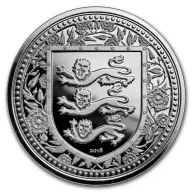
The Royal Arms of England is a silver bullion coin minted by Scottsdale Mint (Arizona, USA) under licence from the Government of Gibraltar. Released in 2018, the 1oz silver version celebrates the heraldic shield of King Richard I (Richard the Lionheart), who established the first Royal Arms of England in the late 12th century. The three lions passant guardant, walking with their faces turned toward the viewer, remained the standard Royal Arms for over 200 years under the Plantagenet dynasty.
The coin is legal tender in Gibraltar with a face value of 1 pound, struck at .999 fine silver with a 50,000 mintage for the silver bullion version and just 5,000 for the gold. These production numbers are well below the unlimited mintages of major sovereign bullion coins, giving the Royal Arms of England a semi-collectible character alongside its investment function. The 2018 silver release was reported to have sold out quickly at the mint.
This coin is distinct from The Royal Mint's own "Royal Arms" bullion coin, which features the full modern quartered arms with lion and unicorn supporters. The Scottsdale version focuses exclusively on the medieval Plantagenet shield, the original three-lion design predating the quartered arms that incorporated the Scottish and Irish symbols. The name creates a direct connection to English rather than British heraldry, reflecting the specific historical period being commemorated.
Royal Arms of England Specifications
| Attribute | Silver | Gold |
|---|---|---|
| Weight | 1 troy ounce | 1 troy ounce |
| Purity | .999 fine silver | .999 fine gold |
| Diameter | 39 mm | 32 mm |
| Thickness | 3.2 mm | Not stated |
| Face Value | GBP 1 | GBP 1 |
| Mintage | 50,000 | 5,000 |
| Edge | Reeded | Reeded |
| Finish | Brilliant Uncirculated | Brilliant Uncirculated |
Design Details
The obverse carries Raphael Maklouf's portrait of Queen Elizabeth II wearing the Royal Diadem crown, the third-generation British effigy designed in 1984. A distinctive leopard-spot pattern is struck into the field surrounding the portrait, a textural element not found on most bullion coins.
The reverse features the Royal Arms shield with three lions passant guardant, enhanced with decorative vines and roses symbolising the House of Tudor's eventual succession from the Plantagenets. King Richard I added the third lion to earlier designs during the late 12th century, creating the iconic three-lion arrangement. The design deliberately references the medieval original rather than the later evolution of the Royal Arms that incorporated Scottish, Irish, and Hanoverian elements.
Limited Edition Coloured Variants
Multiple limited-edition coloured versions were produced in both silver and gold with reverse-proof colour finishes. Silver colour variants (Blue, Purple, Yellow, Red, Black) had mintages of 500 each. Gold colour variants (Blue, Black) had mintages of 99 to 500 each. These command significant premiums on the secondary market.
Royal Arms of England Tax Treatment
The coin is legal tender in Gibraltar (British Overseas Territory) with a face value of GBP 1. Gibraltar is not part of the United Kingdom for tax purposes, which affects the coin's treatment in key markets.
United Kingdom
Silver coins from Gibraltar carry 20% VAT. The gold version qualifies for VAT exemption as investment gold (legal tender coin, post-1800, purity 900/1000 or above). The .999 gold Royal Arms meets these criteria. The critical distinction for UK buyers: Gibraltar coins are not UK legal tender. Only Royal Mint coins with UK legal tender status, such as the Silver Britannia and Gold Britannia, qualify for CGT exemption. Capital gains on Royal Arms of England coins are taxable at the individual's marginal rate.
United States
Scottsdale Mint is based in Arizona, making this coin readily available through US dealers. The .999 silver purity meets the IRS requirement for precious metals IRA eligibility. Sales tax treatment varies by state, with approximately 35 states exempting bullion. Arizona itself exempts precious metals from sales tax.
European Union
Gold coins meeting the investment gold criteria (legal tender, post-1800, purity 900+) are VAT-exempt under EU Council Directive 98/80/EC. Silver coins are subject to the local standard VAT rate, ranging from 17% (Luxembourg) to 27% (Hungary).
Canada
Gold and silver coins at 99.5% or higher purity are exempt from GST/HST. The .999 purity of both versions exceeds this threshold.
From Richard the Lionheart to Gibraltar Legal Tender
The Royal Arms of England has one of the longest continuous histories of any heraldic device. King Henry I (1100-1135) may have used a single lion on his personal seal, and Henry II (1154-1189) is recorded with two lions. Richard I (1157-1199), known as Richard the Lionheart for his martial reputation during the Crusades, added the third lion and established the three lions passant guardant arrangement that has persisted for over 800 years.
The three-lion design remained the sole Royal Arms through the Plantagenet dynasty and into the Tudor period, a span of more than two centuries. The quartering of the arms with French fleur-de-lis (claiming the French throne) came under Edward III, and the incorporation of Scottish and Irish elements followed with the union of the crowns. The Scottsdale Mint coin deliberately depicts the original, pre-quartered Plantagenet shield, before these later additions complicated the design.
The decorative vines and roses surrounding the shield on the coin's reverse reference the Tudor dynasty's succession from the Plantagenets, specifically the Tudor rose that symbolised the union of the Houses of Lancaster and York. This design element bridges the medieval and early modern periods of English history on a single coin face.
Gibraltar's role as the issuing territory reflects a common arrangement in modern numismatics. Smaller territories, including Gibraltar, Niue, Tokelau, and Tuvalu, licence their legal tender status to private mints for bullion and collector coin programmes. Gibraltar has a long history as a numismatic issuing authority, making it a credible partner for Scottsdale Mint's project. The GBP 1 face value is essentially symbolic; the coin's value derives entirely from its silver content and collector appeal.
Royal Arms of England vs Royal Mint Royal Arms and Britannia
The most direct comparison is with The Royal Mint's own "Royal Arms" bullion coin, which shares the heraldic theme but differs in every other respect. The Royal Mint version features the full modern quartered arms with the lion and unicorn supporters, is UK legal tender (CGT-exempt), carries unlimited mintage, and is produced to Royal Mint security standards. The Scottsdale version features the medieval Plantagenet shield, is Gibraltar legal tender (not CGT-exempt in the UK), has a limited 50,000 mintage, and is produced by a US private mint.
For UK buyers, the choice between the two is straightforward on tax grounds alone. The Royal Mint Royal Arms carries CGT exemption; the Scottsdale version does not. The Scottsdale coin's appeal is historical specificity (the original three-lion shield rather than the evolved quartered arms) and limited mintage (50,000 versus unlimited). For collectors interested in medieval heraldry, the Scottsdale design is arguably more authentic to the period it references.
Against the Silver Britannia, the Royal Arms of England offers a limited mintage and distinctive design but cannot compete on liquidity, security features, or UK tax treatment. The Britannia's surface animation technology, unlimited production, global dealer recognition, and CGT exemption make it the practical default for UK silver investment. The Royal Arms of England serves buyers who value specific historical design and collecting appeal over maximum investment efficiency.
In the US market, where CGT exemption is irrelevant and Scottsdale Mint has a domestic presence, the Royal Arms of England competes on design merit and limited availability against open-mintage sovereign coins. The 50,000 silver mintage is low enough to give the coin collector interest while high enough to keep premiums within reach of bullion buyers. The 5,000 gold mintage is notably limited, and the coloured variants at 99 to 500 pieces per colour are genuine rarities.
Royal Arms of England Silver: frequently asked questions
-
The Royal Arms of England is a 2018 silver bullion coin minted by Scottsdale Mint (Arizona) under licence from the Government of Gibraltar. Each coin weighs 1 troy ounce and contains .999 fine silver, with a mintage of 50,000. The reverse depicts the medieval heraldic shield of King Richard I featuring three lions passant guardant, with decorative vines and roses. It is Gibraltar legal tender with a £1 face value.
-
The value of a Royal Arms of England silver coin tracks closely with the silver spot price, currently $67.63. A small premium above spot accounts for minting and dealer costs. 1 dealer lists 1 options on this site, and the comparison table above shows current prices so you can see where each dealer sits relative to spot.
-
1 dealer currently carries Royal Arms of England silver coins, with 1 listing tracked. The comparison table above shows prices from all tracked dealers. Because this was a single 2018 release, availability depends on secondary market stock and may vary.
-
Silver bullion coins carry VAT in most markets. In the UK, silver coins are subject to 20%, though some dealers use the margin scheme, which can reduce the effective rate. In Ireland the standard rate is 23%; in Germany 19%. The coin is not CGT-exempt in the UK, as that benefit applies only to Royal Mint UK legal-tender coins.