 CGS Coins


Prices are fetched automatically and may not reflect current merchant prices. Currency conversions and tax treatment are approximate. Rankings are based solely on price. We are not a dealer and accept no responsibility for transactions with listed merchants. Past performance is not indicative of future results. This site does not provide investment advice. Full disclaimer
About the 10 oz Johnson Matthey Gold Bar
A Discontinued Refiner With Enduring Market Demand
The 10 oz Johnson Matthey gold bar is a secondary-market product from one of the most historically significant precious metals refiners in the world. Johnson Matthey, a British company founded in the 19th century, sold its gold and silver refining operations to Asahi Refining in 2015. No new Johnson Matthey-branded gold bars have been produced since then, making every JM bar on the market today a legacy product traded through the secondary market.
Despite the cessation of production, Johnson Matthey gold bars remain widely traded and universally recognised. The JM hallmark and assay marks are accepted by every major bullion dealer globally. LBMA accreditation belonged to Johnson Matthey's refining division, and while Asahi Refining now holds that accreditation for the facilities, vintage JM bars retain their investment-grade status based on their documented provenance and established authentication characteristics.
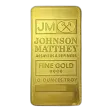
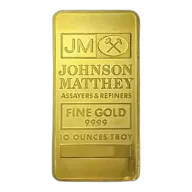
At 10 troy ounces (311.035 grams) of 999.9 fine gold, this bar represents approximately $30,000+ in gold value. The 10 oz weight is less commonly encountered from Johnson Matthey than the 1 oz and 100 oz sizes, which were JM's most prolific formats. Each bar carries an individual serial number and the distinctive Johnson Matthey hallmark, with refinery markings identifying the production facility.
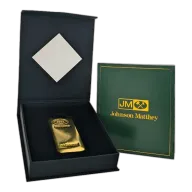
The secondary-market-only status of JM bars creates a specific dynamic: supply is fixed and gradually declining as bars are melted or absorbed into long-term holdings. Some buyers value the heritage aspect of owning a bar from a refiner with deep historical roots in the precious metals industry. Others are drawn by the competitive pricing that secondary-market bars sometimes offer relative to newly minted products. The practical risk is that bars purchased without sealed packaging may require independent authentication, particularly at the 10 oz weight where the value justifies verification costs.
10 oz Johnson Matthey Gold Bar Specifications
| Specification | Detail |
|---|---|
| Weight | 10 troy ounces (311.035 grams) |
| Purity | 999.9 fine gold (24 karat) |
| Manufacturer | Johnson Matthey (refining operations sold to Asahi Refining in 2015) |
| Country of origin | United Kingdom |
| Format | Minted bar |
| Serialisation | Individual serial number |
| Face value | None (not legal tender) |
| Production status | Discontinued (secondary market only) |
| LBMA accreditation | Original JM refinery was LBMA-accredited; accreditation now held by Asahi Refining for the same facilities |
About Johnson Matthey
Johnson Matthey's involvement in precious metals stretches back to the 19th century. The company became one of the world's premier gold and silver refiners, producing bars traded on the London Bullion Market and COMEX. JM bars were among the most widely held investment bars globally, particularly the 1 oz, 10 oz, and 100 oz formats. The company's decision to exit precious metals refining in 2015, selling to Japan's Asahi Holdings, marked the end of an era. Johnson Matthey now focuses on catalysis, pharmaceutical ingredients, and sustainable technologies. The precious metals brand endures in the secondary market, where JM bars continue to trade at prices closely tracking spot gold.
10 oz Johnson Matthey Gold Bar Tax Treatment by Country
The 10 oz Johnson Matthey bar qualifies for investment gold tax exemptions despite being a discontinued product. Tax exemptions are based on the gold's purity and form, not the refiner's current operating status. At 999.9 purity, the bar exceeds all major jurisdiction thresholds.
- United Kingdom: VAT-exempt as investment gold (995+ purity). As a British-produced bar, JM bars have particularly strong recognition among UK dealers. Subject to CGT on profits at 18% or 24% with a GBP 3,000 annual allowance. Not CGT-exempt. UK investors with significant holdings may prefer CGT-exempt 1oz Britannias for tax efficiency.
- United States: IRA-eligible, subject to custodian acceptance of the specific bar. The 999.9 purity meets IRS requirements. Some IRA custodians may require additional verification for secondary-market bars without sealed packaging. Long-term gains taxed at the collectibles rate of up to 28%. Most states exempt investment bullion from sales tax.
- European Union: VAT-exempt as investment gold under EU Council Directive 98/80/EC.
- Canada: GST/HST-exempt for gold of 99.5%+ purity.
- Australia: GST-free as investment-grade gold. CGT on disposal with a 50% discount for holdings over 12 months.
- Singapore: GST-exempt under the IPM scheme for gold bars of 99.5%+ purity. No capital gains tax.
- Hong Kong: No sales tax, import duty, or capital gains tax.
- New Zealand: GST-exempt for fine gold of 99.5%+ purity.
- South Africa: 15% VAT on gold bars.
Johnson Matthey vs Active Producers at 10 oz
Buying a discontinued refiner's bar at the 10 oz weight involves a specific set of tradeoffs against actively produced alternatives. The comparison is between heritage value and secondary-market dynamics on one hand, and fresh packaging, current authentication, and assured supply on the other.
The 10 oz PAMP Fortuna represents the current state of the art in minted gold bars. VeriScan digital authentication, CertiPAMP tamper-evident packaging, and the Lady Fortuna design all provide assurances that a secondary-market JM bar cannot match. The Fortuna commands a higher premium, but at 10 oz the authentication advantage is more meaningful: a bar worth $30,000+ justifies the extra cost of built-in verification. For buyers who may eventually sell outside the dealer network, the Fortuna's self-authenticating features reduce friction.
The 10 oz Credit Suisse gold bar shares some similarities with the JM bar in being a brand with uncertain future production. Credit Suisse bars are still available from dealer inventories, but the UBS acquisition raises questions about new supply. Both bars derive their value from gold content and brand heritage rather than cutting-edge authentication. Credit Suisse bars have the advantage of being manufactured by Valcambi, an actively accredited LBMA refinery, providing clearer provenance documentation.
The 10 oz Perth Mint gold bar offers everything the JM bar cannot: current production, sealed CertiCard packaging, government backing from Western Australia, and ongoing LBMA refinery accreditation. Perth Mint bars are the natural alternative for buyers who want an established brand with assured future production and sovereign-mint credibility.
The 10 oz Valcambi gold bar provides the lowest premiums among major brands with current production. For buyers who prioritise cost per ounce above all else, a newly minted Valcambi bar in sealed packaging offers better value and simpler authentication than a secondary-market JM bar.
The case for buying a 10 oz Johnson Matthey bar rests on three factors: competitive secondary-market pricing (JM bars sometimes trade at or below the premiums of newly minted bars), the heritage appeal of a historic British refiner, and the established recognition of the JM hallmark among dealers worldwide. Buyers should purchase from reputable dealers who provide authentication guarantees, particularly at this weight where the value of the bar justifies professional verification.
10 oz Johnson Matthey Gold Bar: frequently asked questions
-
The value of a 10 oz Johnson Matthey gold bar is determined by the current $4,408.10 gold spot price multiplied by ten troy ounces at 999.9 purity. The cheapest listing we track is $44,682.22. As a secondary-market bar, prices can vary by condition and source.
-
Johnson Matthey ceased retail and investment bullion bar production in 2000. It continued manufacturing wholesale LBMA Good Delivery bars until it sold its gold and silver refining operations to Asahi Holdings in March 2015. The Johnson Matthey name was not included in that sale, so the brand on bars is now historic. All JM bars available today are from the secondary market.
-
A Johnson Matthey 10 oz gold bar weighs 10 oz (311.035 grams). Cast bars are poured rather than pressed to exact tolerances, so physical dimensions vary between individual bars. The bar's weight is the definitive specification.
-
Many Johnson Matthey bars carry an assay mark, weight, and fineness stamp. Some bars also include a serial number. When buying a pre-owned JM bar, confirm the hallmark matches the stated weight and that the assay mark is clearly struck.