2 listings Prices & premiums exclude tax to compare across countries

 AU Bullion

 Suisse Gold
Prices are fetched automatically and may not reflect current merchant prices. Currency conversions and tax treatment are approximate. Rankings are based solely on price. We are not a dealer and accept no responsibility for transactions with listed merchants. Past performance is not indicative of future results. This site does not provide investment advice. Full disclaimer
About the 1g Panda Platinum Coin
China's Miniature Platinum Bullion Piece
The 1g Platinum Panda is the smallest denomination in the Chinese Panda platinum series, containing exactly one gram of 999 fine platinum. Produced by the China Gold Coin Corporation (CGCC) under the authority of the People's Bank of China, this coin carries legal tender status in the People's Republic of China. The Platinum Panda programme ran intermittently from 1987 to 2005 and is not currently in production, making any available pieces secondary market items from a discontinued series.
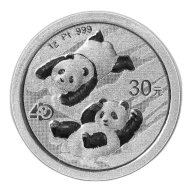
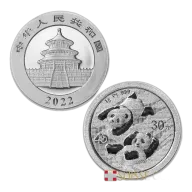
The Panda's defining characteristic across all metals is its annually changing reverse design. Each year's coin features a new giant panda illustration, depicted in various poses (eating bamboo, playing, resting, with cubs). This annual variation creates collector interest that other bullion series, which maintain fixed designs, do not share. The obverse has remained unchanged since the gold Panda's 1982 inception: the Hall of Prayer for Good Harvests at Beijing's Temple of Heaven complex.
At 999 purity (three nines fine), the Platinum Panda sits slightly below the 999.5 standard used by the American Platinum Eagle, Canadian Maple Leaf, Platinum Britannia, and Austrian Philharmonic. This is simply the standard China has maintained across the Panda programme; the gold version is also 999 rather than the 9999 achieved by Canadian and Austrian mints. The practical difference for the buyer is that 999 platinum meets most international tax exemption thresholds (Australia, NZ, and Singapore require 99%+) but falls short of Canada's 99% GST/HST exemption threshold for platinum.
The coin's market position is collector-oriented rather than investment-grade. The Platinum Panda's combination of discontinued status, small size, low mintages, and annually changing designs places it in a hybrid space between bullion and numismatics. Premiums reflect this positioning: buyers pay for both the platinum content and the scarcity of a product no longer being manufactured.
1g Platinum Panda Technical Details
| Attribute | Value |
|---|---|
| Weight | 1.000 g |
| Purity | 999 fine platinum (99.9%) |
| Diameter | Approximately 10 mm |
| Legal Tender | People's Republic of China |
| Manufacturer | China Gold Coin Corporation (CGCC) |
| Struck at | Multiple facilities (Beijing, Shanghai, Shenyang, Shenzhen) |
| Obverse | Hall of Prayer for Good Harvests, Temple of Heaven, Beijing |
| Reverse | Giant panda (new design each year) |
| Production Period | 1987-1990, 1993-1997, 2002-2005 (intermittent) |
The Platinum Panda's 999 purity distinguishes it from the 999.5 standard that dominates Western sovereign platinum coins. The coin is struck at one of four CGCC facilities without standardised mintmarks, making attribution to a specific mint difficult. This multi-facility production approach is unique to the Chinese programme and contrasts with the single-facility minting of competitors (West Point for the American Eagle, Perth for the Koala, Vienna for the Philharmonic).
The 1g weight corresponds to what was the 1/20 oz denomination in the pre-2016 Panda range. China's 2016 switch from troy ounces to metric grams affected the gold and silver programmes (reducing the standard coin from 1 oz/31.1g to 30g), but the Platinum Panda had already been discontinued by that point. Historical 1/20 oz platinum Pandas from the troy-ounce era contain 1.555g rather than the modern metric 1g.
Tax Treatment of the 1g Platinum Panda
The Platinum Panda's 999 purity (rather than 999.5) creates a meaningful tax distinction in certain jurisdictions compared to higher-purity sovereign platinum coins.
- United Kingdom: 20% VAT applies on purchase (all platinum attracts VAT regardless of purity). Not CGT-exempt as it is not UK legal tender. The Panda has no tax advantage over or disadvantage compared to other platinum coins in the UK.
- United States: IRA eligibility is generally uncertain for Pandas. The IRS requires platinum at 99.95% purity for IRA inclusion under Section 408(m). The Panda at 999 (99.9%) does not meet this threshold, unlike the American Platinum Eagle at 999.5. Capital gains taxed at the 28% collectibles rate.
- Canada: The 99.5% GST/HST exemption threshold for platinum means the 999 Panda (99.9%) qualifies, as 99.9% exceeds 99.5%. GST/HST exempt in coin form.
- Australia: GST-free at the 99%+ threshold for investment-grade platinum. The Panda qualifies at 99.9%.
- New Zealand: GST-exempt for platinum at 99%+ purity. No capital gains tax. The Panda qualifies.
- Singapore: IPM exemption covers platinum coins at 99%+ purity that are or were legal tender. The Panda carries Chinese legal tender status and meets the purity threshold, so it should qualify for GST exemption.
- Hong Kong: No sales tax, no CGT, no import duties. Tax-neutral regardless of purity or legal tender status.
The Panda's Chinese legal tender status provides eligibility in jurisdictions that require coins to be legal tender for exemptions (notably Singapore's IPM scheme). Its 999 purity meets most thresholds but falls short of the US IRA's 99.95% requirement, making it unsuitable for American retirement accounts where the American Platinum Eagle is the standard choice.
Platinum Panda vs Other Small-Denomination Platinum Coins
The 1g Platinum Panda competes in the micro-denomination platinum space with very few direct competitors, as most sovereign mints do not produce platinum coins this small.
The closest comparable product is the Austrian Platinum Philharmonic 1/25 oz (1.244g, 999.5 fine). The Philharmonic is slightly lighter (1.244g vs 1.000g) but carries higher purity (999.5 vs 999). It is currently in annual production, giving it better availability than the discontinued Panda. The Philharmonic lacks the annually changing design that gives the Panda its collector appeal, but it offers ongoing supply and clear IRA eligibility through its 999.5 purity.
The Perth Mint Platinum Koala 1/20 oz (1.555g, 999.5 fine) is larger than the 1g Panda by weight and carries higher purity. It was produced from 1988-2000 and is similarly discontinued, making it a secondary market product. The Koala is specifically listed as IRA-eligible and carries explicit Perth Mint provenance with the "P" mintmark.
Against both competitors, the Panda's strengths are its annually changing design (creating year-specific collector interest) and its Chinese legal tender status. Its weaknesses are the lower 999 purity (failing the US IRA threshold), the counterfeiting risk that affects all Panda products more acutely than Western competitors, and the lack of current production. NGC and PCGS certification is particularly recommended for Pandas to confirm authenticity, a precaution less necessary for Perth Mint or Austrian Mint products.
For pure platinum accumulation at this scale, the Philharmonic's ongoing production and higher purity make it more practical. For collectors interested in the annual design changes and Chinese numismatic tradition, the Panda carries unique appeal that no Western coin replicates.
1g Panda Platinum Coin: frequently asked questions
-
The Platinum Panda is issued by China Gold Coin Group Co., Ltd in .9995 fine platinum. Like the gold and silver Panda series, the reverse design features a new giant panda illustration each year, while the obverse carries the Temple of Heaven. The platinum series was produced intermittently and has not been in continuous production.
-
The 1g Platinum Panda is struck in 999.5 fine platinum (99.9% pure). This meets the standard investment-grade purity threshold recognised in most major markets.
-
Platinum is treated differently from investment gold in most jurisdictions. In the UK, platinum bullion carries 20% VAT, unlike investment gold which is exempt. In the US, sales tax treatment varies by state with no federal rate applied to precious metals. Buyers in other markets should check local rules, as platinum does not share the widespread VAT or GST exemptions that investment gold receives.