13 listings
Filters
| Product | /oz | Premium | Price | |
|---|---|---|---|---|

 Ainslie Bullion
|
$2,014.26 | +11.57% |
$2,014.37
A$2,829
|
View Deal |
| $2,029.19 | +12.36% |
$2,029.30
NZ$3,554
|
View Deal | |
| $2,074.57 | +14.87% | $2,074.57 | View Deal | |

 Golden Eagle Coins
|
$2,101.50 | +16.36% | $2,101.50 | View Deal |

 Canadian PMX
|
$2,144.59 | +18.94% |
$2,144.60
CA$3,005
|
View Deal |
 Canadian PMX
|
$2,145.21 | +18.96% |
$2,145.12
CA$3,005
|
View Deal |
| $2,203.06 | +21.99% |
$2,203.07
S$2,816
|
View Deal | |
| $2,227.94 | +23.36% |
$2,227.84
S$2,848
|
View Deal | |
| $2,248.47 | +24.50% |
$2,248.48
S$2,874
|
View Deal | |
| $2,248.47 | +24.50% |
$2,248.48
S$2,874
|
View Deal | |
 Golden Eagle Coins
|
$2,296.50 | +27.16% | $2,296.50 | View Deal |
 Golden Eagle Coins
|
$2,296.50 | +27.16% | $2,296.50 | View Deal |
| $2,320.01 | +28.46% |
$2,319.92
S$2,966
|
View Deal |

 Best Bullion

 BullionStar


Prices are fetched automatically and may not reflect current merchant prices. Currency conversions and tax treatment are approximate. Rankings are based solely on price. We are not a dealer and accept no responsibility for transactions with listed merchants. Past performance is not indicative of future results. This site does not provide investment advice. Full disclaimer
About the 1 oz Perth Mint Lunar Platinum Coin
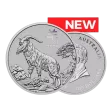
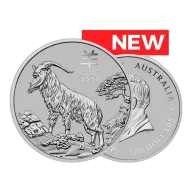
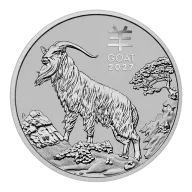
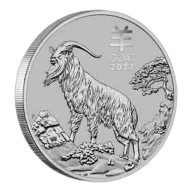
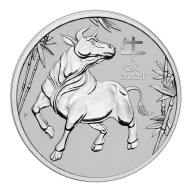
The 1oz Platinum Perth Lunar
The Perth Mint's Lunar program follows the Chinese zodiac: each year the reverse carries a new animal from the twelve-year cycle, so every issue is a one-off design rather than a repeat of the previous year. The Perth Mint was the first major mint to build a precious metal coin program around the Chinese lunar calendar, launching gold coins in 1996. Platinum joined the program in limited runs, with Series III (2020-2031) confirmed. The platinum coins are struck in 99.95% fine platinum and are Australian legal tender under the Australian Currency Act 1965.
The annual design change is the main reason to pick a platinum Lunar over its rivals. The coin works as straight bullion through its platinum content, and the zodiac cycle adds collector appeal on top: Dragon year coins (2024 in Series III) are consistently the most popular and fastest to sell out, reflecting the dragon's status in Chinese culture as a symbol of power and good fortune. Perth Mint mintages are generally controlled rather than unlimited, which has historically supported premiums on sought-after years.
Platinum is a smaller market than gold or silver. Fewer mints produce platinum coins, mintages are lower, and dealer inventory is more limited, so 1oz platinum coins typically carry premiums of 8-15% over spot, higher than equivalent gold coins. The 1oz size is the dominant weight in platinum; fractional sizes exist across the platinum market but production is intermittent. Coins also carry higher premiums than platinum bars of equivalent weight, so the Lunar's case rests on its legal tender status, sovereign mint backing, and the zodiac design rather than the lowest possible cost per ounce.
Series III coins carry the Perth Mint's current security package: a micro-laser engraved letter detectable only under magnification, a small "P" mintmark for Perth incorporated into the reverse design, and a precision-machined radial line background that is difficult to replicate. Platinum's density adds a further layer of protection: at 21.45 g/cm3 it is far denser than silver (10.49 g/cm3) and heavier than tungsten (19.25 g/cm3), so no common cheap metal matches it and a simple weight check on a coin of known diameter is a strong authentication test.
Platinum Perth Lunar Specifications
| Attribute | Detail |
|---|---|
| Metal | Platinum |
| Purity | 99.95% (0.9995 fine) |
| Weight | 1 troy oz (31.1035 g) |
| Legal tender | Australia (Australian Currency Act 1965) |
| Mint | The Perth Mint |
| Series | Lunar Series III (2020-2031), platinum issued in limited runs |
The 99.95% standard matches the other major platinum bullion coins; all four major platinum coins share this purity. The reverse design changes every year to the current zodiac animal, while the obverse carries the monarch's portrait: Jody Clark's Queen Elizabeth II portrait on 2020-2022 issues and King Charles III from 2024 onwards.
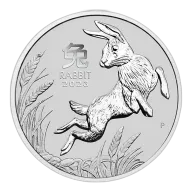
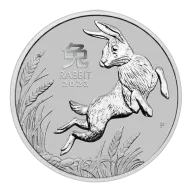
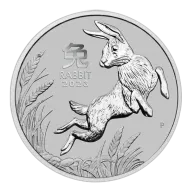
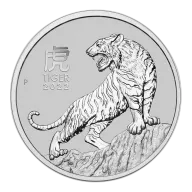
The Series III zodiac schedule runs: Rat (2020), Ox (2021), Tiger (2022), Rabbit (2023), Dragon (2024), Snake (2025), Horse (2026), Goat (2027), Monkey (2028), Rooster (2029), Dog (2030), Pig (2031).
Series III security features apply across the program: a micro-laser engraved letter that varies by year and is visible only under magnification, the "P" mintmark serving as both mint identification and a security device, and a radial line background machined into the coin surface. Earlier Lunar series (I and II) carried no advanced security features, so authentication on older coins relies on weight, dimensions, magnetic properties, and quality of strike. Platinum's 21.45 g/cm3 density makes a weight-and-diameter check particularly effective, since no common substitute metal comes close.
Platinum Lunar Tax Treatment by Country
Platinum coins follow the same general tax pattern as silver: subject to VAT or GST in most jurisdictions, without the special exemptions that investment gold enjoys.
- United Kingdom: 20% VAT on purchase. The platinum Lunar is not CGT-exempt because it is not UK legal tender; only coins with a sterling face value are CGT-free. Gains are taxed at the individual's CGT rate above the £3,000 annual allowance.
- United States: No federal sales tax; most states exempt bullion, while some tax it or apply threshold-based exemptions. Long-term gains are taxed at the collectibles rate of up to 28%. IRA-eligible platinum must be 99.95%+ pure, which the coin's 0.9995 fineness meets; IRA metal must be held by an approved custodian, not personally.
- Australia: Investment-grade platinum (99%+ purity) is GST-free, and goods sold and exported from Australia by the Perth Mint are GST-free regardless. Bullion is subject to CGT, with a 50% discount for individuals holding 12+ months. There is no blanket CGT exemption for Australian legal tender bullion.
- Canada: 0% GST/HST for platinum refined to 99.5%+ purity in coin form. Palladium is the only major precious metal excluded from this exemption.
- New Zealand: Fine platinum at 99%+ purity is GST-exempt. There is no formal CGT, though gains can be taxed as income if bullion was acquired for resale.
- Singapore: Platinum at 99%+ purity qualifies under the Investment Precious Metals scheme at 0% GST, and Singapore has no capital gains tax.
- Hong Kong: No sales tax, no import duty, no capital gains tax.
- European Union: Full standard VAT applies to platinum (17-27% depending on country); the investment gold exemption does not extend to platinum.
- South Africa: Platinum bullion carries the full 15% VAT, with no exemption equivalent to the gold Krugerrand zero-rating.
The Lunar Program Since 1996
The Perth Mint launched the Lunar series in 1996 with a gold coin for the Year of the Mouse, becoming the first major western mint to build a bullion program around the Chinese zodiac. The program was designed with Asian-Pacific markets in mind, particularly China, Hong Kong, Singapore, and Malaysia, where the lunar calendar carries deep cultural significance. Three complete twelve-year cycles have followed: Series I (1996-2007), Series II (2008-2019), and Series III (2020-2031). Silver coins joined during Series I, and platinum was added in limited runs, with Series III platinum issues confirmed.
Each series is a complete zodiac cycle with its own design language. Series I used simpler, more traditional designs with a pimpled (dotted) border, stylised cloud motifs, and the Chinese character for each animal. Series II moved to more complex, detailed designs, with some years featuring multiple animals on the reverse (Monkey, Dog, Goat). Series III is the most intricate yet, with landscape elements around each zodiac animal, continued Chinese characters, and the mint's modern security features: micro-laser engraving, the "P" mintmark, and radial line backgrounds.
The obverse has tracked the changing royal portraits. Series I opened with Raphael Maklouf's effigy of Queen Elizabeth II (1996-1998), switched to Ian Rank-Broadley's portrait from 1999 through 2018, then to Jody Clark's sixth-generation portrait in 2019. Series III carried the Clark portrait from 2020 to 2022, with King Charles III appearing from 2024 onwards.
The program has produced some notable rarities. The 10kg gold coin of 2007 (Series I, Year of the Pig) had a mintage of just six pieces, among the rarest modern bullion coins ever produced. Series I coins from 1996-1999 are significantly scarcer than later years and trade at substantial premiums over spot. Dragon year coins (2000, 2012, 2024) are consistently the fastest sellers across all metals. For buyers of the platinum Lunar, this history matters because the same forces apply: each year's coin stands alone as a bullion investment, but mintage limits, animal popularity, and age have repeatedly pushed certain years well above their metal value. The gold Lunar coins demonstrate this pattern most clearly, with 1oz coins selling out in many years.
Platinum Lunar vs Britannia, Eagle, and Kangaroo
All four major platinum bullion coins share 0.9995 fineness, so the choice comes down to design, tax position, and liquidity rather than purity.
The 1oz Platinum Britannia (Royal Mint, since 2018) is the decisive pick for UK buyers. As UK legal tender it is CGT-exempt on sale, the same dynamic as silver Britannias: 20% VAT on entry, no CGT on exit. The Lunar, like every non-UK platinum coin, is both VAT-liable and CGT-liable in the UK, so from a UK tax perspective the Britannia is the only platinum coin worth considering. The Britannia is also the most recognised platinum coin in the UK market, though it remains a relatively new series offered in 1oz and 1/10oz sizes.
The American Platinum Eagle (US Mint, since 1997) carries a $100 face value, the largest of the four, and has the strongest resale demand in the US market, where the Lunar is a niche product. The Eagle's annual design variety sits in its proof versions, which carry rotating reverse designs; the Lunar's annual zodiac change applies to the bullion coin itself. Both are IRA-eligible at 99.95% purity.
The 1oz Platinum Kangaroo (Perth Mint, since 2018) comes from the same mint with a wave-textured background. It is a newer series still building its market presence, and it gives Perth Mint buyers a non-zodiac alternative from the same source.
On resale, platinum coins are less liquid than gold coins generally: the buyer pool is smaller, spreads are wider, and a round-trip through a dealer can cost 5-10% of the purchase price. Coins from LBMA-accredited mints, including the Eagle, Maple Leaf, Britannia, and Kangaroo, have the best resale prospects. The Lunar's counterweight is its collector dimension: controlled mintages and the zodiac cycle have historically lifted early-year and Dragon-year coins above their metal value, an upside the fixed-theme alternatives do not offer.
1 oz Perth Mint Lunar Platinum Coin: frequently asked questions
-
The cheapest 1oz Perth Mint Lunar platinum coin tracked here is $2,014.37, currently around 11.6% over the $1,806.00 platinum spot price. Prices update in real time as dealers reprice; use the comparison table to find the best deal across all listed sellers.
-
The Perth Mint Lunar series follows the Chinese zodiac, cycling through 12 animals across successive 12-year series. Series I ran 1996 to 2007, Series II from 2008 to 2019, and Series III from 2020 onward. Platinum Lunar coins are struck by Perth Mint in Western Australia to 999.5 fine platinum and carry an Australian legal tender designation. The reverse design changes with each zodiac year.
-
Today's platinum spot is $1,806.00. The two metals move independently, so the gap between them changes over time. Platinum's market is smaller than gold's, which can make its price movements more pronounced.
-
This page tracks 6 dealers selling the 1oz Platinum Perth Lunar coin in real time. The cheapest right now is Ainslie Bullion. Use the table to compare all live prices and premiums side by side before you buy.