8 products · 31 deals Prices & premiums exclude tax to compare across countries
Filters
| Product | /oz | Premium | Price (ex. tax) | |
|---|---|---|---|---|

2 deals
|
$1,959.09 |
+8.84%
+31% inc.VAT
|
$195.91
£176 inc.VAT
|
Compare |
| $2,197.02 |
+22.06%
+46% inc.VAT
|
$219.70
£198 inc.VAT
|
View Deal | |

2 deals
|
$2,407.84 | +33.32% | $240.78 | Compare |

3 deals
|
$2,421.46 | +34.08% | $242.15 | Compare |

12 deals
|
$2,520.94 |
+40.05%
+68% inc.VAT
|
$252.10
£227 inc.VAT
|
Compare |
| $2,883.55 | +59.66% | $288.36 | View Deal | |
| $2,926.65 | +62.05% | $292.67 | Compare | |
|
1/
2 deals
|
$3,145.55 | +74.17% | $314.56 | Compare |



Prices are fetched automatically and may not reflect current merchant prices. Currency conversions and tax treatment are approximate. Rankings are based solely on price. We are not a dealer and accept no responsibility for transactions with listed merchants. Past performance is not indicative of future results. This site does not provide investment advice. Full disclaimer
About 1/10 oz Platinum Coins
1/10 oz Platinum Coins: The Cheapest Door into a Small Market
A 1/10 oz platinum coin contains 3.1103 grams of .9995 fine platinum, the purity standard shared by all the major platinum coins. The appeal of the weight is the same as it is in gold: the lowest dollar entry point into sovereign-mint metal, maximum divisibility, and a coin small enough to give as a gift. The difference is the market around it. Platinum bullion is a far smaller world than gold or silver, with fewer mints producing coins, lower mintages, more limited dealer inventory, and fractional sizes whose production is intermittent rather than guaranteed year to year.
That context defines who buys at this weight. The 1/10 oz platinum coin suits someone who wants exposure to platinum specifically, with its industrial demand story in automotive catalysts and hydrogen fuel cells that gold lacks, but at a fraction of the cost of a 1oz platinum coin. It also suits UK buyers building a position in the 1/10 oz Platinum Britannia, the lowest-cost entry into a CGT-exempt platinum coin.
The economic tradeoff is steeper than in gold. Fractional platinum coins carry very high premiums because production runs are small and demand is inconsistent, on top of platinum's already elevated coin premiums relative to gold. A buyer paying that markup on each tenth-ounce gives up a lot of metal compared with consolidating into a single 1 oz coin, so the weight makes sense for sampling the metal, gifting, or incremental buying rather than efficient accumulation.
One quirk works in the small buyer's favour: authentication is easier with platinum than with almost any other metal. Platinum's density of 21.45 g/cm3 has no cheap look-alike; tungsten is substantially lighter, and no common metal matches it, so a simple weight check on a coin of known diameter is a strong test. Combined with sovereign mint security features, the counterfeiting risk on small platinum coins is low, and the metal neither tarnishes nor corrodes, so even a coin handled as a gift keeps its condition.
Why Fractional Platinum Carries the Heaviest Markups
Platinum coin premiums start high and get higher as the coins get smaller. Full 1 oz platinum coins typically run 8-15% over spot, already well above the equivalent gold coin range, because lower production volumes mean higher per-unit costs, fewer competing products thin out price competition, and some mints only produce intermittently. Fractional platinum coins, including the 1/4 oz and 1/10 oz sizes, carry very high premiums on top of that, sometimes 15-25% or more, because production runs are small and demand is inconsistent.
The structural cause is the same one that afflicts every small bullion product: die work, quality control and packaging cost nearly as much for a tenth-ounce coin as for a full ounce, but the cost is spread over one-tenth the metal. In platinum the effect is amplified by the small market. Where a 1/10 oz gold Eagle competes against a deep bench of fractional gold from every major mint, fractional platinum production is intermittent and less consistently available, so a buyer often faces few listings and little price competition for any given coin.
Tax can dominate the arithmetic in some markets. In the UK and EU, platinum has no equivalent of the investment-gold exemption, so 20% UK VAT (or 17-27% across EU states) stacks on top of the coin premium; for 1 oz platinum coins the effective all-in cost can reach 30-40% above spot in those jurisdictions, and the fractional markup makes the small coins even harsher. By contrast, the US (most states), Canada, Australia, New Zealand, Singapore and Hong Kong all leave qualifying platinum coins free of sales tax, so the sticker premium is the whole story there.
The practical conclusions for a buyer at this weight: compare dealers aggressively, because thin competition produces wide price dispersion on identical coins; check the per-ounce cost against the 1oz platinum coin equivalent before committing to accumulate in tenths; and expect the buyback side to be less generous than gold, since wide spreads are a feature of the whole platinum coin market rather than a defect of any single product.
The 1/10 oz Platinum Coin Field
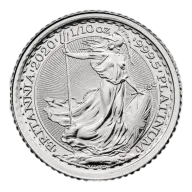
Two coins dominate dealer stock at this weight in our listings. The 1/10 oz Platinum Britannia from the Royal Mint is the most widely available. The platinum Britannia series launched in 2018 in .9995 fine platinum and is produced in 1 oz and 1/10 oz sizes, so the tenth-ounce is not an afterthought but one of only two weights in the series. As UK legal tender it is CGT-exempt for British sellers, which makes the 1/10 oz Platinum Britannia the only sensible platinum coin for UK buyers from a tax standpoint.
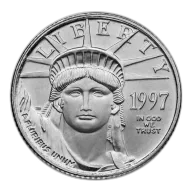
Close behind it is the 1/10 oz American Platinum Eagle. The Platinum Eagle programme dates from 1997, struck in .9995 fine platinum across 1 oz, 1/2 oz, 1/4 oz and 1/10 oz denominations, with the full-size coin carrying a $100 face value. The Eagle has the strongest resale demand in the US market and is IRA-eligible, since all the major .9995 platinum coins clear the 99.95% purity bar that US retirement accounts require.
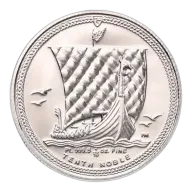
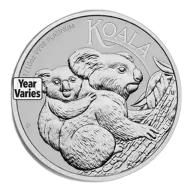
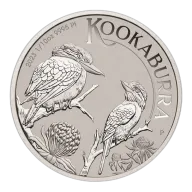
The Perth Mint supplies the next tier of availability with 1/10 oz platinum Kookaburra and Koala coins, both well represented across dealers in our data. Perth's flagship platinum bullion series, the wave-textured Platinum Kangaroo launched in 2018, anchors the mint's presence in the metal. Smaller numbers of listings cover the Pobjoy Mint Noble and the Platinum Maple Leaf; the Royal Canadian Mint's platinum Maple Leaf series dates from 1988 with a $50 CAD face value and Bullion DNA security, but its production has been intermittent, so secondary-market coins are often the practical option.
Notable absences shape the field too. The Austrian Mint makes no platinum Philharmonic and the South African Mint no regular-production platinum Krugerrand, so the platinum fractional market is essentially an Anglosphere affair: British, American, Australian and Canadian mints. Buyers comparing within the weight should put the Britannia and Eagle at the top for liquidity, then let price decide, since all the sovereign options share the same .9995 purity.
Selling Small Platinum: Plan the Exit First
Platinum coins are less liquid than gold coins at every weight, and the tenth-ounce inherits all of it. The buyer pool is smaller, dealer spreads are wider, and not every bullion dealer carries platinum inventory at all. A seller should expect to lose 5-10% of the purchase price on a full round trip through a dealer, and selling may mean approaching specialist dealers or larger operations, since small local coin shops often cannot quote competitively on platinum. Private sales add their own friction: platinum's lower market profile means many potential buyers are simply unfamiliar with the products.
Within those constraints, coin choice matters. The American Platinum Eagle has the strongest resale demand in the US, the Platinum Britannia is the most recognised in the UK, and coins from the LBMA-accredited sovereign mints (Eagle, Maple Leaf, Britannia, Kangaroo) have the best resale prospects generally. The same logic that applies to fractional gold applies here with more force: stick to the most recognised names, because an obscure fractional platinum coin combines two liquidity penalties at once.
The low unit value cuts both ways at resale. On one hand, a tenth-ounce of platinum is a small-ticket item, so shipping and insurance for a mailed-in sale consume a disproportionate share of the proceeds; selling several coins together or in person improves the economics. On the other, the low price point broadens the potential buyer base in the way fractional coins always do, which partially offsets the thin market.
Storage is the easy part. Platinum coins take minimal space per unit of value, and the metal is harder than gold (Mohs 3.5 versus 2.5), making it more resistant to scratches and handling damage. It does not tarnish or corrode, so none of the atmospheric precautions silver demands apply. Standard coin capsules work fine; the one practical caveat is that fewer platinum-specific tube sizes exist than for gold and silver coins, so check capsule and tube compatibility for the specific coin rather than assuming gold-coin accessories will fit.
1/10 oz Platinum Coins: frequently asked questions
-
A 1/10 oz platinum coin contains 1/10 oz of platinum. Its melt value is one-tenth of the live spot price ($1,806.00 per troy ounce). Dealer prices sit above melt; fractional coins typically carry a higher percentage premium than 1oz coins because fabrication costs are spread over less metal.
-
A 1/10 troy ounce platinum coin weighs 1/10 oz (3.1104 grams). One full troy ounce equals 31.1035 grams, so dividing by ten gives the weight of these fractional coins.
-
Most investment-grade platinum bullion coins are struck at 999.5 fine (99.95% platinum). Some coins are produced at higher purities. These purities are well above the 950 alloy used in jewellery, which is not considered bullion grade.
-
CGT treatment depends on your country. In the US, platinum coins are treated as collectibles, with long-term gains taxed at up to 28%. In Canada, 50% of any capital gain is included in taxable income at your marginal rate. In the UK, gains on platinum coins are subject to CGT at 18% or 24% above the £3,000 annual allowance.
-
Common 1/10 oz platinum bullion coins include the UK Britannia, the Australian Koala, and the American Platinum Eagle. We currently track 32 products in this size from 17 dealers, so you can compare premiums across all available options.
- 1/10 oz American Platinum Eagle Platinum Coin
- 1/10 oz Britannia Platinum Coin
- 1/10 oz Kookaburra Platinum Coin
- 1/10 oz Maple Leaf Platinum Coin
- 1/10 oz Panda Platinum Coin
- 1/10 oz Perth Mint Koala Platinum Coin
- 1/10 oz Perth Mint Lunar Platinum Coin
- 1/10 oz Philharmonic Platinum Coin
- 1/10 oz Pobjoy Mint Noble Platinum Coin
- Pre-Owned 1/10 oz American Platinum Eagle Platinum Coin
- Pre-Owned 1/10 oz Maple Leaf Platinum Coin
- Pre-Owned 1/10 oz Platinum Coin