21 products · 169 deals Prices & premiums exclude tax to compare across countries
Filters
| Product | /oz | Premium | Price (ex. tax) | |
|---|---|---|---|---|

4 deals
|
$1,907.41 | +5.62% | $1,907.41 | Compare |

3 deals
|
$1,907.20 |
+5.96%
+27% inc.VAT
|
$1,907.20
£1,715 inc.VAT
|
Compare |
| $1,923.68 | +6.52% | $1,923.68 | Compare | |

2 deals
|
$1,925.66 | +6.63% | $1,925.66 | Compare |
| $1,928.78 | +6.80% | $1,928.78 | Compare | |
| $1,928.78 | +6.80% | $1,928.78 | Compare | |
| $1,943.34 | +7.60% | $1,943.34 | View Deal | |
| $1,945.57 | +7.73% | $1,945.57 | View Deal | |

4 deals
|
$1,946.50 | +7.78% | $1,946.50 | Compare |
| $1,952.70 | +8.12% | $1,952.70 | Compare | |

16 deals
|
$1,972.97 |
+9.43%
+30% inc.VAT
|
$1,972.97
€2,049 inc.VAT
|
Compare |

12 deals
|
$1,975.45 |
+9.75%
+32% inc.VAT
|
$1,975.45
£1,776 inc.VAT
|
Compare |

20 deals
|
$1,977.29 |
+9.85%
+32% inc.VAT
|
$1,977.29
£1,778 inc.VAT
|
Compare |
| $1,977.29 |
+9.85%
+32% inc.VAT
|
$1,977.29
£1,778 inc.VAT
|
Compare | |

8 deals
|
$1,977.29 |
+9.85%
+32% inc.VAT
|
$1,977.29
£1,778 inc.VAT
|
Compare |

12 deals
|
$1,977.29 |
+9.85%
+32% inc.VAT
|
$1,977.29
£1,778 inc.VAT
|
Compare |

18 deals
|
$2,044.06 | +13.56% |
$2,044.06
£1,532
|
Compare |

13 deals
|
$2,074.57 | +14.87% | $2,074.57 | Compare |
| $2,228.21 | +23.79% |
$2,228.21
£1,670
|
Compare | |

2 deals
|
$2,312.59 | +28.05% | $2,312.59 | Compare |
| $2,334.62 | +29.70% |
$2,334.62
£1,750
|
View Deal |










Prices are fetched automatically and may not reflect current merchant prices. Currency conversions and tax treatment are approximate. Rankings are based solely on price. We are not a dealer and accept no responsibility for transactions with listed merchants. Past performance is not indicative of future results. This site does not provide investment advice. Full disclaimer
About 1 oz Platinum Coins
The Standard Weight in a Small Market
One troy ounce (31.1035 grams) is the dominant weight for platinum coins. Fractional sizes (1/2 oz, 1/4 oz, 1/10 oz) exist from some mints, but production is intermittent and less consistently available than gold fractionals, so the 1oz coin is where almost all retail platinum activity happens. The platinum coin market is much smaller than gold or silver: fewer mints strike platinum, mintages are lower, and dealer inventory is more limited.
Purity is unusually uniform. All major sovereign platinum coins are struck at .9995 fine, so there is no equivalent of gold's 22-karat versus 24-karat split to weigh up. There are no major .9999 platinum bullion products at all; achieving four-nines purity in platinum is extremely difficult because of its refining characteristics. The metal melts at 1,768 degrees Celsius, far above gold's 1,064 degrees, which makes platinum more expensive to refine and fabricate.
The buyer profile differs from gold. Platinum is overwhelmingly an industrial and automotive metal: investment accounted for only 8.5% of demand in 2024, against 37.8% for automotive catalytic converters. The market recorded a 995 koz deficit in 2024, its third consecutive deficit year, with above-ground stocks falling 23% year-on-year. Since 2015 platinum has consistently traded below gold, currently at roughly 30-40% of the gold price, a discount that is historically unusual; platinum traded above gold from the mid-1990s until 2014. Buyers of 1oz platinum coins are typically taking a position on that discount closing, or diversifying away from gold's investment-driven price profile.
Physically, platinum is the densest of the three main bullion metals at 21.45 g/cm3, denser than gold's 19.3, so a 1oz platinum coin is slightly smaller in diameter than a 1oz gold coin of the same purity. It weighs the same 31.1 grams, does not tarnish or corrode under normal conditions, and is harder than gold (Mohs 3.5 versus 2.5), making it more resistant to scratches and handling damage.
Premiums on 1oz Platinum Coins
Platinum coin premiums are substantially higher than gold coin premiums. Sovereign 1oz platinum coins carry around 5-12% over spot, against 3-5% for 1oz gold coins like the American Gold Eagle. The reasons are structural: lower production volumes mean higher per-unit costs, there are fewer competing products, dealer inventory is smaller so price competition is weaker, and some mints produce intermittently.
The coin-versus-bar gap is narrower for platinum than for gold or silver. A 1oz branded platinum bar from PAMP or Valcambi runs about 5-10% over spot, only modestly below sovereign coins, because both formats carry elevated fabrication costs from platinum's 1,768 degree Celsius melting point. Moving down the weight scale is punishing: fractional platinum coins at 1/4 oz and 1/10 oz carry premiums of 15-30%, because production runs are small and demand inconsistent. The 1oz coin is the cost-efficient entry point for platinum, and platinum bars in 10 oz and 1 kg sizes offer fewer step-up options than the equivalent gold or silver weights.
Tax treatment shapes the real cost more than the headline premium. In the UK, platinum carries 20% VAT with no investment exemption, so a delivered 1oz coin can cost 25-30% or more above spot once VAT stacks on the premium; the EU applies standard VAT of 17-27% depending on country. By contrast, Canada exempts platinum at 99%+ purity from GST/HST, Australia is GST-free at 99%+ purity in investment form, New Zealand is GST-exempt at 99%+ purity with no capital gains tax, Singapore exempts legal-tender platinum coins of 99%+ purity from GST, and Hong Kong levies no tax at all. Since every major sovereign platinum coin is .9995 fine, all of them clear every one of these purity thresholds.
The Five Sovereign 1oz Platinum Coins
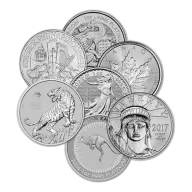
Five sovereign mints strike 1oz platinum bullion coins, all at .9995 fine:
| Coin | Mint | First issued | Face value |
|---|---|---|---|
| Canadian Platinum Maple Leaf | Royal Canadian Mint | 1988 | $50 CAD |
| American Platinum Eagle | US Mint | 1997 | $100 USD |
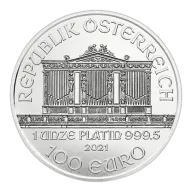
| Austrian Platinum Philharmonic | Austrian Mint | 2016 | EUR 100 |
| Platinum Britannia | Royal Mint | 2018 | GBP 100 |
| Australian Platinum Kangaroo | Perth Mint | 2018 | $100 AUD |
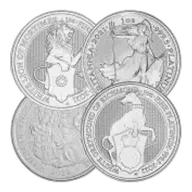
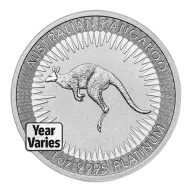
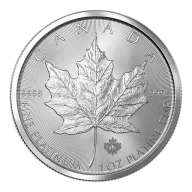
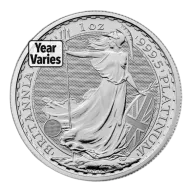
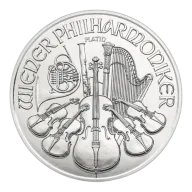
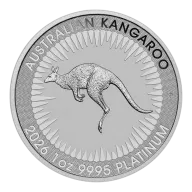
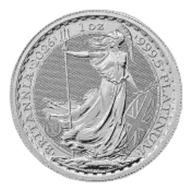
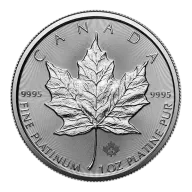
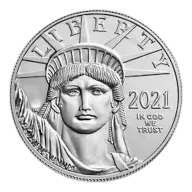
The Platinum Maple Leaf is one of the earliest platinum coins and is often among the most competitively priced, though Royal Canadian Mint production has been intermittent, so secondary market coins may be the primary option. The American Platinum Eagle carries a $100 face value and is the most recognised platinum coin in North America, available in 1 oz down to 1/10 oz, with annual proof versions featuring rotating reverse designs. The Platinum Britannia is CGT-exempt in the UK as legal tender, the only platinum coin with that benefit. The Australian Platinum Kangaroo uses a fixed design that does not change annually, set against a wave-textured background. The Austrian Platinum Philharmonic shares its design with the gold and silver versions and is denominated in euros.
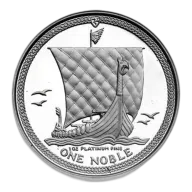
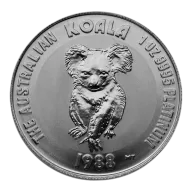
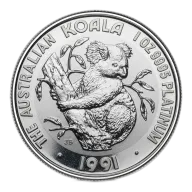
The Philharmonic, Britannia, and Kangaroo all arrived between 2016 and 2018, reflecting platinum's late development as a retail investment metal. Before them, the Isle of Man Noble (1983, discontinued 1989) and the Australian Koala (1987) pioneered the format. Notably, the South African Mint produces no platinum Krugerrand despite South Africa mining 71.7% of global platinum supply, so platinum bullion there attracts 15% VAT with no legal-tender coin exemption. Platinum rounds from private mints barely exist; the market is dominated by sovereign coins and branded bars.
Reselling 1oz Platinum Coins
Platinum coins are less liquid than gold coins. Total platinum investment demand was 702 koz (about 22 tonnes) in 2024, against gold's 2,175 tonnes, so the buyer pool is smaller and not every dealer carries platinum inventory at all. Smaller and regional dealers outside the US, UK, and Singapore may not handle platinum, and small local coin shops may not offer competitive buy prices. Selling can mean approaching specialist dealers or larger operations, though the process itself mirrors gold and silver: same-day pricing with payment in 1-5 days.
Spreads reflect the thin market. Dealers buy platinum at roughly spot minus 3-6% and sell at spot plus 5-10%, putting round-trip costs on 1oz products at 8-15%, wider than gold in both absolute and percentage terms. During low-liquidity periods spreads widen further. Sticking to the recognised names protects resale value: the Platinum Eagle has the strongest resale demand in the US, the Britannia is most recognised in the UK, and coins from accredited mints (Eagle, Maple Leaf, Britannia, Kangaroo) have the best resale prospects overall.
Authentication works in the seller's favour. Platinum's 21.45 g/cm3 density makes convincing counterfeits difficult; tungsten at 19.25 g/cm3 is substantially lighter, and no common cheap metal matches platinum, so a simple weight check on a coin of known diameter is a strong test. Counterfeit platinum coins are rare. For storage, a 1oz platinum coin weighs 31.1 grams and is slightly smaller in diameter than a 1oz gold coin. Standard coin capsules and tubes are suitable, though fewer platinum-specific tube sizes exist than for gold or silver, so verify compatibility. No tarnish protection is needed; platinum requires nothing beyond basic security.
1 oz Platinum Coins: frequently asked questions
-
Retail prices for a 1 oz platinum coin include the $1,806.00 spot price plus a dealer premium. The 30 dealers tracked here list 174 products in total, so you can compare to find the keenest price. Premiums on platinum coins tend to be higher than on gold coins of the same weight, reflecting platinum's thinner market.
-
Platinum has a smaller pool of buyers than gold or silver, so liquidity is genuinely thinner. Major 1 oz coins such as the Platinum Maple Leaf or American Platinum Eagle are the easiest to resell because dealers recognise them readily. Less common designs or older dates can be harder to place quickly. Selling back to a dealer is usually the most straightforward exit.
-
Yes. Annual platinum mine production is a small fraction of gold output. Platinum is also concentrated in a handful of countries, making supply less diversified. This relative scarcity is one reason investors consider 1 oz platinum coins, though rarity alone does not guarantee price performance.
-
In the UK, gains on platinum coins are taxable at 18% or 24% above the £3,000 annual allowance. US investors are subject to up to 28% on long-term gains. In Canada, 50% of any capital gain is included in taxable income at your marginal rate.
- 1 oz American Eagle Platinum Coin
- 1 oz American Platinum Eagle Platinum Coin
- 1 oz Armillary Platinum Coin
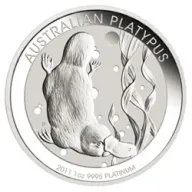
- 1 oz Australian Platypus Platinum Coin
- 1 oz Big 5 Platinum Coin
- 1 oz Big Five Platinum Coin
- 1 oz Britannia Platinum Coin
- 1 oz Dragon Rectangular Platinum Coin
- 1 oz Maple Leaf Platinum Coin
- 1 oz Myths and Legends Platinum Coin
- 1 oz Panda Platinum Coin
- 1 oz Perth Mint Kangaroo Platinum Coin
- 1 oz Perth Mint Koala Platinum Coin
- 1 oz Perth Mint Lunar Platinum Coin
- 1 oz Philharmonic Platinum Coin
- 1 oz Platinum Coin
- 1 oz Platypus Platinum Coin
- 1 oz Pobjoy Mint Noble Platinum Coin
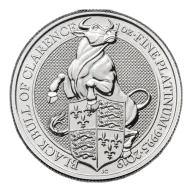
- 1 oz Queen's Beasts Platinum Coin
- 1 oz Robin Hood Platinum Coin
- 1 oz Royal Arms Platinum Coin
- 1 oz South African Mint Krugerrand Platinum Coin
- 1 oz Tower Mint Noble Platinum Coin
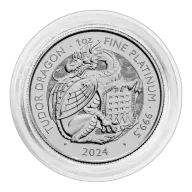
- 1 oz Tudor Beasts Platinum Coin
- Pre-Owned 1 oz American Platinum Eagle Platinum Coin
- Pre-Owned 1 oz Australian Platypus Platinum Coin
- Pre-Owned 1 oz Britannia Platinum Coin
- Pre-Owned 1 oz Maple Leaf Platinum Coin
- Pre-Owned 1 oz Perth Mint Kangaroo Platinum Coin
- Pre-Owned 1 oz Perth Mint Koala Platinum Coin
- Pre-Owned 1 oz Philharmonic Platinum Coin
- Pre-Owned 1 oz Platinum Coin
- Pre-Owned 1 oz Queen's Beasts Platinum Coin
- Pre-Owned 1 oz Somalia Elephant Platinum Coin
- Pre-Owned 1 oz Tudor Beasts Platinum Coin
- American Eagle
- American Platinum Eagle
- Armillary
- Australian Platypus
- Big 5
- Big Five
- Britannia
- Dragon Rectangular
- Isle of Man Noble
- Maple Leaf
- Myths and Legends
- Noble
- Panda
- Perth Kangaroo
- Perth Koala
- Perth Lunar
- Philharmonic
- Platypus
- Queen's Beasts
- Robin Hood
- Royal Arms
- SA Mint Krugerrand
- Somalia Elephant
- Tudor Beasts