


Prices are fetched automatically and may not reflect current merchant prices. Currency conversions and tax treatment are approximate. Rankings are based solely on price. We are not a dealer and accept no responsibility for transactions with listed merchants. Past performance is not indicative of future results. This site does not provide investment advice. Full disclaimer
About 10g Platinum Bars
The 10g Platinum Bar Weight Class
The 10 gram platinum bar is the entry point to LBMA-branded platinum from major refiners at a price point accessible to regular buyers. At approximately 0.32 troy ounces, a 10g platinum bar contains roughly one-third of an ounce and carries premiums in the 10-20% range over spot. This places it in the transition zone between the high-premium small bars (1g-5g at 20-40% premiums) and the more efficient medium bars (50g-100g at 4-8%).
The 10g format is most popular in European and Asian markets where metric weights are standard for bar purchases. In the US and UK, the 1/4 oz denomination is more common at a similar price point, but the two are not directly interchangeable: 10g equals 0.3215 troy oz, while 1/4 oz equals 7.78g. The 10g bar contains approximately 29% more platinum than a 1/4 oz product.
For platinum specifically, the 10g weight carries higher premiums relative to gold at the same size. Platinum's elevated fabrication costs (driven by its 1,768 degree Celsius melting point versus gold's 1,064 degrees) make all small platinum bars disproportionately expensive to produce. The fixed manufacturing cost represents a larger percentage of the total bar value than it would for an equivalent gold bar.
Premium Economics at 10 Grams
Platinum bars at 10g typically carry premiums of 10-20% over spot price, depending on the refiner and market conditions. This is comparable to 1/10 oz platinum coins and is well above the 5-10% range achievable at 1 oz and the 4-8% range at 100g. The premium compression from 10g down to 1g is steep: a 1g platinum bar can carry premiums of 30-40% or more, making bars below 10g essentially novelty products for investment purposes.
The premium step-change for platinum bars occurs at 50g and above, where premiums drop below 10% consistently. For buyers with the budget to step up from 10g to 50g, the premium improvement is significant. The jump from 10g (12-18% typical) to 50g (6-10% typical) represents perhaps the most impactful single weight upgrade in the platinum bar range.
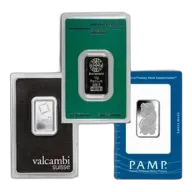
Among 10g products specifically, the major Swiss refiners (PAMP, Valcambi, Argor-Heraeus) compete closely on premium. PAMP's Lady Fortuna variant typically commands the highest premium due to brand positioning. The 10g Valcambi Platinum Bar often provides the most competitive pricing among the Swiss brands. Generic or lesser-known refiner bars can trade 2-5% cheaper than branded equivalents, though with reduced resale liquidity.
Major 10g Platinum Bars
The market for 10g platinum bars is dominated by the established Swiss and European refiners who produce the same product across their gold, silver, and platinum ranges. All share the 999.5 fineness standard.
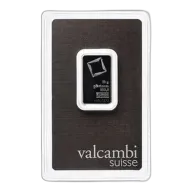
The 10g Valcambi Platinum Bar is the most widely available product at this weight, stocked by dealers across multiple continents. Valcambi is LBMA-accredited and produces bars in sealed assay card packaging with individual serial numbers. Its competitive pricing makes it the default choice for premium-conscious buyers.
The 10g PAMP Suisse Fortuna Platinum Bar carries the Lady Fortuna design and VeriScan digital authentication. It commands a brand premium over plain-stamped bars but offers the most robust verification system in the minted bar market. PAMP also produces a plain-branded 10g PAMP Suisse Platinum Bar without the Fortuna motif at a slightly lower price point.
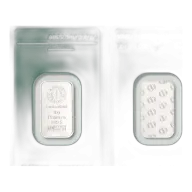
The 10g Argor-Heraeus Platinum Bar features Argor-Heraeus's Kinebar holographic security element on the reverse, providing a visual anti-counterfeiting measure. Argor-Heraeus is an LBMA-accredited Swiss refiner jointly owned by Heraeus.
Generic platinum bars at 10g are also available from various producers and trade at lower premiums. These serve buyers who prioritise metal content over brand recognition and do not require specific refiner provenance for resale or retirement account purposes.
Resale and Storage at 10 Grams
A 10g platinum bar in its assay card is slightly larger than a postage stamp. The bar itself measures approximately 15-26mm in length depending on manufacturer, making it compact enough that dozens can fit in a small safe deposit box. Platinum does not tarnish or corrode under normal conditions, so no special storage materials or atmospherics are required beyond physical security.
Resale liquidity for 10g platinum bars from recognised refiners (PAMP, Valcambi, Argor-Heraeus, Heraeus) is good but not as immediate as for 1 oz products. The 1 oz bar and 1 oz coin are the standard trading units for platinum, and dealers maintain more active buyback programmes at that weight. A 10g bar from a known brand in sealed assay packaging will be accepted by most major online dealers, but local dealers may not always stock or buy platinum in gram weights.
The intact assay card is important for resale value. Bars removed from their original sealed packaging may require re-assay or sell at a discount to compensate for the additional verification step. For this reason, 10g bars should be stored in a way that preserves the tamper-evident packaging intact.
For buyers accumulating platinum gradually, the 10g format works as a regular savings vehicle (buying one bar per month, for example). The trade-off versus saving toward a single larger purchase is the cumulative premium paid on multiple small bars versus the lower per-gram premium of a single 100g platinum bar.
10g Platinum Bars: frequently asked questions
-
A 10g platinum bar contains roughly 0.3215 troy ounces of metal. At $1,806.00 per troy ounce, the metal value is around 0.3215 times that figure, with retail prices sitting above it to cover fabrication and dealer margin. We track 9 listings across 6 dealers on this page.
-
Platinum's price is heavily tied to industrial demand, particularly automotive catalytic converters. When carmakers switched from petrol to diesel and then increasingly to electric powertrains, demand from that sector fell. Platinum also has a smaller investor market than gold, meaning less buying pressure from that side. These factors have kept price below gold despite platinum being far rarer by mine supply.
-
Yes. Annual platinum mine production is roughly 30 times smaller than gold by volume, making it significantly rarer in the earth's crust. However, rarity alone does not determine market price. Because platinum's price is heavily influenced by industrial demand (especially from the auto sector), the market can price it below gold even though it is physically scarcer.
-
Investment-grade platinum bars are typically 999.5 fine (99.95% pure). This is the standard for recognised bullion bars from accredited refineries. The 950 and 990 alloys sometimes associated with platinum are jewellery grades, not investment bullion, and carry different metal content. Check the hallmark or assay card when buying.