4 products · 6 deals Prices & premiums exclude tax to compare across countries
Filters




Prices are fetched automatically and may not reflect current merchant prices. Currency conversions and tax treatment are approximate. Rankings are based solely on price. We are not a dealer and accept no responsibility for transactions with listed merchants. Past performance is not indicative of future results. This site does not provide investment advice. Full disclaimer
About 500g Platinum Bars
Half-Kilo Platinum Bars: Institutional Weight at Retail Scale
The 500g platinum bar sits at the boundary between retail and institutional bullion. At 16.075 troy ounces of 999.5 fine platinum, each bar represents a substantial capital commitment that attracts serious portfolio allocators rather than casual accumulators. This is not a size purchased on impulse; buyers at this weight are typically building concentrated positions in a metal they believe is structurally undervalued.
The economic logic is straightforward. Fabrication and refining costs for platinum are high relative to gold (the 1,768 degrees Celsius melting point demands more energy and specialised equipment), but those fixed costs become a smaller fraction of metal value as bar size increases. A 500g platinum bar captures most of the premium compression available in the retail market, with per-gram costs approaching those of full kilogram bars while requiring roughly half the capital outlay.
Platinum's density advantage matters at this scale. At 21.45 g/cm3, platinum is denser than gold, meaning a 500g bar is remarkably compact for its weight. The physical package is smaller than many buyers expect, making secure storage straightforward relative to the value stored. For comparison, a 500g silver bar of equivalent value would be far larger and more cumbersome.
The 500g size is more established in metric-oriented markets (continental Europe, Japan, Australia) than in troy-ounce markets like the United States. European refiners such as 500g Heraeus, 500g Valcambi, and 500g Argor-Heraeus produce this weight as a standard catalogue item, while LPPM (London Platinum and Palladium Market) accreditation ensures global acceptance for resale.
Premium Structure for 500g Platinum Bars
Premiums on 500g platinum bars typically fall in the 3-6% range over spot, representing some of the most efficient pricing available in the retail platinum market. This compares favourably to 1oz platinum bars at 5-10% and fractional sizes where premiums can exceed 20%. The savings are meaningful: on a bar worth tens of thousands at spot, each percentage point of premium translates to hundreds in additional cost.
The premium compression from 100g to 500g is more significant than from 500g to 1kg. Buyers moving up from a 100g platinum bar to 500g capture most of the available scale benefit. The residual gap between 500g and kilogram bars is modest, perhaps 1-2 percentage points, making 500g attractive for buyers who want near-institutional pricing without committing to a full kilo.
Brand premiums remain relevant at this size. Bars from PAMP Suisse, Valcambi, Heraeus, and Argor-Heraeus carry modest brand premiums over generic equivalents, reflecting their LPPM accreditation, tamper-evident packaging, and serial-numbered assay documentation. These premiums are typically recovered at resale, since branded bars command tighter buy-sell spreads from dealers.
Buy-sell spreads on 500g platinum bars are wider than equivalent gold bars at the same weight. Platinum's thinner market means dealers must hold inventory longer and face more price risk between purchase and sale. Round-trip costs (buy premium plus sell discount) for 500g platinum bars from recognised refiners typically run 8-12%, compared to 3-5% for gold at the same weight. This spread cost is the primary friction for investors treating platinum as a short-to-medium term position.
Established Refiners Producing 500g Platinum Bars
The 500g platinum bar market is dominated by LPPM-accredited refiners whose bars are accepted globally by dealers and institutions. Brand selection at this weight directly affects liquidity; bars from unrecognised sources may face wider spreads or outright rejection at resale.
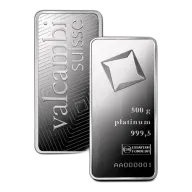
The 500g Valcambi Platinum Bar is among the most widely available options, produced by Switzerland's largest refiner in Balerna. Valcambi bars are sealed with assay certification and serial numbers, and the refinery's LPPM Good Delivery accreditation ensures acceptance across international markets. Valcambi typically offers competitive pricing relative to other Swiss refiners.
The 500g PAMP Suisse Fortuna Platinum Bar carries the Lady Fortuna motif that has defined PAMP's minted bars since 1979. PAMP bars include VeriScan digital authentication and CertiPAMP packaging. The brand commands the highest premiums in the minted bar market but also tends to achieve the strongest resale prices.
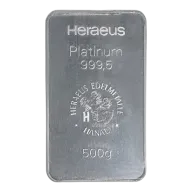
From Germany, the 500g Heraeus Platinum Bar is popular across European markets. Heraeus has been refining precious metals since 1851 and holds both LBMA and LPPM accreditations. Their bars are a staple of the German-speaking investment market.
The 500g Argor-Heraeus Platinum Bar comes from the Swiss subsidiary of the Heraeus Group, operating independently as an LPPM-accredited refiner since 1951. Argor-Heraeus is known for its kinebar holographic security feature on gold bars, though platinum bars rely on standard serial-numbered assay documentation.
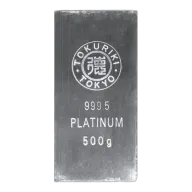
For buyers in the Asia-Pacific region, the 500g Tokuriki Honten Platinum Bar offers a Japanese-manufactured alternative. Tokuriki has operated since 1889 and is one of the longest-running refiners in Asia. Their bars are particularly liquid in Japanese, Singaporean, and Australian dealer networks.
The 500g ABC Refinery Platinum Bar serves the Australian market. As Australia's only independent LBMA-accredited refinery, ABC bars benefit from a domestic supply chain and GST-exempt status for qualifying investors.
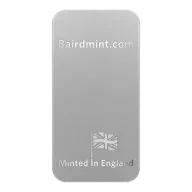
500g Baird and Co. Platinum Bars are produced by the UK's largest refinery in East London. The company has been an LBMA member since 2000 and produces both minted and cast formats, with cast bars typically carrying slightly lower premiums.
Resale Considerations for 500g Platinum
Liquidity for 500g platinum bars is adequate but materially thinner than for gold at the same weight. The platinum investment market absorbed only 702,000 ounces globally in 2024, roughly 22 tonnes, compared to thousands of tonnes for gold. This smaller pool of buyers and sellers means that selling a 500g platinum bar may take longer and command a wider discount than selling a 500g gold bar.
Brand recognition is the primary determinant of resale ease. Bars from LPPM-accredited refiners (PAMP, Valcambi, Heraeus, Argor-Heraeus, Tanaka, Perth Mint) are accepted by major dealers in all significant bullion markets. Bars from lesser-known refiners or generic bars without serialisation may face additional verification requirements or outright refusal from some buyers.
The geographic factor matters. European dealers, particularly in Switzerland, Germany, and the UK, are the most active secondary market for 500g platinum. US dealers tend to stock troy-ounce products and may offer less competitive buyback on metric weights. Asian markets (Singapore, Hong Kong, Japan) accept 500g bars readily, particularly from Japanese refiners like Tokuriki.
Sealed bars in original assay packaging with intact serial numbers command meaningfully better resale prices than loose bars or bars with damaged packaging. Once a tamper-evident seal is broken, the bar typically requires re-assaying at the seller's expense before a dealer will offer full buyback value. This is more consequential for platinum than gold because platinum's visual similarity to cheaper white metals (silver, stainless steel) makes authentication more important.
Storage costs for 500g platinum bars are typically assessed on insured value, not weight. At current platinum prices, a 500g bar stores roughly half the value of a 500g gold bar in a marginally smaller physical package. Professional vault storage is common at this value level, with annual fees typically running 0.3-0.5% of insured value. The bar's compact dimensions and corrosion resistance make it straightforward for either vault or home storage, with no tarnish prevention measures required.
500g Platinum Bars: frequently asked questions
-
The live platinum spot is $1,806.00 per troy ounce. To find the melt value of a 500g bar, divide that figure by 31.1035 to get the per-gram price, then multiply by 500. Dealer prices for 500g bars will sit above melt value to cover fabrication and distribution costs.
-
4 dealers across our tracked markets list 500g platinum bars, with 7 individual products available. At this weight, choice narrows compared with 1oz coins or smaller bars, so comparing premiums across available dealers is especially worthwhile.
-
Investment-grade platinum bars are typically 999.5 fine (99.95% pure platinum), the standard for bullion. Platinum 950 and 990 are jewellery alloys containing 5% or 1% other metals respectively. Bullion buyers should look for bars stamped 999.5 or 999 fine rather than jewellery-grade alloys, which carry lower platinum content and trade at different premiums.
-
At 500g, most platinum bars are cast: molten metal is poured into a mould and allowed to solidify, producing a plain, sometimes textured finish with slightly lower production costs. Minted bars are cut from rolled sheet and often carry a polished finish and assay certificate. Cast bars at this size typically trade with a lower premium over spot; minted bars may carry a small premium for presentation and packaging.
-
This question concerns platinum coins rather than bars. Platinum bars are not legal tender and do not carry a coin-based CGT exemption in any market. In the UK, bar gains are taxed at 18% or 24% above the £3,000 annual exemption. US investors face up to 28% on long-term gains; in Canada 50% of any gain is included in taxable income.