420 products · 4,028 deals
Filters
| Product | /oz | Premium | Price | |
|---|---|---|---|---|

7 deals
|
$4,502.49 | +2.14% | $4,502.49 | Compare |

21 deals
|
$4,440.03 | +2.18% |
$7,137.51
£5,349
|
Compare |
| $4,452.48 | +2.21% |
$44,524.84
S$56,921
|
View Deal | |

3 deals
|
$4,441.22 | +2.21% |
$142,788.25
£107,004
|
Compare |

2 deals
|
$4,442.88 | +2.25% |
$1,777,152.08
£1,331,780
|
Compare |

4 deals
|
$4,507.64 | +2.26% | $2,898.48 | Compare |

6 deals
|
$4,443.56 | +2.26% |
$14,286.38
£10,706
|
Compare |

2 deals
|
$4,449.58 | +2.30% |
$8,899.15
A$12,499
|
Compare |

9 deals
|
$4,445.78 | +2.31% |
$14,293.52
£10,711
|
Compare |

3 deals
|
$4,447.32 | +2.35% |
$71,492.21
£53,576
|
Compare |

22 deals
|
$4,448.53 | +2.38% |
$14,302.33
£10,718
|
Compare |

46 deals
|
$4,449.32 | +2.40% |
$4,449.33
£3,334
|
Compare |

12 deals
|
$4,450.23 | +2.42% |
$14,307.80
£10,722
|
Compare |

3 deals
|
$4,461.68 | +2.42% |
$2,868.92
S$3,668
|
Compare |

13 deals
|
$4,451.22 | +2.44% |
$2,095.70
£1,571
|
Compare |

14 deals
|
$4,451.74 | +2.45% |
$35,778.65
£26,812
|
Compare |
| $4,452.62 | +2.45% |
$35,788.72
€31,229
|
View Deal | |

52 deals
|
$4,452.10 | +2.46% |
$4,452.10
£3,336
|
Compare |

10 deals
|
$4,452.10 | +2.46% |
$4,452.10
£3,336
|
Compare |

2 deals
|
$4,452.10 | +2.46% |
$143,138.26
£107,266
|
Compare |

2 deals
|
$4,519.25 | +2.52% | $22,596.26 | Compare |

3 deals
|
$4,456.88 | +2.57% |
$7,164.60
£5,369
|
Compare |

3 deals
|
$4,521.93 | +2.58% | $4,521.93 | Compare |

3 deals
|
$4,522.63 | +2.60% | $1,130.66 | Compare |
| $4,458.39 | +2.61% |
$4,458.39
CA$6,246
|
View Deal | |

5 deals
|
$4,459.11 | +2.62% |
$7,168.18
£5,372
|
Compare |

92 deals
|
$4,459.12 | +2.62% |
$4,459.12
£3,342
|
Compare |
| $4,523.69 | +2.62% | $4,523.69 | View Deal | |

26 deals
|
$4,460.54 | +2.65% |
$14,339.52
£10,746
|
Compare |

5 deals
|
$4,460.73 | +2.66% |
$4,460.73
£3,343
|
Compare |




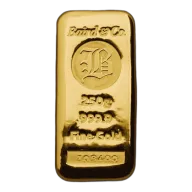

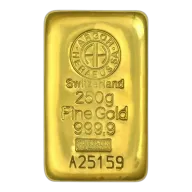


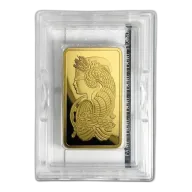







Prices are fetched automatically and may not reflect current merchant prices. Currency conversions and tax treatment are approximate. Rankings are based solely on price. We are not a dealer and accept no responsibility for transactions with listed merchants. Past performance is not indicative of future results. This site does not provide investment advice. Full disclaimer
About Gold Bullion
Gold Bullion as a Store of Value
Gold occupies a unique position among investment assets. It does not corrode, tarnish, or degrade over time. A gold bar produced a century ago contains exactly the same metal, at the same purity, as one struck today. That permanence, combined with universal recognition, is the reason central banks collectively held over 36,000 tonnes of gold reserves as of 2025 and continued buying at a pace of 863 tonnes in that year alone.
For individual buyers, gold bullion comes in three forms: coins from sovereign mints, bars from accredited refiners, and rounds from private mints. Each carries the same underlying metal value but differs in premium, liquidity, and tax treatment. Gold coins carry legal tender status and command the highest premiums, typically 3-7% over spot for a 1 oz piece. Gold bars are the most cost-efficient route to accumulating gold, with premiums as low as 1-2% on kilo bars. Gold rounds fall between the two on premium but lack the legal tender status that drives certain tax advantages.
Gold's density of 19.3 g/cm3 makes it exceptionally compact for its value. At a spot price around $3,000 per troy ounce, $100,000 worth of gold weighs roughly 1 kilogram and fits in a palm. A million dollars' worth occupies less space than a shoebox. This compactness is one of gold's practical advantages over silver, where the same dollar value would weigh more than 100 kilograms.
The global gold market is deep and operates nearly 24 hours a day across London, New York, and Asian exchanges. Sovereign mint coins and LBMA-branded bars can be sold at virtually any bullion dealer worldwide, making gold the most liquid precious metal. Buy-sell spreads on standard 1 oz coins typically run 4-8% round-trip, tightening further on larger bars. That liquidity, combined with gold's lack of counterparty risk and independence from any single government or financial system, is why it remains the default precious metal for wealth preservation.
Gold Tax Treatment Across Major Markets
Gold receives the most favourable tax treatment of any precious metal in most jurisdictions. The core principle: most countries exempt investment gold from purchase taxes (VAT, GST, or sales tax), recognising its monetary status. The treatment on disposal varies more widely.
United Kingdom
Investment gold is VAT-exempt in the UK. Qualifying criteria include gold bars and wafers at 995+ thousandths purity, and gold coins minted after 1800 at 900+ thousandths purity that are or were legal tender. All Britannias and Sovereigns qualify, as do Maple Leafs, Krugerrands, Eagles, and other major sovereign coins. On disposal, gains are subject to Capital Gains Tax at 18-24%, with an annual tax-free allowance of GBP 3,000. The critical exception: UK legal tender coins, specifically the Britannia and Sovereign, are CGT-exempt because they are British legal currency. This makes them uniquely tax-efficient for UK buyers: zero VAT on purchase and zero CGT on sale, regardless of profit.
Gold is eligible for Self-Invested Personal Pensions (SIPPs), providing income tax relief at the buyer's marginal rate and exemption from CGT within the pension wrapper.
United States
There is no federal sales tax on gold. At the state level, over 40 states exempt investment-grade precious metals from sales tax. States that still impose tax include Hawaii, Maine, Maryland, Vermont, and Washington. California exempts purchases over $2,000. Five states have no sales tax at all: Alaska, Delaware, Montana, New Hampshire, and Oregon.
On disposal, the IRS classifies physical gold as a collectible. Long-term capital gains (held over one year) are taxed at a maximum rate of 28%, higher than the 15-20% rate applied to stocks and bonds. Short-term gains are taxed as ordinary income. Gold meeting purity requirements (99.5%+ for bars, or specific coins including the American Eagle despite its 22ct composition) can be held in a self-directed IRA for tax-deferred or tax-free (Roth) growth. The Eagle's IRA eligibility at 91.67% purity is a specific statutory exemption, not a general rule.
Canada
Investment gold at 99.5%+ purity is exempt from GST/HST across all provinces. Coins, bars, ingots, and wafers all qualify. Capital gains are taxable at a 50% inclusion rate (66.67% above CAD 250,000 from June 2024). Gold can be held in RRSPs and TFSAs for tax-advantaged growth.
Australia
Investment gold at 99.5%+ purity is GST-free. This covers bars, ingots, and coins that are or were legal tender and trade within 150% of their metal content value. Capital gains are subject to CGT, with a 50% discount for assets held longer than 12 months.
New Zealand
Fine gold at 99.5%+ purity is GST-exempt. Coins and bars both qualify at this threshold. Importantly, 22-carat coins such as Krugerrands, American Eagles, and Sovereigns fall below 99.5% and attract 15% GST in New Zealand. New Zealand has no formal capital gains tax, though the IRD may treat profits as taxable income if the purchase was made with the purpose of resale.
Singapore
Investment Precious Metals (IPM) qualifying gold is GST-exempt. Gold bars must be 99.5%+ purity and at least 0.5 troy ounce. Coins must be 99.5%+ purity and legal tender. As with New Zealand, 22-carat coins do not qualify. Singapore has no capital gains tax, making it one of the most favourable jurisdictions for gold: no purchase tax, no sale tax.
Hong Kong
Hong Kong imposes no sales tax, no VAT, no import duty, and no capital gains tax on gold bullion. It is the most tax-neutral jurisdiction of any major bullion market.
South Africa
Gold Krugerrands are VAT-exempt as legal tender under the Value-Added Tax Act. Other gold products, including bars and non-Krugerrand coins, are subject to 15% VAT. Capital gains tax applies at a 40% inclusion rate for individuals, with an effective maximum rate around 18%.
European Union
Investment gold is VAT-exempt across all EU member states under Directive 98/80/EC. Qualifying criteria: gold bars at 995+ purity, and gold coins minted after 1800 at 900+ purity that are legal tender and trade within 180% of their gold content value. The EU publishes an annual list of qualifying coins. Capital gains treatment varies by country. Germany stands out: gains on gold held longer than one year are completely tax-free, regardless of the amount. Belgium has no CGT on personal capital gains, including gold.
Gold Purity Standards for Bullion Products
Gold purity is measured in millesimal fineness (parts per thousand) or karats (parts per 24). For bullion, four standards matter.
999.9 fine (24 karat, "four nines") is the modern standard for most sovereign mint coins and refiner bars. The Canadian Maple Leaf was the first 999.9 fine coin in 1979. Today, the Britannia (since 2013), Philharmonic, Kangaroo, and American Buffalo are all 999.9. Major refiner bars from PAMP Suisse, Valcambi, Argor-Heraeus, Heraeus, and Perth Mint are struck at 999.9. This purity meets every tax exemption threshold worldwide and is the default for modern gold bullion.
999 fine (24 karat, "three nines") is found on some bars, older Britannias (pre-2013), and certain generic rounds. Functionally equivalent to 999.9 for tax and investment purposes in all jurisdictions.
995 fine is the minimum for LBMA Good Delivery bars, the 400 oz (~12.4 kg) institutional standard. It is also the minimum purity for VAT/GST exemption in the UK, EU, Canada, Australia, New Zealand, and Singapore. Products at 995 are uncommon in the retail market; virtually all consumer-grade bars exceed it.
916.7 fine (22 karat, "crown gold") is used by two of the most widely traded coins: the South African Krugerrand and the American Gold Eagle. Both contain exactly one troy ounce (31.1035g) of pure gold; the remaining weight is copper alloy (with a small amount of silver in the Eagle). The total coin weight is 33.93g. The alloy adds hardness and scratch resistance, giving these coins a distinctive warm, orange-gold colour compared to the brighter yellow of 999.9 products.
The 22-carat composition has a specific tax consequence in some countries. In New Zealand and Singapore, the purity threshold for GST exemption is 99.5%, which means Krugerrands and Eagles are not GST-exempt in those markets. Buyers in NZ and Singapore should favour 999.9 coins to avoid 15% and 9% GST respectively. In the UK, EU, Australia, and Canada, the exemption thresholds are set low enough (900-995 thousandths) that 22-carat coins qualify. The American Eagle also receives a specific statutory exemption for US IRA eligibility despite falling below the standard 99.5% purity requirement.
For most buyers, the purity distinction between 22ct and 24ct is a matter of tax jurisdiction and aesthetics, not gold content. A 1 oz Krugerrand and a 1 oz Maple Leaf contain the same amount of gold. The Krugerrand is simply a heavier coin because of the alloy.
Gold Supply, Demand, and Market Structure
Global gold mine production reached approximately 3,670 tonnes in 2025, a record high. The three largest producers are China (around 380 tonnes), Russia (around 330 tonnes), and Australia (around 284 tonnes). Unlike platinum, where 72% of supply comes from a single country, gold production is geographically diversified across dozens of countries on every continent. This diversification reduces supply-side geopolitical risk.
Total gold demand in 2025 hit 5,002 tonnes (including over-the-counter flows), valued at $555 billion, the first time demand exceeded 5,000 tonnes. The demand breakdown reveals why gold behaves differently from other commodities:
- Jewellery consumption: 1,542 tonnes (31%) concentrated in China, India, and the Middle East
- Bar and coin investment: 1,374 tonnes (27%) split between bars (1,068t), official coins (171t), and medals/imitation coins (135t)
- ETFs and similar: 801 tonnes (16%) reflecting institutional and retail paper gold demand
- Central bank purchases: 863 tonnes (17%) continuing a multi-year trend of reserve diversification away from US dollar assets
- Technology and industrial: 323 tonnes (6%) primarily electronics (270t), with smaller amounts in other industrial applications and dentistry
The central bank buying trend is notable. After decades of being net sellers, central banks have been net buyers since 2010, accelerating sharply from 2022. This structural demand from sovereign institutions provides a floor under gold prices that other precious metals lack.
Above-ground gold stocks total approximately 212,000 tonnes of historically mined gold. Unlike silver, which is consumed industrially (and the consumed portion is often unrecoverable), gold is almost entirely preserved. The jewellery, bars, coins, and central bank reserves accumulated over millennia still exist. Annual mine production adds less than 2% to this stock each year, which is why gold's supply-demand dynamics are fundamentally different from industrial metals: the existing stock overwhelms new supply, and price is driven more by the desire of existing holders to buy or sell than by mine output.
The gold price is discovered on two primary markets. The London Bullion Market Association (LBMA) runs twice-daily fixings and hosts the largest over-the-counter wholesale market. COMEX (part of CME Group in New York) is the primary futures exchange. Between London, New York, and Asian markets, gold trades nearly 24 hours a day on business days. Retail bullion prices are derived from this wholesale market, with the premium above spot reflecting manufacturing, distribution, and dealer margins.
Storing Gold Bullion: Density, Durability, and Practical Options
Gold's physical properties make it the easiest precious metal to store. Its density of 19.3 g/cm3 means high value in minimal space: a single 1 oz bar measures roughly 50mm x 29mm x 1.6mm, smaller than a credit card. A 1 kg bar, worth over $85,000 at recent prices, is about the size of a smartphone. This compactness stands in sharp contrast to silver, where the same dollar value occupies 50 to 80 times more space.
Gold does not tarnish, corrode, or react with oxygen or moisture under any normal storage conditions. A gold bar requires no protective capsules, desiccants, anti-tarnish strips, or climate control. It will look identical in a century to how it looks today. The only practical concern is physical security: protection against theft, fire, and flood.
Home Storage
Home storage is the lowest-cost option and provides immediate access. A quality safe rated for fire and burglary protection is the standard approach. For modest holdings (under $50,000), a mid-range safe is sufficient. Gold's compactness means even a small safe can hold a significant value. The downsides are theft risk, potential difficulty obtaining insurance, and the psychological burden of responsibility. Some investors distribute holdings across multiple locations to mitigate single-point-of-failure risk.
Safe Deposit Boxes
Bank safe deposit boxes cost typically GBP 100-300 per year and provide institutional security. They suit holdings that do not need frequent access. The limitations are real: restricted access hours (no weekends or bank holidays at most branches), no bank-provided insurance on contents, and no access during bank failures or emergencies. The box protects against home theft but introduces dependency on the bank's operating hours and solvency.
Professional Vault Storage
Dedicated bullion vaults from providers such as BullionVault, GoldMoney, Brink's, and Loomis offer fully insured, segregated or pooled storage. Annual costs run 0.1-0.5% of the stored value. Segregated storage means your specific bars or coins are identified and reserved for you; pooled (or unallocated) storage means you own a share of a larger holding. Vault storage is the standard for larger holdings and provides insurance, audit trails, and in some cases the ability to sell directly from the vault without physical movement of the metal.
For UK buyers using vault storage, the metal can remain in a VAT-free state (relevant for silver and platinum, though not for already-exempt gold). Some vaults are located in tax-neutral jurisdictions like Zurich, Singapore, or Hong Kong.
Practical Considerations
Gold coins are typically stored in mint tubes (10 or 20 coins) and monster boxes (e.g., 500 coins from the Royal Canadian Mint). Tubes protect individual coins from surface contact. Gold is soft (2.5-3 on the Mohs hardness scale), so even handling with cotton gloves can create micro-scratches on proof or high-grade surfaces. Individual capsules are recommended for coins held outside tubes. Minted bars in sealed assay cards should be stored flat and kept in their original packaging; breaking the tamper-evident seal can reduce resale value. No ongoing maintenance is required for gold storage, which is a practical advantage over assets like property that require continuous upkeep.
Gold bullion: frequently asked questions
-
The gold spot price is the live benchmark for one troy ounce of unallocated gold, traded on the global interbank market. Right now it stands at $4,408.10 per troy ounce. Dealers price physical coins and bars at a premium above this figure to cover minting, handling, and margin costs.
-
The spot price reflects wholesale, unallocated gold. When you buy a coin or bar you are also paying for fabrication (refining, die-striking, assay), the dealer's operating margin, packaging, and shipping. These costs are bundled into the premium, expressed as a percentage above spot. Larger bars generally carry smaller premiums per ounce than smaller coins, because fabrication costs are spread over more metal.
-
In most markets covered here, investment-grade gold bullion is VAT or GST free. In the UK, gold meeting the 99.5% purity threshold carries no VAT. Australia, Canada, and Singapore each zero-rate qualifying gold bullion as well. Silver and platinum are treated differently and do attract VAT or GST in many countries.
-
In most countries, yes. UK residents pay CGT at 18% or 24% on gains above the £3,000 annual allowance. US investors are subject to up to 28% on long-term gains. In Canada, 50% of the gain is included in taxable income. Australian investors pay CGT at their marginal rate, with a discount available for assets held longer than 12 months.
-
Bars typically carry lower premiums per ounce, especially at larger sizes, making them efficient for straightforward wealth storage. Coins cost more relative to spot but are widely recognised and easier to sell in small increments. The right choice depends on your budget, intended holding period, and tax position in your country.
- ABC Cast Bar
- American Buffalo
- American Eagle
- American Gold Eagle
- American Liberty
- American Prospector
- Am Yisrael Chai!
- Arctic Fox
- Argor-Heraeus Lunar
- Armillary
- Asahi Diwali
- Asahi Lunar
- Australian Nugget
- Australian Striped Marlin
- Australian Wildlife
- Bahar Azadi
- Baird Gold Bar
- Barbados Trident
- Battle of the Coral Sea
- Big 5
- Big Five
- Bird of Paradise
- Bison
- Bounty
- Britannia
- Britannia and Liberty
- British Lion
- Buddha
- Call of the Wild
- Canadian Moose
- Cayman Marlin
- Chinese Lunar
- Chinese Myths and Legends
- Christmas Coins
- Chronos
- CombiBar
- Commander
- Coronation
- Credit Suisse Liberty
- Cross of Christianity
- Degussa Goldbars
- Devil's Brigade
- Dragon
- Dragon Rectangular
- Dwelling Taniwha
- EC8
- Eid Mubarak
- Emirates Gold Diwali
- Emu
- Engelhard Silver Bars
- Feng Shui
- Five Blessings
- Fortuna
- Geiger Edelmetalle Geiger Original
- Goddesses
- Gold Kiwi
- Gold Standard
- Good Luck
- Good Luck Yellow Dragon
- Growling Cougar
- Guardian Lions
- Happy Diwali
- Harry Potter
- Hawksbill Turtle
- Helvetia
- Holiday
- Humpback Whale
- Isle of Man Angel
- Isle of Man Cat
- Italpreziosi Standard Investment Bars
- Jerusalem of Gold
- Ka `Bah. Mecca
- Kinebar
- Klondike Gold Rush
- Kookaburra
- Lady Justice
- Legendary Creatures
- Libertad
- Liberty
- Loggerhead Turtle
- Maltese
- Maplegram
- Maple Leaf
- Marquee Peacock
- MMTC-PAMP Lakshmi Ganesh
- Multigram
- Music Legends
- Myths and Legends
- Natura
- Noah's Ark
- Noble
- North American Bald Eagle
- Origin Traced
- PAMP America the Free
- PAMP Ayatul Kursi
- PAMP Diwali
- PAMP Lakshmi Ganesh
- PAMP Liberty
- PAMP Love
- PAMP Lucky Cat
- PAMP Lucky Scarab
- PAMP Lunar
- PAMP Rosa
- Panda
- Perth Kangaroo
- Perth Koala
- Perth Lunar
- Philharmonic
- Polar Bear
- Queen's Beasts
- RAM Kangaroo
- RAM Lunar
- Ram of Calvary
- Rand Refinery Krugerrand
- Rand Refinery Minted Bars
- RCM Lunar
- Reflections of America
- Robin Hood
- Royal Arms
- Royal Mint Lunar
- Royal Mint Three Graces
- Royal Mint Una and the Lion
- SA Mint Krugerrand
- Scottsdale Cowboy
- Scottsdale Lunar
- Scottsdale Stacker
- Silver Buffalo Round
- Singapore Gold Lion
- Single Sourced Mine
- Snow Falcon
- Snowy Owl
- Somalia Elephant
- Sovereign
- Star of David
- St George and the Dragon
- St Helena Queen's Virtues
- St Helena Una and the Lion
- Swan
- The Lion and The Eagle
- Themis
- True Happiness
- Tudor Beasts
- Twin Maple Leaf
- Two Dragons
- Victory in the Pacific
- Walking Liberty
- War in the Pacific
- Wedge-Tailed Eagle
- Wildlife
- Wonders of Australia
- World's Wildlife
- Zodiac
- Zodiac